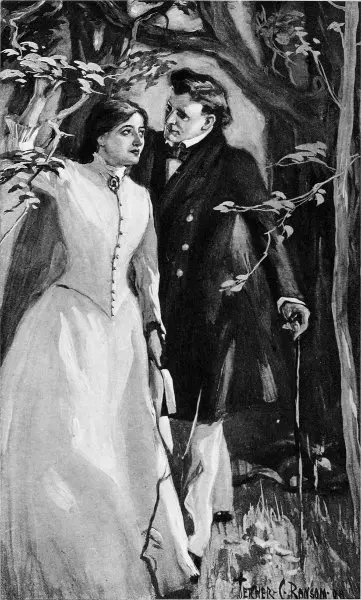
The diary of a superfluous man, and other stories
Ivan Sergeevich Turgenev
THE CLASSIC COLLECTION · 1917
"Fathers and Children" by Ivan Sergeevich Turgenev is a novel published in 1862. When university graduate Arkady returns home with his friend Bazarov, a self-proclaimed nihilist, their radical philosophy clashes with the older generation's values. Bazarov's rejection of tradition and emotion is tested when he meets the captivating Anna Odintsova. As romantic entanglements develop and tensions escalate between generations, the young men must confront whether their ideals can withstand the complexities of love, family, and mortality in nineteenth-century Russia.
Introduction adapted from the source catalogue; source summaries may be automatically generated.
Free to read · English · 76,870 words · No account needed
MAKE TIME FOR A GOOD BOOK
On by default. Untick to stop anonymous reading totals. Each page counts after 10 seconds in view. How this works.
Anonymous counting is on unless you have switched it off.
"Fathers and Children" is as beautifully constructed as a drama of Sophocles; the events move inevitably to a tragic close. There is not a touch of banality from beginning to end, and not an unnecessary word; the portraits of the old father and mother, the young Kirsanov, and all the minor characters are perfect; and amidst the trivial crowd Bazarov stands out like Lucifer, the strongest--the only strong character--that Turgenev created, the first Nihilist--for if Turgenev was not the first to invent the word, he was the first to apply it in this sense.
Bazarov is the incarnation of the Lucifer type that recurs again and again in Russian history and fiction, in sharp contrast to the meek, humble type of Ivan Durak. Lermontov's Pechorin was in some respects an anticipation of Bazarov; so were the many Russian rebels. He is the man who denies, to whom art is a silly toy, who detests abstractions, knowledge, and the love of Nature; he believes in nothing; he bows to nothing; he can break, but he cannot bend; he does break, and that is the tragedy, but, breaking, he retains his invincible pride, and
"not cowardly puts off his helmet,"
and he dies "valiantly vanquished."
In the pages which describe his death Turgenev reaches the high-water mark of his art, his moving quality, his power, his reserve. For manly pathos they rank among the greatest scenes in literature, stronger than the death of Colonel Newcome and the best of Thackeray. Among English novelists it is, perhaps, only Meredith who has struck such strong, piercing chords, nobler than anything in Daudet or Maupassant, more reserved than anything in Victor Hugo, and worthy of the great poets, of the tragic pathos of Goethe and Dante. The character of Bazarov, as has been said, created a sensation and endless controversy. The revolutionaries thought him a caricature and a libel, the reactionaries a scandalous glorification of the Devil; and impartial men such as Dostoevsky, who knew the revolutionaries at first hand, thought the type unreal. It is impossible that Bazarov was not like the Nihilists of the sixties; but in any case as a figure in fiction, whatever the fact may be, he lives and will continue to live....--From "An Outline of Russian Literature" (1914).
NIKOLAI PETROVITCH KIRSANOV, a landowner.
PAVEL PETROVITCH KIRSANOV, his brother.
ARKADY (ARKASHA) NIKOLAEVITCH (or NIKOLAITCH), his son.
YEVGENY (ENYUSHA) VASSILYEVITCH (or VASSILYITCH) BAZAROV, friend of
Arkady.
VASSILY IVANOVITCH (or IVANITCH), father of Bazarov.
ARINA VLASYEVNA, mother of Bazarov.
FEDOSYA (FENITCHKA) NIKOLAEVNA, second wife of Nikolai.
ANNA SERGYEVNA ODINTSOV, a wealthy widow.
KATYA SERGYEVNA, her sister.
PORFIRY PLATONITCH, her neighbor.
MATVY ILYITCH KOLYAZIN, government commissioner.
Your reading position is saved on this browser. Take it to another device with a library code. Reading pages adapt to text, rather than matching a printed edition.
Ivan Sergeevich Turgenev
Ivan Sergeevich Turgenev
Ivan Sergeevich Turgenev
Ivan Sergeevich Turgenev
BEHIND THE BOOK
This eBook is for the use of anyone anywhere in the United States and most other parts of the world at no cost and with almost no restrictions whatsoever. You may copy it, give it away or re-use it under the terms of the Project Gutenberg License included with this eBook or online at www.gutenberg.org. If you are not located in the United States, you will have to check the laws of the country where you are located before using this eBook. Read the source licence.
The original source file, including credits and licence, is retained by this library. Request an original-format copy at no charge. Please include the book title and Project Gutenberg identifier #30723.
KEEP YOUR CURIOSITY GOING

David Patterson (Spirit) Hatch
Cécile Tormay

Moritz Busch
Coulson Kernahan
John L. Ransom

Ralph Waldo Emerson