THE CLASSIC COLLECTION✦Letters from a Landscape PainterCLASSIC FREE BOOKS
Letters from a Landscape Painter
Charles Lanman
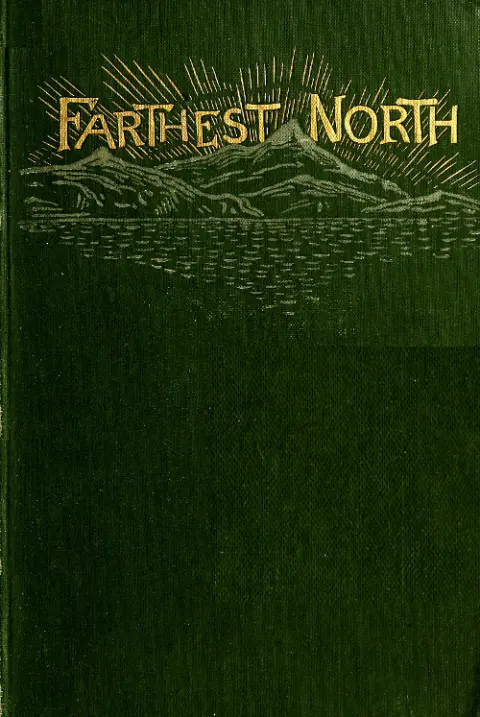
THE CLASSIC COLLECTION · 1885
"Farthest North" by Charles Lanman is a historical account written in the late 19th century. The book chronicles the life and explorations of Lieutenant James Booth Lockwood, particularly his role in the Greely Arctic Expedition, which sought to advance our understanding of the polar regions. It aims to provide insight into Lockwood's character and experiences as he navigated both the challenges of Arctic exploration and his military life. At the start of the narrative, the author presents Lockwood not only as a dedicated explorer but also as a man of notable character, detailing his early life, military training, and the formative experiences that shaped his adventurous spirit. The opening chapters lay a foundation for his expedition, addressing the circumstances surrounding the Greely mission and highlighting Lockwood's contributions and observations, which are meant to correct misconceptions about the expedition's achievements and challenges. His journey takes him from his childhood through military campaigns to the brink of his ultimate northward exploration, setting the stage for the dramatic events to unfold in the harsher environments of the Arctic.
Introduction adapted from the source catalogue; source summaries may be automatically generated.
Free to read · English · 85,594 words · No account needed
MAKE TIME FOR A GOOD BOOK
On by default. Untick to stop anonymous reading totals. Each page counts after 10 seconds in view. How this works.
Anonymous counting is on unless you have switched it off.
On the 14th of May, occurred a storm so violent that it seemed as if the tent must be blown down. Ritenbank took advantage of it to burrow under the tent and lay hold of a bag of pemmican, but a timely blow on his snout “saved their bacon.” After discussion with Brainard, Lockwood concluded to go no farther, as their remaining rations would hardly suffice to enable them satisfactorily to determine their present position. While waiting for the sun that this might be done, they improvised a checker-board from the chopping-board, and played some games. After a while, finding that the cliffs somewhat interfered with the observations, they moved the tent farther west, stopping to build a cairn, large and conspicuous, and depositing a full record of their journey and a thermometer. This cairn stood on a little shelf or terrace below the top of the cliff. Brainard also cut “XXX Bitters” on the highest rock of the cliff he could reach, Lockwood telling him he only wanted to get a bottle for nothing on the strength of his advertisement. They were engaged until midnight, chiefly in taking observations and in collecting specimens of rocks and vegetation. Some snow-birds were seen.
The next morning the weather became warm, beautiful, and delightful, the sun bright and sky clear, and there was no wind—surely a bit of sunshine in a shady place.
They took advantage of this to bring out hand-gear, foot-gear, bags, and rubber blankets to dry, everything having been damp or wet for nearly a week. Lockwood and Brainard got but a few short naps after supper, for it was necessary for one of them to be awake to insure their getting up at the right time to take “double altitudes,” etc. They secured a complete set of observations, thirty-six in all. A few hours later, Lockwood and Brainard started to make the ascent of the cliffs and of the height beyond. They gained a considerable elevation, and stood on a little plateau overlooking both sides of the promontory, the sea, and a large extent of mountainous country to the south thickly covered with snow. Lockwood unfurled Mrs. Greely’s pretty little silk flag to the breeze, and felt very proud that, on the 15th day of May, 1882, it waved in a higher latitude than was ever before reached by man. By careful astronomical observations under peculiarly favorable circumstances, they found themselves in latitude eighty-three degrees and twenty-four and a half minutes north, longitude forty degrees and forty-six and a half minutes west of Greenwich, thus surpassing the English, who sent the Nares Expedition of 1875-’76, costing upward of a million dollars, for the express purpose of reaching the north pole, and which expedition sent its chief sledge-party directly north over the ice for the purpose of making latitude alone. The view from their lofty station was grand beyond description. At their feet, toward the east, was another of those innumerable fiords, a bald headland forming its farther cape, bearing northeast. Seemingly projecting from its foot was a low point of land, doubtless separated from another by still another fiord. This was as far as Lockwood could see in that direction—probably fifteen miles. Thence round toward the north and in the direction of Cape Britannia lay the vast Polar Sea, covered with ice and desolate in the extreme. Toward the south lay a vast panorama of snow-capped mountains, so overlapping and merging one into another that it was impossible to distinguish the topography of the country. They stayed on the top only twenty minutes, and at 4.50 reached camp again, greatly to the delight of Frederick. He had seemed a good deal “down at the mouth” of late, which Brainard thought was caused by their long distance from home and the absence of dog-food and “skaffer.” Hastily packing up their small load, they started on their return at 5.30 P. M. Though taking a more direct course across the first fiord, they met with soft snow, which was very tiresome to pass through. The weather now commenced to cloud up again, threatening another storm. It was very fortunate that they reached their farthest just in time to take advantage of the thirty hours of fine weather. However, they were now homeward bound, and did not care for storms or anything else, provided they could “move on,” nor did they require any policeman to help them in that particular.
Your reading position is saved on this browser. Take it to another device with a library code. Reading pages adapt to text, rather than matching a printed edition.
Charles Lanman
Charles Lanman
Charles Lanman
Charles Lanman
BEHIND THE BOOK
This eBook is for the use of anyone anywhere in the United States and most other parts of the world at no cost and with almost no restrictions whatsoever. You may copy it, give it away or re-use it under the terms of the Project Gutenberg License included with this eBook or online at www.gutenberg.org. If you are not located in the United States, you will have to check the laws of the country where you are located before using this eBook. Read the source licence.
The original source file, including credits and licence, is retained by this library. Request an original-format copy at no charge. Please include the book title and Project Gutenberg identifier #54019.
KEEP YOUR CURIOSITY GOING
Cécile Tormay

Moritz Busch
John L. Ransom
Frances Wright
Cécile Tormay

Mabel Potter Daggett