THE CLASSIC COLLECTION✦Letters from a Landscape PainterCLASSIC FREE BOOKS
Letters from a Landscape Painter
Charles Lanman
THE CLASSIC COLLECTION · 1885
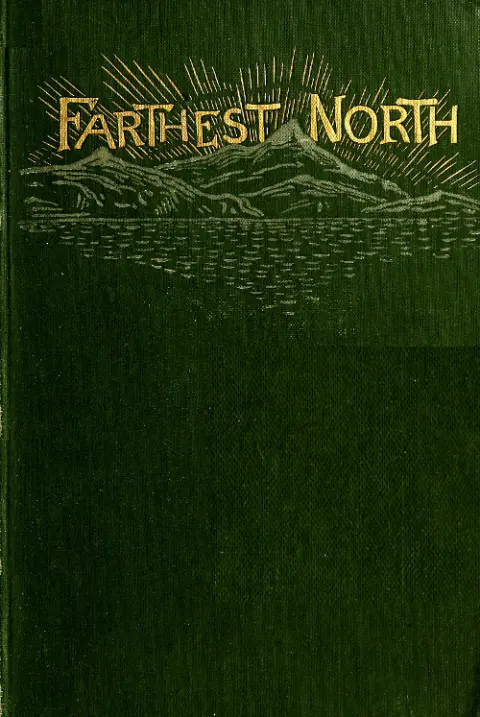
"Farthest North" by Charles Lanman is a historical account written in the late 19th century. The book chronicles the life and explorations of Lieutenant James Booth Lockwood, particularly his role in the Greely Arctic Expedition, which sought to advance our understanding of the polar regions. It aims to provide insight into Lockwood's character and experiences as he navigated both the challenges of Arctic exploration and his military life. At the start of the narrative, the author presents Lockwood not only as a dedicated explorer but also as a man of notable character, detailing his early life, military training, and the formative experiences that shaped his adventurous spirit. The opening chapters lay a foundation for his expedition, addressing the circumstances surrounding the Greely mission and highlighting Lockwood's contributions and observations, which are meant to correct misconceptions about the expedition's achievements and challenges. His journey takes him from his childhood through military campaigns to the brink of his ultimate northward exploration, setting the stage for the dramatic events to unfold in the harsher environments of the Arctic.
Introduction adapted from the source catalogue; source summaries may be automatically generated.
Free to read · English · 85,594 words · No account needed
MAKE TIME FOR A GOOD BOOK
On by default. Untick to stop anonymous reading totals. Each page counts after 10 seconds in view. How this works.
Anonymous counting is on unless you have switched it off.
Finding traveling so troublesome in the storm, and much difficulty in getting observations, Lockwood resolved to remain there for better weather, all sleeping as much and eating as little as possible. Indeed, Brainard agreed with Lockwood that, if the easterly trend of the coast should continue, they had better spend their time in going directly north over the sea. On the 11th, it being still stormy and no other land in sight, they remained in their sleeping-bags on the island, which from its shape was first called “Shoe Island,” but afterward “Mary Murray.” All of them suffered greatly with cold feet in the mean while; and, although Lockwood’s feet were wrapped in blankets, furs, and socks, they were like lumps of ice. To husband their few rations, they had eaten very little of late, and doubtless to this may be attributed their cold feet. The dogs were ravenous for food. When feeding-time came, it was amid blows from the men and fights among the dogs that the distribution was made. Old Howler was conspicuous on these occasions. That he might secure all he could, he bolted ball after ball of the frozen mass, and then would wander around, uttering the most unearthly howls while the mass was melting in his stomach. He was, indeed, a character. He had an air of utter weariness and dejection, as well he might, for who can be more miserable than the dethroned monarch, jeered, cuffed, and condemned by his late subjects? One day one of the dogs swallowed a live lemming, and the little animal went squealing all the way down to the corporation.
The weather clearing up a little the next morning, Lockwood took sun observations, and soon after saw a cape with very high land behind it, at the northeast. But the storm setting in again, they could not attempt to cross the mouth of the deep fiord intervening between them and the cape until nearly two hours after midnight. The traveling being good, and aided by a high wind, they made good time across the fiord toward the cape, alternately visible and invisible, and reached it in two hours. This cape proved to be the extremity of a line of high, rocky cliffs, stretching toward the southeast. Here they found the ice-foot entirely obstructed by lines of floe-bergs and hummocks pressed up nearly to the foot of the cliff, and to add to their difficulty, the tide-crack ran here close to the cape. With great labor they got the dogs and sledge upon a hummock, thence along its surface, using the axe, and finally lowered them down again, and, by a bridge over the crack, gained a level floe half a mile beyond the cape. There, finding a branch crack twelve or fifteen feet wide, Frederick went forth to seek a crossing, while Lockwood and Brainard obtained a peep at the sun for position. The fog rising, the grandest view they had yet seen was suddenly disclosed. To their right were seen the high cliffs connected with the cape just passed, bending to the southeast to form an inlet. Away beyond and across this inlet, and east of them, was the farther shore—a line of very high cliffs, terminating in a bold headland northeast of their position. Back of the cape and cliffs, the land became higher and higher, till, just east of the travelers, stood a peak apparently four thousand feet high. Between them and the cliffs below the peak was seen an island of pyramidal shape and quite high. The explorers made good time toward it, over a level floe, as some hummocks and tide-cracks at the mouth of the inlet prevented them from going direct to the cape. Thence, after a short rest and a relish of pemmican, they took their way toward the cape, now standing nearly north of them. Soon the snow became so deep and soft that the sledge often sank below the slats, the dogs to their bellies, and the men to their knees. Fortunately, the load was very light, and yet, had not the deep snow soon after become dry and feathery, they could not have proceeded. It was then that Lockwood promised himself never to undertake another sledge-journey, a resolve afterward easily forgotten when in camp with a full stomach. Time, rest, plenty to eat, and a good smoke, sometimes make philosophers, was the reflection recorded. About noon, after changing their course around an easterly bend of the cliff, they came to what might be regarded as the northern extremity of the cape, beyond which lay the inevitable fiord. Here they camped on the ice-foot, below a mass of picturesquely colored rocky cliffs, and essayed, but failed, to get observations. Their advance was sixteen miles in ten hours.
Your reading position is saved on this browser. Take it to another device with a library code. Reading pages adapt to text, rather than matching a printed edition.
Charles Lanman
Charles Lanman
Charles Lanman
Charles Lanman
BEHIND THE BOOK
This eBook is for the use of anyone anywhere in the United States and most other parts of the world at no cost and with almost no restrictions whatsoever. You may copy it, give it away or re-use it under the terms of the Project Gutenberg License included with this eBook or online at www.gutenberg.org. If you are not located in the United States, you will have to check the laws of the country where you are located before using this eBook. Read the source licence.
The original source file, including credits and licence, is retained by this library. Request an original-format copy at no charge. Please include the book title and Project Gutenberg identifier #54019.
KEEP YOUR CURIOSITY GOING
Cécile Tormay

Moritz Busch
John L. Ransom
Frances Wright
Cécile Tormay

Mabel Potter Daggett