
The Wonderful Year
William John Locke
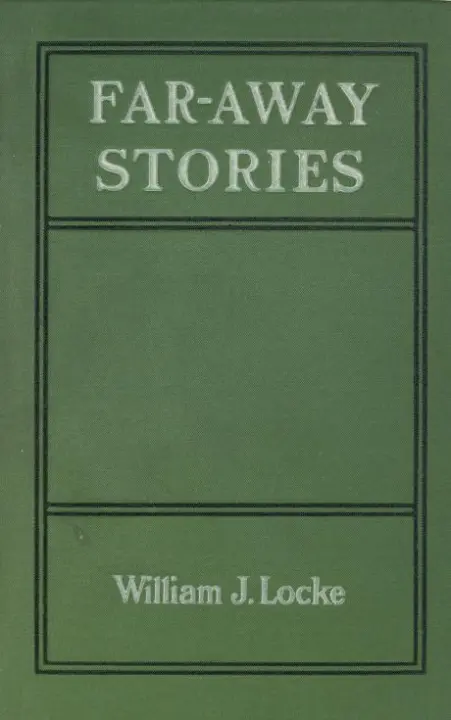
THE CLASSIC COLLECTION · 1919
"Far-away Stories" by William John Locke is a collection of short stories written in the early 20th century. The book unveils a tapestry of tales that transport readers to distant times and places, evoking nostalgia and adventure. In the opening story, "The Song of Life," the central figure is Angelo Fardetti, an aging musician who grapples with the heartache of unfulfilled dreams and the blessing of teaching a promising young composer, Geoffrey Chase. At the start of the book, the narrative introduces Angelo Fardetti, a tall, thin Italian musician living a humble life. Despite his deep yearning to create music and a history of talent, he has not been able to achieve the greatness he dreams of. The story unfolds as he mentors Geoffrey, who shows immense potential and passion for music, thereby igniting in Angelo a sense of purpose and hope. Yet, as Geoffrey finds success, a poignant sense of loss settles into Angelo's heart, setting the stage for a powerful exploration of legacy, love, and the bittersweet nature of artistry.
Introduction adapted from the source catalogue; source summaries may be automatically generated.
Free to read · English · 59,052 words · No account needed
MAKE TIME FOR A GOOD BOOK
On by default. Untick to stop anonymous reading totals. Each page counts after 10 seconds in view. How this works.
Anonymous counting is on unless you have switched it off.
One evening in April, while Jeremy was reading and Barbara sewing in the little candle-lit parlour, almost simultaneously with a sudden downpour of rain came a knock at the front door. Jeremy, startled by this unwonted occurrence, went himself to answer the summons, and, opening the door, was confronted by a stout, youngish man dressed in black with elegant ruffles and a gold-headed cane.
"Your pardon, sir," said the new-comer, "but may I crave a moment's shelter during this shower? I am scarce equipped for the elements."
"Pray enter," said Jeremy hospitably.
"I am from London, and lodging at the 'White Hart' at Bullingford for the night," the stranger explained, shaking the raindrops from his hat. "During a stroll before supper I lost my way, and this storm has surprised me at your gate. I make a thousand apologies for deranging you."
"If you are wet the parlour fire will dry you. I beg you, sir, to follow me," said Jeremy. He led the way through the dark passage and, pausing with his hand on the door-knob, turned to the stranger and said with his grave courtesy:
"I think it right to warn you, sir, that I am afflicted with a certain personal disfigurement which not all persons can look upon with equanimity."
"Sir," replied the other, "my name is John Hattaway, surgeon at St. Thomas' Hospital in London, and I am used to regard with equanimity all forms of human affliction."
Mr. Hattaway was shown into the parlour and introduced in due form to Barbara. A chair was set for him near the fire. In the talk that followed he showed himself to be a man of parts and education. He was on his way, he said, to Oxford to perform an operation on the Warden of Merton College.
"What kind of operation?" asked Barbara.
His quick, keen eyes swept her like a searchlight.
"Madam," said he, not committing himself, "'tis but a slight one."
But when Barbara had left the room to mull some claret for her guest, Mr. Hattaway turned to Jeremy.
"'Tis a cataract," said he, "I am about to remove from the eye of the Warden of Merton by the new operation invented by my revered master, Mr. William Cheselden, my immediate predecessor at St. Thomas's. I did not tell your wife, for certain reasons; but I noticed that she is blinded by the same disease."
Jeremy rose from his chair.
"Do you mean that you will restore the Warden's sight?"
"I have every hope of doing so."
"But if his sight can be restored--then my wife's----"
"Can be restored also," said the surgeon complacently.
Jeremy sat down feeling faint and dizzy.
Your reading position is saved on this browser. Take it to another device with a library code. Reading pages adapt to text, rather than matching a printed edition.
William John Locke

William John Locke

William John Locke

William John Locke
BEHIND THE BOOK
This eBook is for the use of anyone anywhere in the United States and most other parts of the world at no cost and with almost no restrictions whatsoever. You may copy it, give it away or re-use it under the terms of the Project Gutenberg License included with this eBook or online at www.gutenberg.org. If you are not located in the United States, you will have to check the laws of the country where you are located before using this eBook. Read the source licence.
The original source file, including credits and licence, is retained by this library. Request an original-format copy at no charge. Please include the book title and Project Gutenberg identifier #50479.
KEEP YOUR CURIOSITY GOING
Coulson Kernahan

Maurice Baring
Frances Wright
Cécile Tormay

Frederic Jesup Stimson

W. H. P. (William Henry Pope) Jarvis