THE CLASSIC COLLECTION✦PoemsCLASSIC FREE BOOKS
Poems
Marie Van Vorst
THE CLASSIC COLLECTION · 1920
"Fairfax and His Pride: A Novel" by Marie Van Vorst is a fictional work written in the early 20th century. The story begins in January 1880, chronicling the experiences of Antony Fairfax, a young artist arriving in New York from New Orleans. The novel explores themes of ambition, familial relationships, and the social challenges faced by the protagonist as he seeks recognition and belonging in a new and often unfriendly city. The opening portion introduces Antony Fairfax as he grapples with the harsh winter climate of New York and reflects on his hopes for a bright future as an artist. He feels out of place as a stranger in the North while contemplating the warmth he left behind in the South. Shortly after his arrival, Antony visits his relatives, the Carews, but is met with indifference and a lack of hospitality, amplifying his sense of isolation. The narrative then shifts to the enchanting yet complicated relationship he begins to form with his young cousins, Bella and Gardiner, who initially bring him joy amidst his struggles. Their innocent interactions provide depth to the story, hinting at the significance of familial connections and the challenges of navigating adulthood and artistic aspirations in a bustling urban landscape.
Introduction adapted from the source catalogue; source summaries may be automatically generated.
Free to read · English · 110,049 words · No account needed
MAKE TIME FOR A GOOD BOOK
On by default. Untick to stop anonymous reading totals. Each page counts after 10 seconds in view. How this works.
Anonymous counting is on unless you have switched it off.
The four beasts were of heroic size. They came out of the moulds like creatures of a prehistoric age. Benvenuto Cellini, who was to have met his friend Antony at the foundry on the day Fairfax's first plaster cast was carried down, failed to put in an appearance, and Fairfax had the lonely joy, the melancholy, lonely joy, of assisting at the birth of one of his big creatures. All four of them were ultimately cast, but they were to remain in the foundry until Cedersholm's return.
His plans for the future took dignity, and importance, from the fact of his success, and he reviewed with joy the hard labour of the winter, for which in all he had been paid one hundred dollars. He was in need of everything new, from shoes up. He was a great dandy, or would have liked to have afforded to be. As for a spring overcoat--well, he couldn't bear to read the tempting advertisements, and even Gardiner's microscopic coat, chosen by Bella, caused his big cousin a twinge of envy. Bella's new outfit was complete, a deeper colour glowed on the robin-red dress she wore, and Fairfax felt shabby between them as he limped along into the Park under the budding trees, a child's hand on either arm.
"Cousin Antony, why are there such delicious smells to-day?"
Bella sniffed them. The spring was at work under the turf, the grass was as fragrant as a bouquet.
"Breathe it in, Cousin Antony! It makes you wish to do heaps of things
you oughtn't to!"
On the pond the little craft of the school children flew about like butterflies, the sun on the miniature sails.
"What kind of things does the grass cutter, shearing off a few miserable dandelions, make you want to do, Bella? You should smell the jasmine and the oleanders of New Orleans. These are nothing but weeds."
"How can you say so?" she exclaimed; "besides, most of the things I want to do are wicked, anyhow."
"Jove!" exclaimed Fairfax. "That is a confession."
She corrected. "You ought not to say 'Jove' like that, Cousin Antony. You can cut it and make it sound like 'Jovah,' it sounds just like it."
"What wicked things do you want to do, Bella?"
She pointed to the merry-go-rounds, where the giraffes, elephants, and horses raced madly round to the plaintive tune of "Annie Laurie," ground out by a hurdy-gurdy.
"I'd love to go on."
Fairfax put his hand in his pocket, but she pulled it back.
"No, Cousin Antony, please. It's not the money that keeps me back, though I haven't any. It's Sunday, you know."
"Oh," her cousin accepted dismally.
Your reading position is saved on this browser. Take it to another device with a library code. Reading pages adapt to text, rather than matching a printed edition.
Marie Van Vorst
Marie Van Vorst
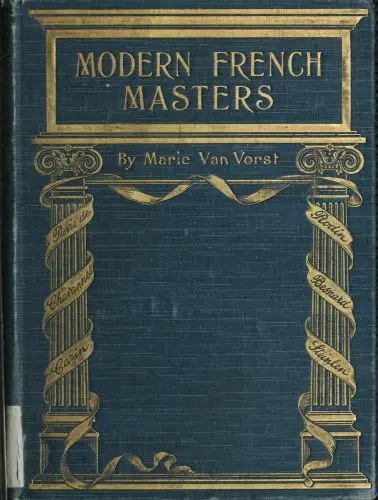
Marie Van Vorst
Marie Van Vorst
BEHIND THE BOOK
This eBook is for the use of anyone anywhere in the United States and most other parts of the world at no cost and with almost no restrictions whatsoever. You may copy it, give it away or re-use it under the terms of the Project Gutenberg License included with this eBook or online at www.gutenberg.org. If you are not located in the United States, you will have to check the laws of the country where you are located before using this eBook. Read the source licence.
The original source file, including credits and licence, is retained by this library. Request an original-format copy at no charge. Please include the book title and Project Gutenberg identifier #32826.
KEEP YOUR CURIOSITY GOING
Coulson Kernahan

Maurice Baring
Frances Wright
Cécile Tormay

Frederic Jesup Stimson

W. H. P. (William Henry Pope) Jarvis