
‘Midst the Wild Carpathians
Mór Jókai
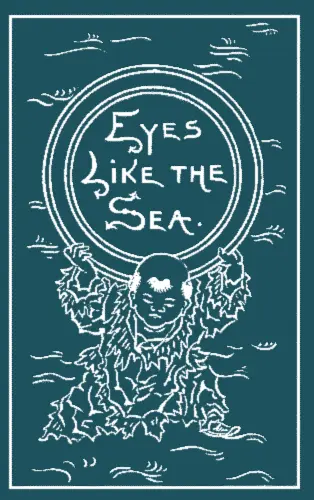
THE CLASSIC COLLECTION · 1894
"Eyes Like the Sea" by Mór Jókai is a novel written in the late 19th century. The story revolves around the protagonist, who is infatuated with a captivating girl named Bessy. As the narrative unfolds, it explores themes of love, ambition, and youthful experiences amidst a backdrop of societal expectations and personal aspirations. The opening of the novel introduces the main character's admiration for Bessy, describing her enchanting eyes, which he likens to the sea. Their first interaction occurs during a dance lesson led by a memorable dancing-master, Monsieur Galifard. The protagonist, who is about sixteen years old, becomes aware of his feelings for Bessy as they engage in playful banter and clumsy dancing. This initial encounter sets the stage for the exploration of their evolving relationship, highlighting the protagonist's youthful aspirations and struggles for recognition in both love and creative endeavors.
Introduction adapted from the source catalogue; source summaries may be automatically generated.
Free to read · English · 97,399 words · No account needed
MAKE TIME FOR A GOOD BOOK
On by default. Untick to stop anonymous reading totals. Each page counts after 10 seconds in view. How this works.
Anonymous counting is on unless you have switched it off.
I threw on my clothes and made my way to the Pillwax coffee-house. I found my good friends already at the "Table of Public Opinion," and every one of them shared my compassion. The critic related the mournful details to us.
All at once two of our comrades, Degré and Lauka, rushed excitedly into the coffee-house. "The whole duel was a swindle!" they cried. "There was no harm done to any one. He was not even wounded. He is lying in bed with his arm tied up, and a bloody shirt; they are giving him ice cataplasms--the whole thing is a pure farce!"
The second, however, solemnly maintained that his principal had been
wounded.
"We will convince ourselves of the fact."
"Surely you would not want them to tear the bandages from the gaping wound?" This I also resolutely opposed, and, taking the part of my colleague, devised another expedient.
"Who was the doctor who bound up the wound?"
The critic mentioned the doctor's name.
"We'll go to the doctor, then."
Dr. K----y was a worthy, honest, high-spirited fellow, who well deserved
the public respect.
We rushed upon him in a body.
"Tell us, now," we said, "is there a wound on the arm of the humorist?"
"There is," replied the doctor.
"Is it true that you took a bullet out of it?"
"It is true."
"On your professional reputation?"
"On my professional reputation."
With that my friends were bound to be satisfied. No further inquiries
could be made.
When, however, my two friends had withdrawn, I remained behind with the doctor, and I said to him, "My dear doctor, you have answered the question, did you take a bullet out of our friend's arm? but now answer me this question, who put that bullet in?"
"Egad! egad! egad!" growled the doctor, "you imaginative people are
really sad scamps!"
The fact was that our humorist and Muki Bagotay had fought an American duel: whoever drew the black ball had--well, not to die, but to get Dr. K----y to make a wound in his arm. The doctor, with his lancet, made an incision about two centimètres in length and four millemètres in depth, in the epidermis just below the biceps; into this wound he insinuated a bullet, then took it out, sewed up the wound, and so wounded honour was amply satisfied. And I'll not say a single word against this being the most correct mode of procedure imaginable.
Then I went home to my native town, ostensibly to advertise my legal diploma, but really to look once more upon her from whom I had been so long absent.
Your reading position is saved on this browser. Take it to another device with a library code. Reading pages adapt to text, rather than matching a printed edition.
Mór Jókai
Mór Jókai

Mór Jókai
Mór Jókai
BEHIND THE BOOK
This eBook is for the use of anyone anywhere in the United States and most other parts of the world at no cost and with almost no restrictions whatsoever. You may copy it, give it away or re-use it under the terms of the Project Gutenberg License included with this eBook or online at www.gutenberg.org. If you are not located in the United States, you will have to check the laws of the country where you are located before using this eBook. Read the source licence.
The original source file, including credits and licence, is retained by this library. Request an original-format copy at no charge. Please include the book title and Project Gutenberg identifier #31642.
KEEP YOUR CURIOSITY GOING
Cécile Tormay

Moritz Busch
Coulson Kernahan
John L. Ransom

Maurice Baring
Frances Wright