
‘Midst the Wild Carpathians
Mór Jókai
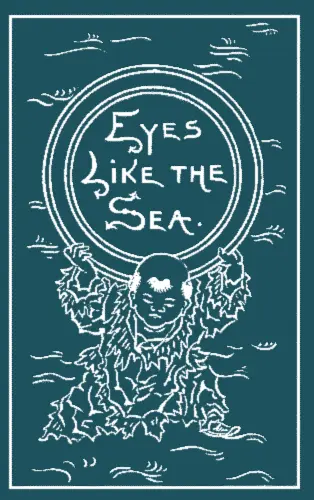
THE CLASSIC COLLECTION · 1894
"Eyes Like the Sea" by Mór Jókai is a novel written in the late 19th century. The story revolves around the protagonist, who is infatuated with a captivating girl named Bessy. As the narrative unfolds, it explores themes of love, ambition, and youthful experiences amidst a backdrop of societal expectations and personal aspirations. The opening of the novel introduces the main character's admiration for Bessy, describing her enchanting eyes, which he likens to the sea. Their first interaction occurs during a dance lesson led by a memorable dancing-master, Monsieur Galifard. The protagonist, who is about sixteen years old, becomes aware of his feelings for Bessy as they engage in playful banter and clumsy dancing. This initial encounter sets the stage for the exploration of their evolving relationship, highlighting the protagonist's youthful aspirations and struggles for recognition in both love and creative endeavors.
Introduction adapted from the source catalogue; source summaries may be automatically generated.
Free to read · English · 97,399 words · No account needed
MAKE TIME FOR A GOOD BOOK
On by default. Untick to stop anonymous reading totals. Each page counts after 10 seconds in view. How this works.
Anonymous counting is on unless you have switched it off.
[Footnote 22: This chapter is somewhat condensed.]
It was Petöfi who introduced me to my associates of the "Table of Public Opinion" (as the long table close to the counter in the Café Pillwax was called), and who got me a place there. "This is a true Frenchman!" said Petöfi, as he presented me to his young army of literati who were assembled there. In those days this was the highest conceivable praise. The face of every liberty-loving nation was turned towards France, and from thence we expected the dawn of the new era. We read nothing but French books. Lamartine's "History of the Girondists" and Tocqueville's "Democracy" were our bibles. Petöfi worshipped Beranger, I had found my ideal in Victor Hugo.... This school might easily have become dangerous to us had not its influence fortunately coincided with the opening up of a new and hitherto unexplored field--popular literature. Hitherto it had been the endeavour of Hungarian writers to write in a style which was distinct from the language of ordinary life. Our group, on the other hand, started the idea that it was just those very constructions, expressions, and modes of thought employed in every-day life that Hungarian writers ought to take as the fundamental principle of their writing; nay, that they should even develop the ideally beautiful, poetry itself, from the life of the common people.... As belonging to this camp of ours I must also reckon Sigismund Czakó, who acclimatized the modern drama to our stage with marked success; and finally Anthony Csengery, the editor of the Pesti Hirlap, who wrote nothing in the way of belles lettres himself, but whose immense erudition and thorough knowledge of literature enabled him to exercise a most beneficial influence over the whole of our group. Amongst our older writers also, Vörösmarty and Bajza watched over us with stimulating encouragement; but it was Ignatius Nagy in particular who befriended us, and of him I have the most pleasant recollections.... At this time he was a cripple. He was rarely to be seen in the street, and then only on his wife's arm. He stopped at home all day at his writing-table, writing those life-like sketches of the little world of Buda-Pest which testify to such a serene good-humour. The first time I saw him was when I went to speak to him about my novel, "Hétköznapok." He had a most embarrassing face covered with dark-red spots right up to his astonishingly lofty forehead, whose shiny baldness was half cut in two, as it were, by a bright black peruke. He had also an inconceivably big red nose, at which, however, you had no time to be amazed, so instantly were you spell-bound by a couple of squinting eyes, one of which glared as fixedly at you as if it were made wholly of stone. His voice, on the other hand, was as the voice of a sick child. And within this repulsive frame dwelt the noblest of souls, in this crippled body the most energetic of characters. From no strange face did I ever get a kinder glance than I got from those stiff fishy eyes, and that sick voice announced to me my first great piece of good news. Upon his recommendation, the publisher Hartleben agreed to publish my first romance, and gave me for it 360 silver florins. In those days that was an immense fortune to me. I had no further need to go scribbling all day long in a lawyer's office at six florins a month. And his fatherly solicitude for me went still further. He introduced me to Frankenburg as a dramatic critic. The editor of the Eletképek had just parted with his dramatic critic (he had been a little too unmerciful to the artistes), and was looking out for a new colleague. By way of honorarium he offered me a free seat at the theatre, and ten florins a month. But my year of office came to an end the very first week. To make amends for the sins of my predecessor, I lauded every artist to the skies, according to the dictates of my youthful enthusiasm. And I can honestly say that I wrote it all from my very heart. It was then that I saw a ballet for the first time in my life. It was my solemn conviction that I was bound by a debt of gratitude to the excellent damsel who exhibited her natural charms to the public eye with such magnanimous frankness. And a pretty lecture Frankenburg read me for it too! "Delightful Sylphid indeed! A clumsy stork, I should say!" Still, that might have passed. But it was my magnifying of Lilla Szilágyi who took the part of Smike in the Beggars of London which did the business for me. I said of her that she was "a lovely sapling!" and promised her a brilliant future in her dramatic career. "Leave her where you found her! She has got no heart that's certain!" said the editor. "Then she'll get one!" said I. "But you'll never get to be a critic," said he.
Your reading position is saved on this browser. Take it to another device with a library code. Reading pages adapt to text, rather than matching a printed edition.
Mór Jókai
Mór Jókai

Mór Jókai
Mór Jókai
BEHIND THE BOOK
This eBook is for the use of anyone anywhere in the United States and most other parts of the world at no cost and with almost no restrictions whatsoever. You may copy it, give it away or re-use it under the terms of the Project Gutenberg License included with this eBook or online at www.gutenberg.org. If you are not located in the United States, you will have to check the laws of the country where you are located before using this eBook. Read the source licence.
The original source file, including credits and licence, is retained by this library. Request an original-format copy at no charge. Please include the book title and Project Gutenberg identifier #31642.
KEEP YOUR CURIOSITY GOING
Cécile Tormay

Moritz Busch
Coulson Kernahan
John L. Ransom

Maurice Baring
Frances Wright