
‘Midst the Wild Carpathians
Mór Jókai
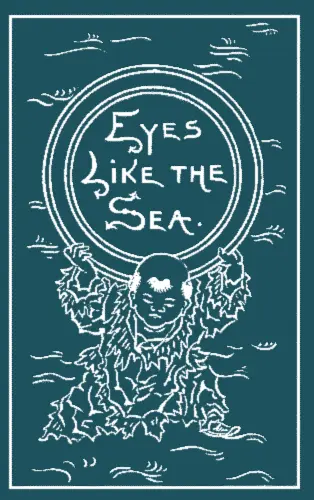
THE CLASSIC COLLECTION · 1894
"Eyes Like the Sea" by Mór Jókai is a novel written in the late 19th century. The story revolves around the protagonist, who is infatuated with a captivating girl named Bessy. As the narrative unfolds, it explores themes of love, ambition, and youthful experiences amidst a backdrop of societal expectations and personal aspirations. The opening of the novel introduces the main character's admiration for Bessy, describing her enchanting eyes, which he likens to the sea. Their first interaction occurs during a dance lesson led by a memorable dancing-master, Monsieur Galifard. The protagonist, who is about sixteen years old, becomes aware of his feelings for Bessy as they engage in playful banter and clumsy dancing. This initial encounter sets the stage for the exploration of their evolving relationship, highlighting the protagonist's youthful aspirations and struggles for recognition in both love and creative endeavors.
Introduction adapted from the source catalogue; source summaries may be automatically generated.
Free to read · English · 97,399 words · No account needed
MAKE TIME FOR A GOOD BOOK
On by default. Untick to stop anonymous reading totals. Each page counts after 10 seconds in view. How this works.
Anonymous counting is on unless you have switched it off.
She invited me to sit down. She took my hat and laid it on the table.
"I suppose you'll remain to dinner? I have told the cook to prepare your
favourite dish."
"Then you know what it is?"
"Why, of course! Beans with pig's ear. Why, all your admirers throughout the kingdom know that."
I had now good reason to be proud! My nation, then, has some regard for me, after all. To others it presents bays, to me--beans.[108]
[Footnote 108: In Hungarian the resemblance is closer still, babo meaning bean, and babér, laurel.]
"In that case I'll remain," I said.
"In Kvatopil's time I was never permitted to cook beans, for he maintained that they make a man stupid."
"On the contrary. Pythagoras assures us that the bean contains the same component parts as the human brain."
Having thus rehabilitated the bean, I reverted to the real motive of my
visit there.
"I should have come to visit you to-day even without a special
invitation."
"Was there any special reason, then, why I should occupy a place in your
thoughts?"
"I have received a letter from Italy, the contents of which will greatly
interest you."
At these words she looked at me as coldly as if she had become an
alabaster statue.
"Interest me?"
"So I believe. On the 20th instant there was a battle on the Mincio, at which your husband distinguished himself."
"Really?" said the lady mechanically.
("Really?"--In that tone? It was rather odd. However, I went on.)
"Nay, in the heat of the combat he was even wounded."
(I calculated surely on the dramatic effect of these words. I fancied that the tender spouse would leap to her feet, pale, ready to faint, wringing her hands, till at last, amidst sobs, the name of the adored husband would burst forth from her lips: "Oh! my Wenceslaus! Oh! my Kvatopil!" But she did not so much as turn her head round.)
"Indeed?" she said, with complete sangfroid.
Just as if it were an every-day occurrence for a beloved husband to be
wounded in battle.
I was offended. Such ungrateful indifference I had never met with before. How was I to go on? I had calculated that when the despairing consort had wept and sobbed her fill, I should hasten to console her.
"It is true," said I, "that his wound is not sufficiently dangerous to prevent him from continuing in the field."
"I can easily believe it," replied the lady, with a shrug of the
shoulders.
Your reading position is saved on this browser. Take it to another device with a library code. Reading pages adapt to text, rather than matching a printed edition.
Mór Jókai
Mór Jókai

Mór Jókai
Mór Jókai
BEHIND THE BOOK
This eBook is for the use of anyone anywhere in the United States and most other parts of the world at no cost and with almost no restrictions whatsoever. You may copy it, give it away or re-use it under the terms of the Project Gutenberg License included with this eBook or online at www.gutenberg.org. If you are not located in the United States, you will have to check the laws of the country where you are located before using this eBook. Read the source licence.
The original source file, including credits and licence, is retained by this library. Request an original-format copy at no charge. Please include the book title and Project Gutenberg identifier #31642.
KEEP YOUR CURIOSITY GOING
Cécile Tormay

Moritz Busch
Coulson Kernahan
John L. Ransom

Maurice Baring
Frances Wright