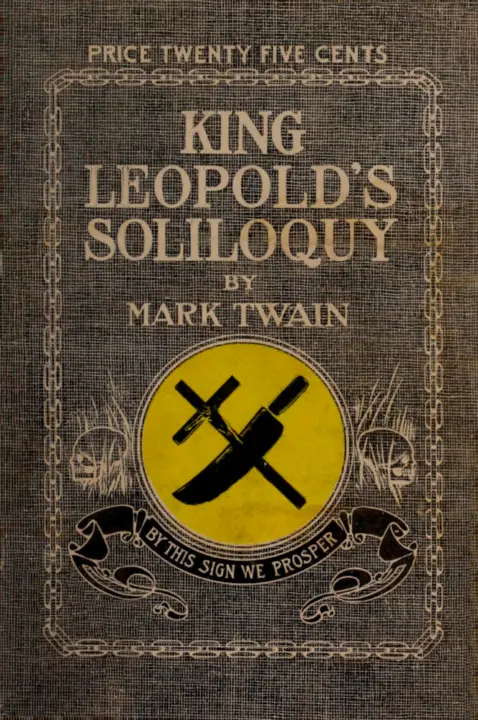
King Leopold’s Soliloquy: A Defense of His Congo Rule
Mark Twain
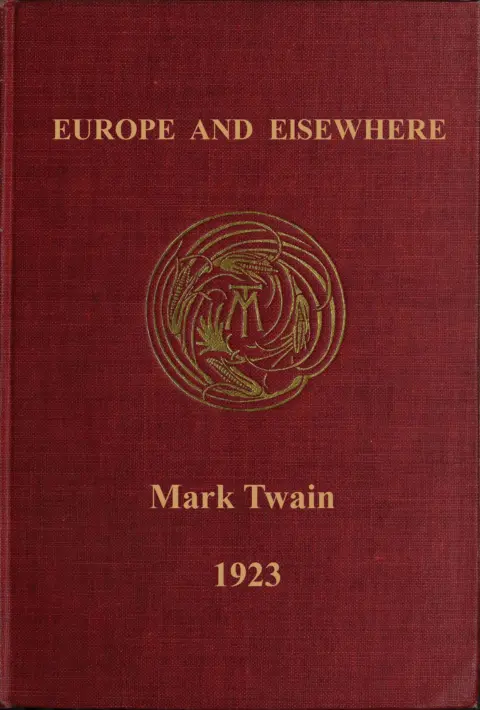
THE CLASSIC COLLECTION · 1923
"Europe and Elsewhere" by Mark Twain is a collection of travel essays and commentaries written in the late 19th century. The work reflects Twain's observations and experiences from his travels throughout Europe and addresses various themes including culture, politics, and social issues. The opening chapter introduces readers to a memorable midnight visit to Westminster Abbey, setting the stage for Twain's blend of humor and incisive critique. At the start of "Europe and Elsewhere," Twain recounts a late-night adventure he embarks on with a friend, who leads him to Westminster Abbey. The atmosphere is both eerie and reverential as they explore the grand yet somber space filled with statues and tombs of historical figures. Twain's keen observations and playful commentary bring the site to life; he describes the remarkable age of the Abbey's architecture and highlights the solemnity of the figures memorialized within its walls. Through this narration, he effectively captures the weight of history and reflects on the contrasts between the past and the present, all while maintaining a humorous undertone with his signature wit.
Introduction adapted from the source catalogue; source summaries may be automatically generated.
Free to read · English · 113,487 words · No account needed
MAKE TIME FOR A GOOD BOOK
On by default. Untick to stop anonymous reading totals. Each page counts after 10 seconds in view. How this works.
Anonymous counting is on unless you have switched it off.
I had to confess that I couldn’t. It filled her with wonder. But it had one pleasant effect--it interested her in me, and I was thankful, for I was getting lonesome for some one to talk to and listen to. The young fellow who was showing me around--on his own motion, I did not invite him--had missed his appointment at the Museum, and I was feeling disappointed, for he was good company. When I told the young woman I could not read, she asked me another embarrassing question:
“Where are you from?”
I skirmished--to gain time and position. I said:
“Make a guess. See how near you can come.”
She brightened, and exclaimed:
“I shall dearly like it, sir, if you don’t mind. If I guess right
will you tell me?”
“Yes.”
“Honor bright?”
“Honor bright? What is that?”
She laughed delightedly and said:
“That’s a good start! I was sure that that phrase would catch you. I know one thing, now, all right. I know----”
“What do you know?”
“That you are not an American. And you aren’t, are you?”
“No. You are right. I’m not--honor bright, as you say.”
She looked immensely pleased with herself, and said:
“I reckon I’m not always smart, but that was smart, anyway. But not so very, after all, because I already knew--believed I knew--that you were a foreigner, by another sign.”
“What was that?”
“Your accent.”
She was an accurate observer; I do speak English with a heavenly accent, and she had detected the foreign twang in it. She ran charmingly on, most naïvely and engagingly pleased with her triumph:
“The minute you said, ‘See ’ow near you can come to it,’ I said to myself, ‘Two to one he is a foreigner, and ten to one he’s English.’ Now that is your nationality, isn’t it?”
I was sorry to spoil her victory, but I had to do it: “Ah--you’ll
have to guess again.”
“What--you are not an Englishman?”
“No--honor bright.”
She looked me searchingly over, evidently communing with herself--adding up my points, then she said:
“Well, you don’t look like an Englishman, and that is true.” After a little she added, “The fact is, you don’t look like any foreigner--not quite like ... like anybody I’ve seen before. I will guess some more.”
She guessed every country whose name she could think of and grew gradually discouraged. Finally she said:
“You must be the Man Without a Country--the one the story tells about. You don’t seem to have any nationality at all. How did you come to come to America? Have you any kinfolks here?”
“Yes--several.”
Your reading position is saved on this browser. Take it to another device with a library code. Reading pages adapt to text, rather than matching a printed edition.
BEHIND THE BOOK
This eBook is for the use of anyone anywhere in the United States and most other parts of the world at no cost and with almost no restrictions whatsoever. You may copy it, give it away or re-use it under the terms of the Project Gutenberg License included with this eBook or online at www.gutenberg.org. If you are not located in the United States, you will have to check the laws of the country where you are located before using this eBook. Read the source licence.
The original source file, including credits and licence, is retained by this library. Request an original-format copy at no charge. Please include the book title and Project Gutenberg identifier #68604.
KEEP YOUR CURIOSITY GOING
Wilfrid Scawen Blunt
Wilfrid Scawen Blunt

E. W. (Edgar Watson) Howe

David Patterson (Spirit) Hatch

David Patterson (Spirit) Hatch

David Patterson (Spirit) Hatch