THE CLASSIC COLLECTION✦As Others Saw Him: A Retrospect, A.D. 54CLASSIC FREE BOOKS
As Others Saw Him: A Retrospect, A.D. 54
Joseph Jacobs
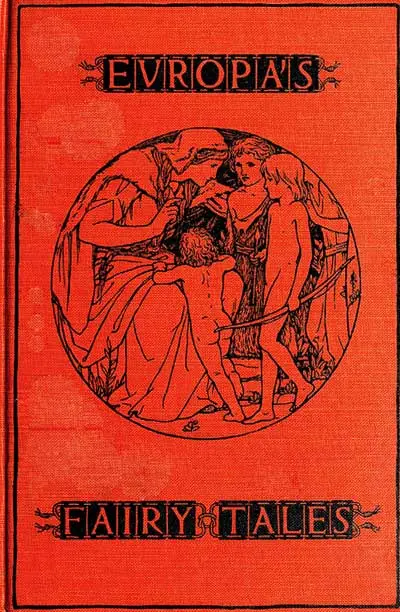
THE CLASSIC COLLECTION · 1916
"Europa's Fairy Book" by Joseph Jacobs is a collection of retold fairy tales written in the early 20th century. This compilation encompasses beloved stories from various European cultures, including well-known favorites such as "Cinderella" and "Beauty and the Beast." Jacobs aims to present these tales in a way that resonates with children, highlighting their universal themes and enchanting narratives. At the start of the collection, the reader is introduced to the enchanting world of fairy tales through a charming narrative framing device featuring a grandfather telling stories to his grandchildren. The opening recounts the preparation for storytelling and touches on how these tales have been passed down through generations across Europe. It highlights the importance of these stories in connecting children not just with their cultural heritage, but also with children from other backgrounds who have heard similar tales, emphasizing their timeless appeal and cross-cultural presence. The narratives encompass trials, tribulations, magic, and moral lessons, thus inviting readers into a fantastical world where dreams come true and justice prevails.
Introduction adapted from the source catalogue; source summaries may be automatically generated.
Free to read · English · 58,303 words · No account needed
MAKE TIME FOR A GOOD BOOK
On by default. Untick to stop anonymous reading totals. Each page counts after 10 seconds in view. How this works.
Anonymous counting is on unless you have switched it off.
The sneaking regard of the folk-mind for the clever rogue who can outwit the guardians of order (the ever-present enemy of the folk) was shown in early days by the myth of Rhampsinitus in Herodotus, ii., 121, which is found to this day among the Italians (see Crane, No. 44, and S. Prato, La Leggenda del Tesoro di Rampsinite, Como, 1882). But the more usual European form is that I have chosen for the text, the formula of which might be summed up as follows:
Apprenticeship in thievery--Purse or life--Hanging "sell"--Master Thief--Three Tests--Horse from Stable--Sheet off bed--Priest in bag--Horse from under (Thumb-Bung).
Almost the whole of this is found as early as Straparola i., 2, where Cassandrino is ordered by the provost of Perugia to steal his bed and his horse and to bring to him in a sack the rector of the village.
The purse incident occurs in Brittany, Piedmont, Tuscany, and Tyrol; in Iceland (Arnason, p. 609) occurs the man twice hanged which also occurs in Norway, Ireland, Saxony, Tuscany, and in Germany (Kuhn and Schwartz, 362); in Servia (Vuk, 46) the Master Thief steals sheep by throwing two shoes successively in the road, which also occurs in Bengal (Day, xi.); the theft of the horse occurs in Brittany, Norway, Ireland, Tuscany, Scotland (Campbell, 40), Flanders, in Basque and Catalan, Russia and Servia. The third test of kidnapping the priest occurs in Brittany, Flanders, Norway, Basque, Catalan, Scotland, Ireland, Lithuania, Tuscany. In Iceland the persons carried away are a king and a queen.
The three tests of the Master Thief, the stealing of bed, horse, and priest, occur as early as Straparola, i., 2, who also has a somewhat similar story of the "Scholar in Magic," viii., 5, which contains the zigzag transformation of the Arabian Nights. Both forms occur in Grimm, 68, 192. While the three tests are fairly uniform throughout Europe, the introduction by which the lad becomes a thief and proves himself a Master Thief varies considerably; and I have had to make a selection rather than a collation.
In some forms the farmer has three sons, of whom the youngest adopts thievery as a profession, which indeed it was in the Middle Ages (as we know from the Cul-le-jatte of The Cloister and the Hearth). In Hahn, 3, the Master Thief has to bring a "Drakos" instead of a priest. Curiously enough, in Gonzenbach, 83, the Master Thief has to bring back a "dragu."
In many of the variants the Master Thief executes his tricks in order to gain the King's daughter by a sort of Bride Wager. But in most cases he does them in order to escape the natural consequences of his thievery.
Your reading position is saved on this browser. Take it to another device with a library code. Reading pages adapt to text, rather than matching a printed edition.
Joseph Jacobs
Joseph Jacobs
BEHIND THE BOOK
This eBook is for the use of anyone anywhere in the United States and most other parts of the world at no cost and with almost no restrictions whatsoever. You may copy it, give it away or re-use it under the terms of the Project Gutenberg License included with this eBook or online at www.gutenberg.org. If you are not located in the United States, you will have to check the laws of the country where you are located before using this eBook. Read the source licence.
The original source file, including credits and licence, is retained by this library. Request an original-format copy at no charge. Please include the book title and Project Gutenberg identifier #26019.
KEEP YOUR CURIOSITY GOING

Maurice Baring
Francis Greenleaf Allinson & Anne C. E. (Anne Crosby Emery) Allinson

Abby Morton Diaz
Helen Hunt Jackson
Mary Frances Blaisdell
Stuart Dodgson Collingwood