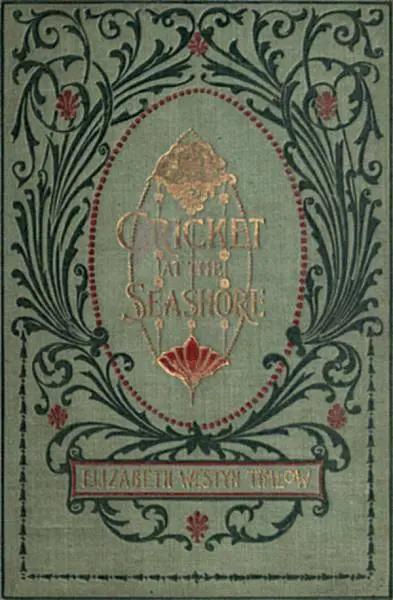
Cricket at the Seashore
Elizabeth Weston Timlow
THE CLASSIC COLLECTION · 1897
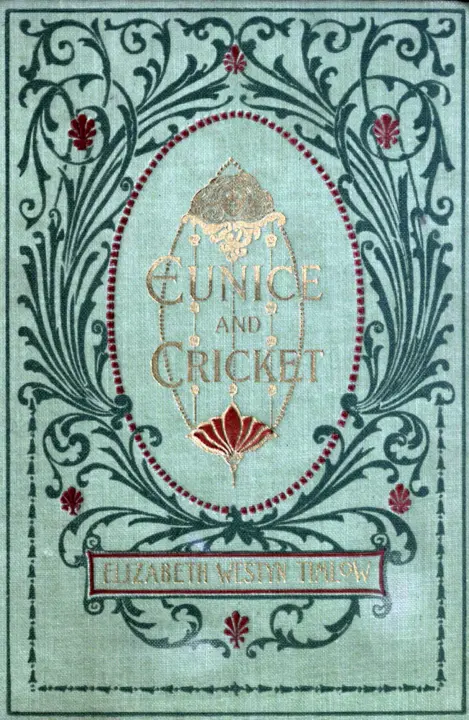
Eunice and Cricket by Elizabeth Weston Timlow. Explore this classic work in a free online edition. Subjects include Conduct of life -- Juvenile fiction; Goats -- Juvenile fiction; Sisters -- Juvenile fiction; Youth -- Conduct of life -- Juvenile fiction; Families -- Juvenile fiction; Kodak camera -- Juvenile fiction. Read the locally hosted text below, adjust the reading display, and continue where you left off.
Introduction adapted from the source catalogue; source summaries may be automatically generated.
Free to read · English · 53,890 words · No account needed
MAKE TIME FOR A GOOD BOOK
On by default. Untick to stop anonymous reading totals. Each page counts after 10 seconds in view. How this works.
Anonymous counting is on unless you have switched it off.
One Saturday morning towards the end of March, Marjorie and Eunice and Cricket were all in mamma’s room. Mrs. Ward had not come home from market yet, and Cricket was watching for her from the window, eager to ask permission for something she wanted to do.
“There’s Donald!” she suddenly exclaimed. “How funny! What can he be doing here at this time?”
She ran to the hall, and hung over the banister, calling down a greeting as Donald let himself in. To her surprise, he made her no answer, but with a curt word to Jane to tell his father that he was in the study and wanted to see him as soon as he came in, he bolted into his father’s private room behind the office, and shut the door.
Cricket came back and reported, with much amazement.
“I hope he isn’t going to have mumps again,” said Eunice, anxiously. “Or, perhaps it’s scarlet fever. Did Donald ever have scarlet fever, Marjorie?”
“Yes, I think so. Oh, I don’t suppose he’s going to have any more baby diseases,” said Marjorie. “There’s papa now!”
Doctor Ward entered the house, and the listening girls heard the maid deliver Donald’s message. He removed his coat in his leisurely way, whistling softly in a fashion he had, and went into his office for a moment. Then they heard him go into his study.
The girls waited, breathlessly, but they only heard their father’s
cheery:
“Well, my son?” and then the door closed.
The room was directly under them, and they could hear the faint, steady murmur of voices, but nothing more.
Presently Mrs. Ward came home, and the children flew to meet her.
“Donald here, and talking with his father? Well, my little maids, what is the mystery in that? Sick? Oh, I dare say not. Probably he only wants advice from your father about something. Whatever it is, we’ll know presently, if it’s any importance.”
A little later, mamma was called into the conference. She did not stay very long, however, and she soon came out, leaving the door open. The girls, who were now down in the back parlour, could hear their father’s voice distinctly.
“There’s nothing to do but stand it, my son. I’d rather you’d be suspended for a year than have you clear yourself at others’ expense. Loyalty is paramount in this instance, and I’ll support you in the stand you’ve taken.”
Your reading position is saved on this browser. Take it to another device with a library code. Reading pages adapt to text, rather than matching a printed edition.
Elizabeth Weston Timlow
BEHIND THE BOOK
This eBook is for the use of anyone anywhere in the United States and most other parts of the world at no cost and with almost no restrictions whatsoever. You may copy it, give it away or re-use it under the terms of the Project Gutenberg License included with this eBook or online at www.gutenberg.org. If you are not located in the United States, you will have to check the laws of the country where you are located before using this eBook. Read the source licence.
The original source file, including credits and licence, is retained by this library. Request an original-format copy at no charge. Please include the book title and Project Gutenberg identifier #66091.
KEEP YOUR CURIOSITY GOING
Coulson Kernahan

Maurice Baring
Frances Wright
Cécile Tormay

Frederic Jesup Stimson

W. H. P. (William Henry Pope) Jarvis