THE CLASSIC COLLECTION✦The school and societyCLASSIC FREE BOOKS
The school and society
John Dewey
THE CLASSIC COLLECTION · 1908
"Ethics" by John Dewey and James Hayden Tufts is a philosophical treatise on moral theory written in the early 20th century. The text seeks to explore moral problems through a historical lens, emphasizing the relationship between individual conduct and the broader social environment. The authors aim to illuminate how our moral judgments evolve, encouraging a reflective and scientific approach to ethical questions. The opening of the work introduces key concepts and outlines the overall structure of the text. It emphasizes the complexity of ethical conduct, which is influenced by both internal motivations and external societal standards. Dewey and Tufts stress the importance of tracing the historical roots of morality to understand its current manifestations, arguing that ethical principles must evolve alongside social developments. This foundation sets the stage for a detailed examination of moral judgment, the growth of ethical concepts, and the role of various societal influences in shaping individual conduct.
Introduction adapted from the source catalogue; source summaries may be automatically generated.
Free to read · English · 202,829 words · No account needed
MAKE TIME FOR A GOOD BOOK
On by default. Untick to stop anonymous reading totals. Each page counts after 10 seconds in view. How this works.
Anonymous counting is on unless you have switched it off.
Enlightenment, period of, 163, 165 ff.
Epictetus, 140
Epicureans, theory of life, 125, 135, 218;
on friendship, 125, 130, 187
Ethics, definition, 1;
derivation of term, 1;
specific problem of, 2;
method of, 3-13
Ethos, meaning, 1;
Chapter IV., 175
Eudaemonism, 134, 230;
see Happiness, Self-realization
Euripides, 112, 116, 139
Evil, problem of, in Israel, 100 ff.
Excitement, and pleasure, 408
Ezekiel, on personal responsibility, 104
"Fagan, J. O.," 503
Family, or Household Group, 23-31;
as an agency in early society, 47-9;
as affected by reflective morality, 193;
and contract, 453;
history of, 571-8;
psychological basis of, 578-84;
strain in, 584-9;
present factors of strain in, 590-4;
and the economic order, 594-9;
authority in, 599-603;
and divorce, 603-5
Feelings, the hedonistic ultimate, 225;
an ambiguous term, 249-51;
Mill on importance of, 294
Feud, see Blood Feud
Fichte, 490
Fisher, G. P., 143
Fiske, John, 581
Franchises, abuses of, 539
Franciscans, 149 f.
Francke, Kuno, 149
Freedom, Pauline conception, 108;
formal and real, 158 ff., 437-9, 483 f., 525 f., 529, 549;
see Rights
Freund, E., 555
Galileo, 164
Genetic Method in Ethics, 3
Gentleman, in Greece, 116 f.;
mediaeval and class ideal of, 144 f., 149, 155-7
Genung, J. F., 102
George, Henry, 162, 510 f.
Germans, customs of, 18, 53;
character and ideals, 143 f., 149;
family among, 575 f.
Golden Rule; 334
Good, the, as subject of ethics, 1, 7 f., 12, 203-5, 215, 236, 241;
origin of the conception of moral, 183 f.;
in group morality, 69-72;
Hebrew ideals of, 107-9;
significance in Greek thought, 113, 117, 119, 124;
Greek individualistic and hedonistic theories of, 126;
Plato on, 131-4, 136 f., 140;
Aristotle on, 134 f., 138;
and modern civilization, 154 ff., 557 f.;
as happiness, 169, Chapter XIV.;
private and general, 289-300, 308;
the true, 208, 284, 302;
good men as standard, 279, 324;
rational and sensuous, 337;
wealth as, 487;
see Happiness, Value
Goodness, 233, 251;
formal and material, 259 n.;
of character, 279;
and happiness, 284;
and social interest, 298;
intrinsic, 318-20;
and progress, 422;
see Virtue
Government, distrust of, 474;
reform of, 479-80;
see also State
Gray, J. H., 17
Greeks, early customs, 18 f., 46;
compared with Hebrews, 91 f.;
moral development of, 111-41, 197, 215, 217 f.
Green, on duty, 225;
on hedonism, 269;
on practical value of utilitarianism, 287-8;
on moral progress, 429
Grosscup, Judge, 552
Grote, 19, 172 f., 178
Group ideal, mediaeval, 144 f.;
see Class Ideal
Group Life, early, Chapter II.;
necessary to understand moral life, 17;
typical facts of, 17;
kinship, 21 ff.;
family, 23 ff.;
ownership of land in, 24;
other economic aspects of, 25 f.;
political aspects of, 26-30;
rights and responsibilities of individual in, 27-30;
religious aspects of, 30-2;
age and sex groups in, 32-4;
moral significance of, 34 f.
Group Morality, 34 f., 51 ff.;
values and defects of, 68-73;
in early Hebrew life, 92;
in Middle Ages, 144 f.;
persistence of, 173-8;
in legal progress, 456;
and international relations, 481 f.;
in industrial conflicts, 500
Habit, and character, 9 f., 12, 202;
effect on knowledge, 319;
effect upon desire, 342-3
Hadley, A. T., 475 n., 488, 563
Hammurabi, Code of, 82, 105, 574
Happiness, and pleasure, 230, 263;
ambiguity in conception of, 266;
relation to desire, 272-4;
as standard, 275-80;
elements in its constitution, 281-3;
final or moral, 284;
general, 286;
and sympathy, 300-3;
and efficiency, 373;
private and public, 395-7;
see Eudaemonism, Good
Hazlitt, on Bentham, 268;
on excitement, 409 n.
Hearn, 24
Your reading position is saved on this browser. Take it to another device with a library code. Reading pages adapt to text, rather than matching a printed edition.
John Dewey
John Dewey

John Dewey
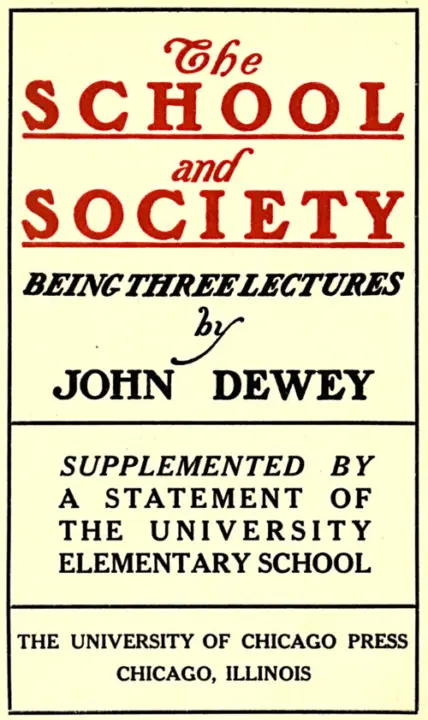
John Dewey
BEHIND THE BOOK
This eBook is for the use of anyone anywhere in the United States and most other parts of the world at no cost and with almost no restrictions whatsoever. You may copy it, give it away or re-use it under the terms of the Project Gutenberg License included with this eBook or online at www.gutenberg.org. If you are not located in the United States, you will have to check the laws of the country where you are located before using this eBook. Read the source licence.
The original source file, including credits and licence, is retained by this library. Request an original-format copy at no charge. Please include the book title and Project Gutenberg identifier #39551.
KEEP YOUR CURIOSITY GOING

David Patterson (Spirit) Hatch
Coulson Kernahan

Ralph Waldo Emerson
Frances Wright
Edwin Abbott Abbott

Joseph Droz