THE CLASSIC COLLECTION✦Hawthorne (English Men of Letters Series)CLASSIC FREE BOOKS
Hawthorne (English Men of Letters Series)
Henry James
THE CLASSIC COLLECTION · 1875
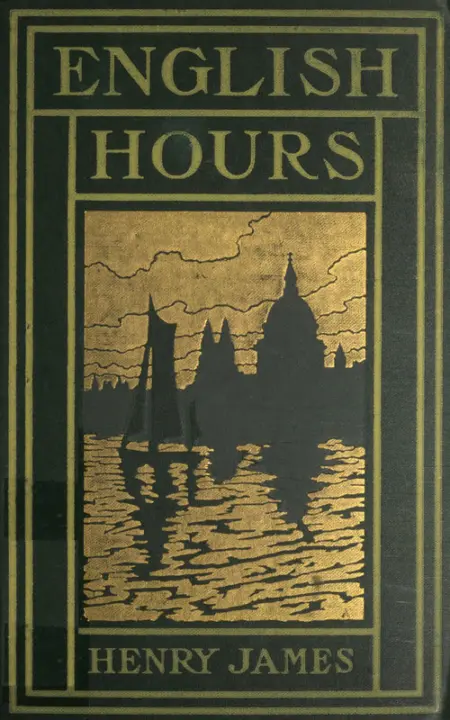
"English Hours" by Henry James is a collection of travel essays published in 1905. Drawing from more than thirty years of writing about England, James chronicles his experiences in his adopted country, from London's "greasy" streets to the pastoral countryside of Devon, Warwickshire, and Suffolk. With knowing affection, he captures both the "dreadful, delightful" British capital and the quiet charms of rural towns like Rye, offering readers an intimate portrait of Victorian and Edwardian England through American eyes.
Introduction adapted from the source catalogue; source summaries may be automatically generated.
Free to read · English · 76,282 words · No account needed
MAKE TIME FOR A GOOD BOOK
On by default. Untick to stop anonymous reading totals. Each page counts after 10 seconds in view. How this works.
Anonymous counting is on unless you have switched it off.
DUNWICH, August 31, 1879.
Abergavenny, 247.
“Adam Bede,” locality of, 216, 217.
Aldeburgh, birthplace of Crabbe, 323, 324.
Apsley House, 20, 21.
Arnold, Matthew, 24;
“The Sick King in Bokhara,” quoted, 29.
Avon River, 90.
Baillie, Joanna, 44.
Banbury, 218.
Becket, Thomas A’, his assassination at Canterbury, 149, 150;
his shrine, 150, 151.
Belgravia, 15, 16; in dog-days, 154.
Blackheath, the Common, 168.
Black Prince, the (see Edward Plantagenet).
Blunderstone, 318, 319.
Bonchurch, 253, 254.
Brighton, 278;
gaiety of, 279.
Broughton Castle, 219, 220.
Browning, Robert, 51-59.
Buckingham Palace, 21, 23.
Bury St. Edmunds, 266;
ruined abbey at, 267.
Cambridge University, famous chapel of King’s College, 264, 265.
Cambridgeshire, Newmarket Heath, 265, 266;
shooting-boxes in, 266;
Bury St. Edmunds, 266, 267.
Canterbury, 142;
the cathedral, 147-152;
King’s School, 148, 149;
where Becket was killed, 149, 150;
tomb of the Black Prince, 150;
Lady Chapel, 151;
the pilgrimage to, 151.
Charing Cross, 7;
railway station, 42.
Chatsworth, 87.
Chaucer, his story-telling cavalcade, 151.
Chelsea, 42, 43.
Chester, ancient wall, 62-67;
cathedral, 66, 72-76;
the Rows, 67-72;
Anglican service, 73, 74;
Canon Kingsley, 73-75.
Chichester, the cathedral, 257, 260;
an old market cross, 259.
Clapham, a classic community, 178, 179.
Climate, richness of London, 17.
Compton Wyniates, 220.
Coventry, charity foundations, 210, 212, 213.
Crabbe, George, birthplace of, 323, 324.
“Daniel Deronda,” recalled in Warwickshire, 202, 203.
“David Copperfield,” 290;
retrospective pictures in, 65;
sleeps under a cannon at Chatham, 145;
his birthplace visited, 317, 318;
home of the Peggottys, 319.
“Denis Duval,” locality of, 288-315.
Devonshire, beauties of, 93, 94.
Dickens, Charles, retrospective pictures in “David Copperfield,”
65;
his Gadshill house, 143;
recalled by talkative shopkeeper, 144;
background of “Oliver Twist” identified, 274;
birthplace of David visited, 317, 318.
Doré, Gustave, his drawing suggested by Devon seacoast, 104.
Dover, 142.
Du Maurier, George, 19.
Dunwich, a desolate seaport, 320-322;
ruins of, 322, 323;
FitzGerald’s tribute to quaintness of, 323;
the Priory, 326;
inroads of the sea, 326, 327;
rural merry-making, 327, 328.
Edward Plantagenet, his tomb, 150;
“Fleur-de-Lis” inn named in honour of, 151;
in the sea-fight off Winchelsea, 310.
Edward III, fights Spaniards off Winchelsea, 310, 311.
Eliot, George, characters in “Daniel Deronda” suggested, 202, 203; locality of “Adam Bede” and “Middlemarch,” 216, 217.
England, its social discipline, 121, 122;
universal church-going, 123-125;
social usages, 125, 126;
Easter exodus from London, 126;
holiday spirit, 128, 129;
Passion Week, 130-138;
its people handsome, 136-138;
its poverty depressing, 137;
proletariat funeral, 138-141;
no public entertainments, 157-159;
prestige of, 170-173;
the Egyptian occupation, 172, 173;
Derby Day, 175-188;
the country the basis of society, 176;
a rural Sunday, 204, 205;
types of English beauty, 206-208;
rural scenery, 225-230;
an English New Year, 269-275;
watering-places in winter, 277-286.
Epsom, Derby Day, 175-188.
Exeter, the cathedral, 95-97.
FitzGerald, Edward, tribute to Suffolk in his “Letters,” 323; fond of Crabbe’s birthplace, 323, 324.
Fletcher, John, born at Rye, 309.
Fog, London, 32, 33, 35, 131, 272.
Foster, Birket, 327.
Gladstone, William Ewart, speech on Egyptian occupation, 173.
Glastonbury, 115, 116;
ruined abbey of, 115-117.
Green Park, 21-23.
Greenwich, 43;
dining at, 161-163;
river excursion to, 164, 165;
observatory and park, 166.
Grosvenor Place, 21.
Haddon Hall, 83-87.
Hampstead, 43, 44.
Hastings, 277;
a little London, 278, 279;
inns and hotels, 280-284;
a quiet retreat, 285, 286.
“Henry Esmond,” lines from, recalled, 5, 6;
its Kensington setting, 44.
Hyde Park, 18;
the Row, 19, 20;
the Corner, 20-23, 46;
in dog-days, 153.
Ilfracombe, 97-101.
“Ingoldsby Legends,” an incident suggests, 5.
Isle of Wight, detestable railways of, 251;
Ryde, 251;
Ventnor, 251-253;
Bonchurch, 253, 254;
Shanklin, 254.
Your reading position is saved on this browser. Take it to another device with a library code. Reading pages adapt to text, rather than matching a printed edition.
Henry James
Henry James
Henry James

Henry James
BEHIND THE BOOK
This eBook is for the use of anyone anywhere in the United States and most other parts of the world at no cost and with almost no restrictions whatsoever. You may copy it, give it away or re-use it under the terms of the Project Gutenberg License included with this eBook or online at www.gutenberg.org. If you are not located in the United States, you will have to check the laws of the country where you are located before using this eBook. Read the source licence.
The original source file, including credits and licence, is retained by this library. Request an original-format copy at no charge. Please include the book title and Project Gutenberg identifier #58938.
KEEP YOUR CURIOSITY GOING
Wilfrid Scawen Blunt
Wilfrid Scawen Blunt

E. W. (Edgar Watson) Howe

David Patterson (Spirit) Hatch

David Patterson (Spirit) Hatch

David Patterson (Spirit) Hatch