THE CLASSIC COLLECTION✦Duologues and scenes from the novels of Jane AustenCLASSIC FREE BOOKS
Duologues and scenes from the novels of Jane Austen
Rosina Filippi & Jane Austen
THE CLASSIC COLLECTION · 1815
"Emma" by Jane Austen is a novel published in December 1815. Set in the village of Highbury, it follows Emma Woodhouse, a privileged young woman who fancies herself a matchmaker. Confident in her abilities, Emma meddles in the romantic lives of those around her, particularly her new friend Harriet Smith. But her misguided interventions lead to misunderstandings, hurt feelings, and unexpected revelations. Through a series of social missteps and romantic entanglements, Emma must confront her own blindness about matters of the heart.
Introduction adapted from the source catalogue; source summaries may be automatically generated.
Free to read · English · 161,533 words · No account needed
MAKE TIME FOR A GOOD BOOK
On by default. Untick to stop anonymous reading totals. Each page counts after 10 seconds in view. How this works.
Anonymous counting is on unless you have switched it off.
Time passed on. A few more to-morrows, and the party from London would be arriving. It was an alarming change; and Emma was thinking of it one morning, as what must bring a great deal to agitate and grieve her, when Mr. Knightley came in, and distressing thoughts were put by. After the first chat of pleasure he was silent; and then, in a graver tone, began with,
“I have something to tell you, Emma; some news.”
“Good or bad?” said she, quickly, looking up in his face.
“I do not know which it ought to be called.”
“Oh! good I am sure.—I see it in your countenance. You are trying not
to smile.”
“I am afraid,” said he, composing his features, “I am very much afraid, my dear Emma, that you will not smile when you hear it.”
“Indeed! but why so?—I can hardly imagine that any thing which pleases or amuses you, should not please and amuse me too.”
“There is one subject,” he replied, “I hope but one, on which we do not think alike.” He paused a moment, again smiling, with his eyes fixed on her face. “Does nothing occur to you?—Do not you recollect?—Harriet Smith.”
Her cheeks flushed at the name, and she felt afraid of something,
though she knew not what.
“Have you heard from her yourself this morning?” cried he. “You have, I believe, and know the whole.”
“No, I have not; I know nothing; pray tell me.”
“You are prepared for the worst, I see—and very bad it is. Harriet Smith marries Robert Martin.”
Emma gave a start, which did not seem like being prepared—and her eyes, in eager gaze, said, “No, this is impossible!” but her lips were closed.
“It is so, indeed,” continued Mr. Knightley; “I have it from Robert Martin himself. He left me not half an hour ago.”
She was still looking at him with the most speaking amazement.
“You like it, my Emma, as little as I feared.—I wish our opinions were the same. But in time they will. Time, you may be sure, will make one or the other of us think differently; and, in the meanwhile, we need not talk much on the subject.”
“You mistake me, you quite mistake me,” she replied, exerting herself. “It is not that such a circumstance would now make me unhappy, but I cannot believe it. It seems an impossibility!—You cannot mean to say, that Harriet Smith has accepted Robert Martin. You cannot mean that he has even proposed to her again—yet. You only mean, that he intends it.”
Your reading position is saved on this browser. Take it to another device with a library code. Reading pages adapt to text, rather than matching a printed edition.
Rosina Filippi & Jane Austen
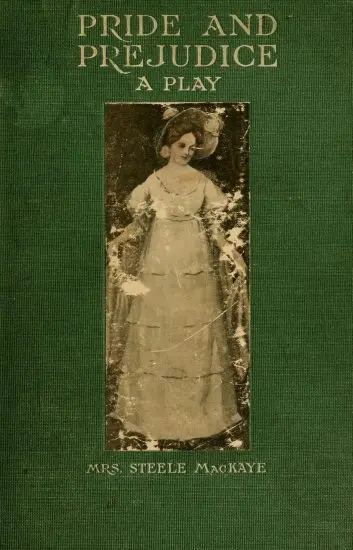
Steele, Mrs. MacKaye & Jane Austen
Jane Austen
Jane Austen
BEHIND THE BOOK
This eBook is for the use of anyone anywhere in the United States and most other parts of the world at no cost and with almost no restrictions whatsoever. You may copy it, give it away or re-use it under the terms of the Project Gutenberg License included with this eBook or online at www.gutenberg.org. If you are not located in the United States, you will have to check the laws of the country where you are located before using this eBook. Read the source licence.
The original source file, including credits and licence, is retained by this library. Request an original-format copy at no charge. Please include the book title and Project Gutenberg identifier #158.
KEEP YOUR CURIOSITY GOING
Coulson Kernahan

Maurice Baring
Frances Wright
Cécile Tormay

Frederic Jesup Stimson

W. H. P. (William Henry Pope) Jarvis