THE CLASSIC COLLECTION✦Duologues and scenes from the novels of Jane AustenCLASSIC FREE BOOKS
Duologues and scenes from the novels of Jane Austen
Rosina Filippi & Jane Austen
THE CLASSIC COLLECTION · 1815
"Emma" by Jane Austen is a novel published in December 1815. Set in the village of Highbury, it follows Emma Woodhouse, a privileged young woman who fancies herself a matchmaker. Confident in her abilities, Emma meddles in the romantic lives of those around her, particularly her new friend Harriet Smith. But her misguided interventions lead to misunderstandings, hurt feelings, and unexpected revelations. Through a series of social missteps and romantic entanglements, Emma must confront her own blindness about matters of the heart.
Introduction adapted from the source catalogue; source summaries may be automatically generated.
Free to read · English · 161,533 words · No account needed
MAKE TIME FOR A GOOD BOOK
On by default. Untick to stop anonymous reading totals. Each page counts after 10 seconds in view. How this works.
Anonymous counting is on unless you have switched it off.
“If I made myself intelligible yesterday, this letter will be expected; but expected or not, I know it will be read with candour and indulgence.—You are all goodness, and I believe there will be need of even all your goodness to allow for some parts of my past conduct.—But I have been forgiven by one who had still more to resent. My courage rises while I write. It is very difficult for the prosperous to be humble. I have already met with such success in two applications for pardon, that I may be in danger of thinking myself too sure of yours, and of those among your friends who have had any ground of offence.—You must all endeavour to comprehend the exact nature of my situation when I first arrived at Randalls; you must consider me as having a secret which was to be kept at all hazards. This was the fact. My right to place myself in a situation requiring such concealment, is another question. I shall not discuss it here. For my temptation to think it a right, I refer every caviller to a brick house, sashed windows below, and casements above, in Highbury. I dared not address her openly; my difficulties in the then state of Enscombe must be too well known to require definition; and I was fortunate enough to prevail, before we parted at Weymouth, and to induce the most upright female mind in the creation to stoop in charity to a secret engagement.—Had she refused, I should have gone mad.—But you will be ready to say, what was your hope in doing this?—What did you look forward to?—To any thing, every thing—to time, chance, circumstance, slow effects, sudden bursts, perseverance and weariness, health and sickness. Every possibility of good was before me, and the first of blessings secured, in obtaining her promises of faith and correspondence. If you need farther explanation, I have the honour, my dear madam, of being your husband’s son, and the advantage of inheriting a disposition to hope for good, which no inheritance of houses or lands can ever equal the value of.—See me, then, under these circumstances, arriving on my first visit to Randalls;—and here I am conscious of wrong, for that visit might have been sooner paid. You will look back and see that I did not come till Miss Fairfax was in Highbury; and as you were the person slighted, you will forgive me instantly; but I must work on my father’s compassion, by reminding him, that so long as I absented myself from his house, so long I lost the blessing of knowing you. My behaviour, during the very happy fortnight which I spent with you, did not, I hope, lay me open to reprehension, excepting on one point. And now I come to the principal, the only important part of my conduct while belonging to you, which excites my own anxiety, or requires very solicitous explanation. With the greatest respect, and the warmest friendship, do I mention Miss Woodhouse; my father perhaps will think I ought to add, with the deepest humiliation.—A few words which dropped from him yesterday spoke his opinion, and some censure I acknowledge myself liable to.—My behaviour to Miss Woodhouse indicated, I believe, more than it ought.—In order to assist a concealment so essential to me, I was led on to make more than an allowable use of the sort of intimacy into which we were immediately thrown.—I cannot deny that Miss Woodhouse was my ostensible object—but I am sure you will believe the declaration, that had I not been convinced of her indifference, I would not have been induced by any selfish views to go on.—Amiable and delightful as Miss Woodhouse is, she never gave me the idea of a young woman likely to be attached; and that she was perfectly free from any tendency to being attached to me, was as much my conviction as my wish.—She received my attentions with an easy, friendly, goodhumoured playfulness, which exactly suited me. We seemed to understand each other. From our relative situation, those attentions were her due, and were felt to be so.—Whether Miss Woodhouse began really to understand me before the expiration of that fortnight, I cannot say;—when I called to take leave of her, I remember that I was within a moment of confessing the truth, and I then fancied she was not without suspicion; but I have no doubt of her having since detected me, at least in some degree.—She may not have surmised the whole, but her quickness must have penetrated a part. I cannot doubt it. You will find, whenever the subject becomes freed from its present restraints, that it did not take her wholly by surprize. She frequently gave me hints of it. I remember her telling me at the ball, that I owed Mrs. Elton gratitude for her attentions to Miss Fairfax.—I hope this history of my conduct towards her will be admitted by you and my father as great extenuation of what you saw amiss. While you considered me as having sinned against Emma Woodhouse, I could deserve nothing from either. Acquit me here, and procure for me, when it is allowable, the acquittal and good wishes of that said Emma Woodhouse, whom I regard with so much brotherly affection, as to long to have her as deeply and as happily in love as myself.—Whatever strange things I said or did during that fortnight, you have now a key to. My heart was in Highbury, and my business was to get my body thither as often as might be, and with the least suspicion. If you remember any queernesses, set them all to the right account.—Of the pianoforte so much talked of, I feel it only necessary to say, that its being ordered was absolutely unknown to Miss F—, who would never have allowed me to send it, had any choice been given her.—The delicacy of her mind throughout the whole engagement, my dear madam, is much beyond my power of doing justice to. You will soon, I earnestly hope, know her thoroughly yourself.—No description can describe her. She must tell you herself what she is—yet not by word, for never was there a human creature who would so designedly suppress her own merit.—Since I began this letter, which will be longer than I foresaw, I have heard from her.—She gives a good account of her own health; but as she never complains, I dare not depend. I want to have your opinion of her looks. I know you will soon call on her; she is living in dread of the visit. Perhaps it is paid already. Let me hear from you without delay; I am impatient for a thousand particulars. Remember how few minutes I was at Randalls, and in how bewildered, how mad a state: and I am not much better yet; still insane either from happiness or misery. When I think of the kindness and favour I have met with, of her excellence and patience, and my uncle’s generosity, I am mad with joy: but when I recollect all the uneasiness I occasioned her, and how little I deserve to be forgiven, I am mad with anger. If I could but see her again!—But I must not propose it yet. My uncle has been too good for me to encroach.—I must still add to this long letter. You have not heard all that you ought to hear. I could not give any connected detail yesterday; but the suddenness, and, in one light, the unseasonableness with which the affair burst out, needs explanation; for though the event of the 26th ult., as you will conclude, immediately opened to me the happiest prospects, I should not have presumed on such early measures, but from the very particular circumstances, which left me not an hour to lose. I should myself have shrunk from any thing so hasty, and she would have felt every scruple of mine with multiplied strength and refinement.—But I had no choice. The hasty engagement she had entered into with that woman—Here, my dear madam, I was obliged to leave off abruptly, to recollect and compose myself.—I have been walking over the country, and am now, I hope, rational enough to make the rest of my letter what it ought to be.—It is, in fact, a most mortifying retrospect for me. I behaved shamefully. And here I can admit, that my manners to Miss W., in being unpleasant to Miss F., were highly blameable. She disapproved them, which ought to have been enough.—My plea of concealing the truth she did not think sufficient.—She was displeased; I thought unreasonably so: I thought her, on a thousand occasions, unnecessarily scrupulous and cautious: I thought her even cold. But she was always right. If I had followed her judgment, and subdued my spirits to the level of what she deemed proper, I should have escaped the greatest unhappiness I have ever known.—We quarrelled.— Do you remember the morning spent at Donwell?—There every little dissatisfaction that had occurred before came to a crisis. I was late; I met her walking home by herself, and wanted to walk with her, but she would not suffer it. She absolutely refused to allow me, which I then thought most unreasonable. Now, however, I see nothing in it but a very natural and consistent degree of discretion. While I, to blind the world to our engagement, was behaving one hour with objectionable particularity to another woman, was she to be consenting the next to a proposal which might have made every previous caution useless?—Had we been met walking together between Donwell and Highbury, the truth must have been suspected.—I was mad enough, however, to resent.—I doubted her affection. I doubted it more the next day on Box Hill; when, provoked by such conduct on my side, such shameful, insolent neglect of her, and such apparent devotion to Miss W., as it would have been impossible for any woman of sense to endure, she spoke her resentment in a form of words perfectly intelligible to me.—In short, my dear madam, it was a quarrel blameless on her side, abominable on mine; and I returned the same evening to Richmond, though I might have staid with you till the next morning, merely because I would be as angry with her as possible. Even then, I was not such a fool as not to mean to be reconciled in time; but I was the injured person, injured by her coldness, and I went away determined that she should make the first advances.—I shall always congratulate myself that you were not of the Box Hill party. Had you witnessed my behaviour there, I can hardly suppose you would ever have thought well of me again. Its effect upon her appears in the immediate resolution it produced: as soon as she found I was really gone from Randalls, she closed with the offer of that officious Mrs. Elton; the whole system of whose treatment of her, by the bye, has ever filled me with indignation and hatred. I must not quarrel with a spirit of forbearance which has been so richly extended towards myself; but, otherwise, I should loudly protest against the share of it which that woman has known.—‘Jane,’ indeed!—You will observe that I have not yet indulged myself in calling her by that name, even to you. Think, then, what I must have endured in hearing it bandied between the Eltons with all the vulgarity of needless repetition, and all the insolence of imaginary superiority. Have patience with me, I shall soon have done.—She closed with this offer, resolving to break with me entirely, and wrote the next day to tell me that we never were to meet again.—She felt the engagement to be a source of repentance and misery to each: she dissolved it.—This letter reached me on the very morning of my poor aunt’s death. I answered it within an hour; but from the confusion of my mind, and the multiplicity of business falling on me at once, my answer, instead of being sent with all the many other letters of that day, was locked up in my writing-desk; and I, trusting that I had written enough, though but a few lines, to satisfy her, remained without any uneasiness.—I was rather disappointed that I did not hear from her again speedily; but I made excuses for her, and was too busy, and—may I add?—too cheerful in my views to be captious.—We removed to Windsor; and two days afterwards I received a parcel from her, my own letters all returned!—and a few lines at the same time by the post, stating her extreme surprize at not having had the smallest reply to her last; and adding, that as silence on such a point could not be misconstrued, and as it must be equally desirable to both to have every subordinate arrangement concluded as soon as possible, she now sent me, by a safe conveyance, all my letters, and requested, that if I could not directly command hers, so as to send them to Highbury within a week, I would forward them after that period to her at—: in short, the full direction to Mr. Smallridge’s, near Bristol, stared me in the face. I knew the name, the place, I knew all about it, and instantly saw what she had been doing. It was perfectly accordant with that resolution of character which I knew her to possess; and the secrecy she had maintained, as to any such design in her former letter, was equally descriptive of its anxious delicacy. For the world would not she have seemed to threaten me.—Imagine the shock; imagine how, till I had actually detected my own blunder, I raved at the blunders of the post.—What was to be done?—One thing only.—I must speak to my uncle. Without his sanction I could not hope to be listened to again.—I spoke; circumstances were in my favour; the late event had softened away his pride, and he was, earlier than I could have anticipated, wholly reconciled and complying; and could say at last, poor man! with a deep sigh, that he wished I might find as much happiness in the marriage state as he had done.—I felt that it would be of a different sort.—Are you disposed to pity me for what I must have suffered in opening the cause to him, for my suspense while all was at stake?—No; do not pity me till I reached Highbury, and saw how ill I had made her. Do not pity me till I saw her wan, sick looks.—I reached Highbury at the time of day when, from my knowledge of their late breakfast hour, I was certain of a good chance of finding her alone.—I was not disappointed; and at last I was not disappointed either in the object of my journey. A great deal of very reasonable, very just displeasure I had to persuade away. But it is done; we are reconciled, dearer, much dearer, than ever, and no moment’s uneasiness can ever occur between us again. Now, my dear madam, I will release you; but I could not conclude before. A thousand and a thousand thanks for all the kindness you have ever shewn me, and ten thousand for the attentions your heart will dictate towards her.—If you think me in a way to be happier than I deserve, I am quite of your opinion.—Miss W. calls me the child of good fortune. I hope she is right.—In one respect, my good fortune is undoubted, that of being able to subscribe myself,
Your reading position is saved on this browser. Take it to another device with a library code. Reading pages adapt to text, rather than matching a printed edition.
Rosina Filippi & Jane Austen
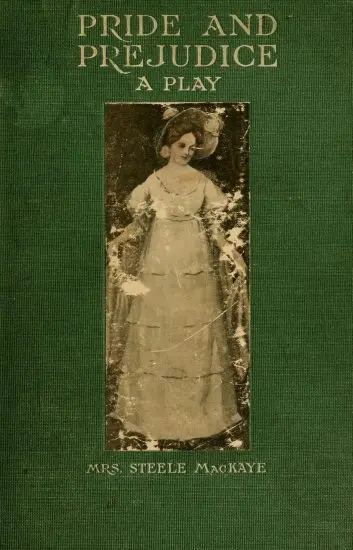
Steele, Mrs. MacKaye & Jane Austen
Jane Austen
Jane Austen
BEHIND THE BOOK
This eBook is for the use of anyone anywhere in the United States and most other parts of the world at no cost and with almost no restrictions whatsoever. You may copy it, give it away or re-use it under the terms of the Project Gutenberg License included with this eBook or online at www.gutenberg.org. If you are not located in the United States, you will have to check the laws of the country where you are located before using this eBook. Read the source licence.
The original source file, including credits and licence, is retained by this library. Request an original-format copy at no charge. Please include the book title and Project Gutenberg identifier #158.
KEEP YOUR CURIOSITY GOING
Coulson Kernahan

Maurice Baring
Frances Wright
Cécile Tormay

Frederic Jesup Stimson

W. H. P. (William Henry Pope) Jarvis