
Elsie’s Friends at Woodburn
Martha Finley
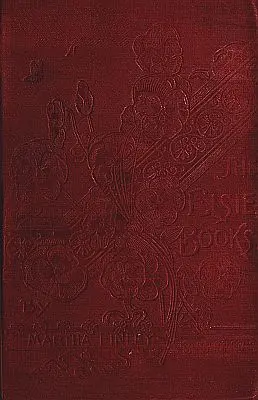
THE CLASSIC COLLECTION · 1892
"Elsie at Viamede" by Martha Finley is a novel written in the late 19th century that continues the saga of the beloved character, Elsie Dinsmore, as she navigates life and family matters at the scenic location of Viamede. The narrative intertwines personal experiences with historical recounts, especially centered around the War of 1812, reflecting on themes of patriotism, family, and moral development. The story primarily focuses on Elsie and her familial relationships, presenting her character growth and insights into American history. At the start of the book, the setting is introduced as a picturesque evening at Viamede, where the family gathers on the veranda after tea. Young Rosie expresses her desire to hear a historical account, leading to Captain Raymond recounting the story of Jackson's defense of New Orleans during the War of 1812. The opening details the initiations into this historical narrative, with characters engaging in a dialogue about historical figures, thereby blending the personal dynamic of the family with moments of educational storytelling. The storyline establishes not only the charm of familial interactions but also the importance of history in shaping their identities and values.
Introduction adapted from the source catalogue; source summaries may be automatically generated.
Free to read · English · 63,758 words · No account needed
MAKE TIME FOR A GOOD BOOK
On by default. Untick to stop anonymous reading totals. Each page counts after 10 seconds in view. How this works.
Anonymous counting is on unless you have switched it off.
IT was only the next day after the departure of Betty and her husband that a letter was received by Mrs. Cyril Keith, informing her of the death of her aunt Delaford, leaving the bulk of her large fortune to her, and a fat legacy to each of the Conley brothers--Calhoun, Arthur, Walter, and Ralph--and the sisters Virginia and Ella.
Isadore was well satisfied with the provisions of the will, as were the others also, with the exception of Virginia, who frowned and grumbled audibly that she herself might have been made to share equally with Isadore, who had a good home and husband already, therefore really needed less than herself, "lone and lorn, and poor as a church mouse."
"But you have no children, Virgie," said her cousin Elsie, in whose presence the remark was made, "no one to support but yourself; and the interest of this money will be sufficient for your comfortable maintenance."
"Possibly, if I had a home, as Isa has; but not without," returned Virginia in a pettish tone, while her eyes flashed angrily.
Elsie bore patiently with the rebuff, and said no more at that time, but considered the matter earnestly, carefully, and prayerfully, in the privacy of her own room, then had a talk about it with her father, without whose approval she seldom took a step of any great importance.
Finding him alone on the veranda, "Papa," she said, taking a seat by his side, "I want a few minutes' chat with you before we are joined by anyone else. You heard Virginia's complaint of yesterday--that she had no home of her own. I have been thinking it over, also of the fact that Dick and Bob are in the same condition, and it has occurred to me that I might invite them to take possession here while we are absent at our more northern home, giving employment to the servants, keeping the house in repair, and the grounds in order; that is, merely overseeing the work and looking to me for the means necessary to cover the expense, I to retain my present satisfactory overseer, and pay his wages out of the returns from the crops; also those of the laborers."
"You mean that you would simply give a home here to your cousins?" returned Mr. Dinsmore interrogatively.
"Yes, sir; a home without expense--except, perhaps, some small increase of the wages of the servants in consideration of the additional work made for them, and a share of the fruits, vegetables, fowls, and so forth, raised upon the plantation."
"A share? meaning all they might want to use? the 'and so forth' I suppose, meaning milk, cream, butter, and eggs?"
"Yes, sir."
Your reading position is saved on this browser. Take it to another device with a library code. Reading pages adapt to text, rather than matching a printed edition.
Martha Finley

Martha Finley

Martha Finley

Martha Finley
BEHIND THE BOOK
This eBook is for the use of anyone anywhere in the United States and most other parts of the world at no cost and with almost no restrictions whatsoever. You may copy it, give it away or re-use it under the terms of the Project Gutenberg License included with this eBook or online at www.gutenberg.org. If you are not located in the United States, you will have to check the laws of the country where you are located before using this eBook. Read the source licence.
The original source file, including credits and licence, is retained by this library. Request an original-format copy at no charge. Please include the book title and Project Gutenberg identifier #32225.
KEEP YOUR CURIOSITY GOING
Cécile Tormay

Moritz Busch
Coulson Kernahan
John L. Ransom

Maurice Baring
Frances Wright