
Elsie’s Friends at Woodburn
Martha Finley
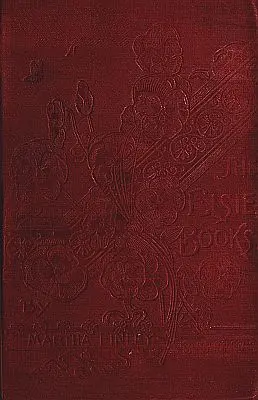
THE CLASSIC COLLECTION · 1892
"Elsie at Viamede" by Martha Finley is a novel written in the late 19th century that continues the saga of the beloved character, Elsie Dinsmore, as she navigates life and family matters at the scenic location of Viamede. The narrative intertwines personal experiences with historical recounts, especially centered around the War of 1812, reflecting on themes of patriotism, family, and moral development. The story primarily focuses on Elsie and her familial relationships, presenting her character growth and insights into American history. At the start of the book, the setting is introduced as a picturesque evening at Viamede, where the family gathers on the veranda after tea. Young Rosie expresses her desire to hear a historical account, leading to Captain Raymond recounting the story of Jackson's defense of New Orleans during the War of 1812. The opening details the initiations into this historical narrative, with characters engaging in a dialogue about historical figures, thereby blending the personal dynamic of the family with moments of educational storytelling. The storyline establishes not only the charm of familial interactions but also the importance of history in shaping their identities and values.
Introduction adapted from the source catalogue; source summaries may be automatically generated.
Free to read · English · 63,758 words · No account needed
MAKE TIME FOR A GOOD BOOK
On by default. Untick to stop anonymous reading totals. Each page counts after 10 seconds in view. How this works.
Anonymous counting is on unless you have switched it off.
"Indeed, sir, I didna think I filled the place so ill that room could be found in it for another mon!" exclaimed Mr. Lilburn, again raising his eyebrows like one astonished, then sending a downward glance over his own portly person, and assuming so comical an expression of countenance that no one could see it without smiling or laughing outright.
So fully was he absorbing the attention of all that no one noticed the return of Nero until words were again heard apparently issuing from his lips.
"That was a nice morsel, master, but not enough to satisfy the appetite of a dog of my size; so another bit, sir, if you please."
"Yes, sir, you shall have it, since you ask so politely," returned Mr. Embury, handing him another and larger piece of the chicken, "but carry it off where there will be no danger of contact with wedding finery."
Nero obeyed, and as he trotted away, a voice that seemed to come from behind Mr. Embury, said whiningly:
"I'm hungry too, sir, and surely a human creature should be treated at
least as well as a dog."
At that Mr. Embury turned suddenly round as if to see the speaker, nearly everyone else doing likewise, but no beggar was in sight.
"Well, sir," he said, "I cannot give to an invisible suppliant; show yourself if you want anything."
"Sir," replied the voice, now seeming to come from a clump of bushes near at hand, "I'm not used to begging, and don't want to be seen. Can you not send a servant here with a plateful of your most toothsome viands?"
"Quite a modest request, sir," returned Mr. Embury, laughing. "But I think you will have to wait till the servants have more leisure; at present they are all fully occupied in waiting upon my guests."
"But then you'll let him have something to eat, won't you, papa?" pleaded little Mary Embury. "You never do turn anybody away hungry."
"Certainly not, little daughter; if he could be found he should be fed."
"But shan't I drive him out, sir?" queried a servant man; "we doan' want no beggahs 'bout yar. Dey mout help deirselfs to some o' de silvah when nobody aint lookin'."
"Well, Bill, you might drive him out; he's perhaps a tramp watching his opportunity to help himself."
Bill, well pleased with the errand, set down with alacrity the dish he carried, and hurried toward the clump of bushes that apparently concealed the tramp. "Ki, you ole tief you!" he cried, "git long out ob dis; nobody doan' want yo' hyar! I'se break yo' skull fo' yo' ef ye doan be gone putty quick!"
Your reading position is saved on this browser. Take it to another device with a library code. Reading pages adapt to text, rather than matching a printed edition.
Martha Finley

Martha Finley

Martha Finley

Martha Finley
BEHIND THE BOOK
This eBook is for the use of anyone anywhere in the United States and most other parts of the world at no cost and with almost no restrictions whatsoever. You may copy it, give it away or re-use it under the terms of the Project Gutenberg License included with this eBook or online at www.gutenberg.org. If you are not located in the United States, you will have to check the laws of the country where you are located before using this eBook. Read the source licence.
The original source file, including credits and licence, is retained by this library. Request an original-format copy at no charge. Please include the book title and Project Gutenberg identifier #32225.
KEEP YOUR CURIOSITY GOING
Cécile Tormay

Moritz Busch
Coulson Kernahan
John L. Ransom

Maurice Baring
Frances Wright