
The Writing of News A Handbook with Chapters on Newspaper Correspondence and Copy Reading
Charles G. (Charles Griffith) Ross
THE CLASSIC COLLECTION · 1877
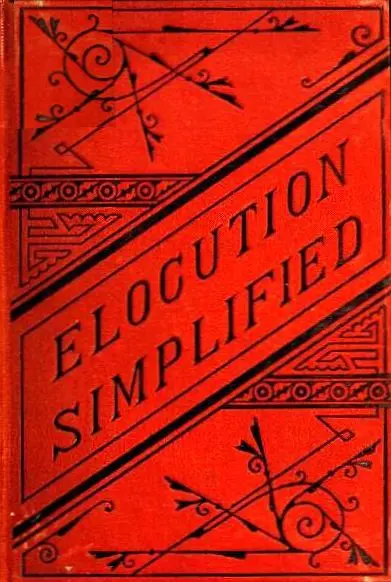
"Elocution Simplified" by Walter K. Fobes is an instructional guide on the art of elocution written in the late 19th century. This manual is designed to provide practical techniques for improving reading and speaking skills, catering to those interested in oratory, public speaking, and overcoming speech defects. Fobes emphasizes the importance of both physical and vocal exercises to cultivate effective speech, aiming to make the art of elocution accessible to a wide audience. The opening of the book begins with a preface that establishes the necessity of elocution, arguing that there is a lack of accessible resources addressing this skill. Fobes outlines the structure of the manual, which includes sections on physical and vocal gymnastics as foundational elements for effective speech. The introduction highlights the value of good reading as an elegant accomplishment, essential for various professions including clergy, teachers, and public speakers. Fobes aims to equip readers with techniques that promote clarity, expression, and confidence in communicating thoughts and feelings, making a compelling case for the importance of mastering elocution.
Introduction adapted from the source catalogue; source summaries may be automatically generated.
Free to read · English · 27,588 words · No account needed
MAKE TIME FOR A GOOD BOOK
On by default. Untick to stop anonymous reading totals. Each page counts after 10 seconds in view. How this works.
Anonymous counting is on unless you have switched it off.
Modus.--Latin, sweet cousin.
Hel.--'Tis a naughty tongue,
I fear, and teaches men to lie.
Modus.--To lie!
Hel.--You study it. You call your cousin sweet, And treat her as you would a crab. As sour 'Twould seem you think her: so you covet her! Why, how the monster stares, and looks about! You construe Latin, and can't construe that!
Modus.--I never studied women.
Hel.--No, nor men;
Else would you better know their ways, nor read
In presence of a lady.
3. "Now," said Wardle, "what say you to an hour on the ice? We shall
have plenty of time."
"Capital!" said Mr. Benjamin Allen.
"Prime!" ejaculated Mr. Bob Sawyer.
"You skate, of course, Winkle?" said Wardle.
"Ye--yes; oh, yes!" replied Mr. Winkle. "I--I am rather out of
practice."
"Oh, do skate, Mr. Winkle!" said Arabella. "I like to see it so much!"
"Oh, it is so graceful!" said another young lady.
A third young lady said it was elegant; and a fourth expressed her opinion that it was "swan-like."
"I should be very happy, I'm sure," said Mr. Winkle, reddening; "but I
have no skates."
This objection was at once overruled. Trundle had got a couple of pair, and the fat boy announced that there were half a dozen more down stairs; whereat Mr. Winkle expressed exquisite delight, and looked exquisitely uncomfortable.
See "Reading Club," No. 1, p. 56; No. 2, p. 49; No. 3, pp.
5, 38; No. 4, pp. 94, 67.
1. Tauler the preacher walked, one autumn-day, Without the walls of Strasburg, by the Rhine, Pondering the solemn miracle of life; As one who, wandering in a starless night, Feels momently the jar of unseen waves, And hears the thunder of an unknown sea Breaking along an unimagined shore.
2. The illustrious Spinola, upon hearing of the death of a friend, inquired of what disease he died. "Of having nothing to do," said the person who mentioned it. "Enough," said Spinola, "to kill a general." Not only the want of employment, but the want of care, often increases as well as brings on this disease.
3. Sir Isaac Newton was once examining a new and very fine globe, when a gentleman came into his study who did not believe in a God, but declared the world we live in came by chance. He was much pleased with the handsome globe, and asked, "Who made it?"--"Nobody," answered Sir Isaac: "it happened there." The gentleman looked up in amazement; but he soon understood what it meant.
See "Reading Club," No. 1, pp. 23, 73; No. 2, pp. 37, 44; No. 3, pp. 9, 99; No. 4, pp. 26, 49, 89.
1. The morn awakes, like brooding dove,
With outstretched wings of gray:
Thin, feathery clouds close in above,
And build a sober day.
Your reading position is saved on this browser. Take it to another device with a library code. Reading pages adapt to text, rather than matching a printed edition.
BEHIND THE BOOK
This eBook is for the use of anyone anywhere in the United States and most other parts of the world at no cost and with almost no restrictions whatsoever. You may copy it, give it away or re-use it under the terms of the Project Gutenberg License included with this eBook or online at www.gutenberg.org. If you are not located in the United States, you will have to check the laws of the country where you are located before using this eBook. Read the source licence.
The original source file, including credits and licence, is retained by this library. Request an original-format copy at no charge. Please include the book title and Project Gutenberg identifier #51109.
KEEP YOUR CURIOSITY GOING
Charles G. (Charles Griffith) Ross
Hannah Webster Foster

Emily Lawless
Edwin Hamlin Carr

Charles De Lano Hine
Andrew Ure