
The Writing of News A Handbook with Chapters on Newspaper Correspondence and Copy Reading
Charles G. (Charles Griffith) Ross
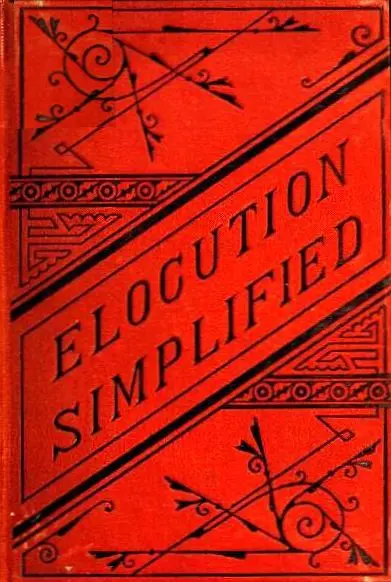
THE CLASSIC COLLECTION · 1877
"Elocution Simplified" by Walter K. Fobes is an instructional guide on the art of elocution written in the late 19th century. This manual is designed to provide practical techniques for improving reading and speaking skills, catering to those interested in oratory, public speaking, and overcoming speech defects. Fobes emphasizes the importance of both physical and vocal exercises to cultivate effective speech, aiming to make the art of elocution accessible to a wide audience. The opening of the book begins with a preface that establishes the necessity of elocution, arguing that there is a lack of accessible resources addressing this skill. Fobes outlines the structure of the manual, which includes sections on physical and vocal gymnastics as foundational elements for effective speech. The introduction highlights the value of good reading as an elegant accomplishment, essential for various professions including clergy, teachers, and public speakers. Fobes aims to equip readers with techniques that promote clarity, expression, and confidence in communicating thoughts and feelings, making a compelling case for the importance of mastering elocution.
Introduction adapted from the source catalogue; source summaries may be automatically generated.
Free to read · English · 27,588 words · No account needed
MAKE TIME FOR A GOOD BOOK
On by default. Untick to stop anonymous reading totals. Each page counts after 10 seconds in view. How this works.
Anonymous counting is on unless you have switched it off.
9. Till last by Philip's farm I flow
10. To join the brimming river;
11. For men may come, and men may go,
12. But I go on forever.
13. I chatter over stony ways
14. In little sharps and trebles;
15. I bubble into eddying bays;
16. I babble on the pebbles.
17. With many a curve my banks I fret,
18. By many a field and fallow,
19. And many a fairy foreland set
20. With willow-weed and mallow.
21. I chatter, chatter, as I flow
22. To join the brimming river;
23. For men may come, and men may go,
24. But I go on forever.
25. I wind about, and in and out,
26. With here a blossom sailing,
27. And here and there a lusty trout,
28. And here and there a grayling,
29. And here and there a foamy flake
30. Upon me as I travel;
31. With many a silvery waterbreak
32. Above the golden gravel;
33. And draw them all along, and flow,
34. To join the brimming river;
35. For men may come, and men may go,
36. But I go on forever.
37. I steal by lawns and grassy plots;
38. I slide by hazel covers;
39. I move the sweet forget-me-nots
40. That grow for happy lovers.
41. I slip, I slide, I gloom, I glance,
42. Among my skimming swallows;
43. I make the netted sunbeams dance
44. Against my sandy shallows.
45. I murmur under moon and stars
46. In brambly wildernesses;
47. I linger by my shingly bars;
48. I loiter round my cresses;
49. And out again I curve and flow
50. To join the brimming river;
51. For men may come, and men may go,
52. But I go on forever.
As a whole, this piece requires for quality of voice the pure tone; force, gentle; movement, moderate; pitch, middle; stress, median. The variations in modulation must be from these, and will be mostly variations in quality, movement, and pitch.
Lines 2 to 6. Movement, quick; pitch, high; with quality changing on words sudden, sparkle, bicker, hurry, slip, in such a way as to suggest the meaning of the word.
Lines 7 to 12. Movement, moderate; pitch, middle.
Lines 13 to 16. Movement, quick; pitch, high; the words chatter, stony, sharps, trebles, bubble, babble, spoken with suggestion of their meaning.
Lines 17 to 20. Movement, moderate; pitch, middle.
Lines 21 to 24. Movement, quick; pitch, high; make quality suggest on
chatter, brimming.
Lines 25 to 28. Movement, slow; pitch, middle; change to suggestive quality on wind, blossom, lusty.
Lines 29 to 36. Movement, moderate; pitch, middle; suggestive quality on foamy, silvery, golden, brimming.
Lines 37 to 40. Movement, slow; pitch, low; suggestive quality on steal, slide, move, happy.
Lines 41, 42. Movement, pitch, quality, all varied on words slip,
slide, gloom, glance.
Lines 43, 44. Movement, quick; pitch, high; suggestive quality on
dance, shallows.
Lines 45 to 48. Movement, slow; pitch, low; quality, very slightly aspirate; suggestive quality on murmur, linger, loiter.
Your reading position is saved on this browser. Take it to another device with a library code. Reading pages adapt to text, rather than matching a printed edition.
BEHIND THE BOOK
This eBook is for the use of anyone anywhere in the United States and most other parts of the world at no cost and with almost no restrictions whatsoever. You may copy it, give it away or re-use it under the terms of the Project Gutenberg License included with this eBook or online at www.gutenberg.org. If you are not located in the United States, you will have to check the laws of the country where you are located before using this eBook. Read the source licence.
The original source file, including credits and licence, is retained by this library. Request an original-format copy at no charge. Please include the book title and Project Gutenberg identifier #51109.
KEEP YOUR CURIOSITY GOING
Charles G. (Charles Griffith) Ross
Hannah Webster Foster

Emily Lawless
Edwin Hamlin Carr

Charles De Lano Hine
Andrew Ure