
The Writing of News A Handbook with Chapters on Newspaper Correspondence and Copy Reading
Charles G. (Charles Griffith) Ross
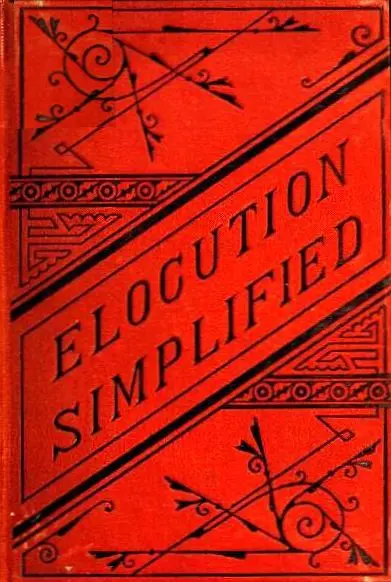
THE CLASSIC COLLECTION · 1877
"Elocution Simplified" by Walter K. Fobes is an instructional guide on the art of elocution written in the late 19th century. This manual is designed to provide practical techniques for improving reading and speaking skills, catering to those interested in oratory, public speaking, and overcoming speech defects. Fobes emphasizes the importance of both physical and vocal exercises to cultivate effective speech, aiming to make the art of elocution accessible to a wide audience. The opening of the book begins with a preface that establishes the necessity of elocution, arguing that there is a lack of accessible resources addressing this skill. Fobes outlines the structure of the manual, which includes sections on physical and vocal gymnastics as foundational elements for effective speech. The introduction highlights the value of good reading as an elegant accomplishment, essential for various professions including clergy, teachers, and public speakers. Fobes aims to equip readers with techniques that promote clarity, expression, and confidence in communicating thoughts and feelings, making a compelling case for the importance of mastering elocution.
Introduction adapted from the source catalogue; source summaries may be automatically generated.
Free to read · English · 27,588 words · No account needed
MAKE TIME FOR A GOOD BOOK
On by default. Untick to stop anonymous reading totals. Each page counts after 10 seconds in view. How this works.
Anonymous counting is on unless you have switched it off.
The changes from one kind of force to another, or one pitch to another, or one movement to another, or one quality to another, are many in expressive reading; and these changes are called "Transition." To practise it is very useful in breaking up monotony of voice, and adding expressiveness to it. In practice of these short extracts, you are showing the benefit of practice in quality, pitch, movement, and force. Put yourself into the thought and feeling, and vary the voice as that, guided by common sense, may suggest to you.
See "Reading Club," No. 1, pp. 45, 54; No. 2, pp. 5, 101; No. 3, pp. 9, 70, 87; No. 4, pp. 26, 42, 75.
1. "Make way for liberty!" he cried,--
Made way for liberty, and died!
2. "Peace be unto thee, father," Tauler said: "God give thee a good day!" The old man raised Slowly his calm blue eyes: "I thank thee, son; But all my days are good, and none are ill."
3. "They come, they come! the pale-face come!"
The chieftain shouted where he stood,
Sharp watching at the margin wood,
And gave the war-whoop's treble yell,
That like a knell on fair hearts fell
Far watching from their rocky home.
4. "Not yet, not yet: steady, steady!"
On came the foe in even line,
Nearer and nearer, to thrice paces nine.
We looked into their eyes. "Ready!"
A sheet of flame, a roll of death!
They fell by scores: we held our breath:
Then nearer still they came.
Another sheet of flame,
And brave men fled who never fled before.
5. Did ye not hear it?--No: 'twas but the wind, Or the car rattling o'er the stony street. On with the dance! let joy be unconfined! No sleep till morn, when youth and pleasure meet To chase the glowing hours with flying feet. But hark!--that heavy sound breaks in once more, As if the clouds its echo would repeat; And nearer, clearer, deadlier than before! Arm, arm! it is--it is--the cannon's opening roar!
6. "Together!" shouts Niagara his thunder-toned decree; "Together!" echo back the waves upon the Mexic Sea; "Together!" sing the sylvan hills where old Atlantic roars; "Together!" boom the breakers on the wild Pacific shores; "Together!" cry the people. And "together" it shall be, An everlasting charter-bond forever for the free! Of liberty the signet-seal, the one eternal sign, Be those united emblems,--the Palmetto and the Pine.
7. "Ho, sailor of the sea!
How's my boy,--my boy?"
"What's your boy's name, good wife?
And in what good ship sailed he?"
"My boy John,--
He that went to sea:
What care I for the ship, sailor?
My boy's my boy to me."
Your reading position is saved on this browser. Take it to another device with a library code. Reading pages adapt to text, rather than matching a printed edition.
BEHIND THE BOOK
This eBook is for the use of anyone anywhere in the United States and most other parts of the world at no cost and with almost no restrictions whatsoever. You may copy it, give it away or re-use it under the terms of the Project Gutenberg License included with this eBook or online at www.gutenberg.org. If you are not located in the United States, you will have to check the laws of the country where you are located before using this eBook. Read the source licence.
The original source file, including credits and licence, is retained by this library. Request an original-format copy at no charge. Please include the book title and Project Gutenberg identifier #51109.
KEEP YOUR CURIOSITY GOING
Charles G. (Charles Griffith) Ross
Hannah Webster Foster

Emily Lawless
Edwin Hamlin Carr

Charles De Lano Hine
Andrew Ure