
The Writing of News A Handbook with Chapters on Newspaper Correspondence and Copy Reading
Charles G. (Charles Griffith) Ross
THE CLASSIC COLLECTION · 1877
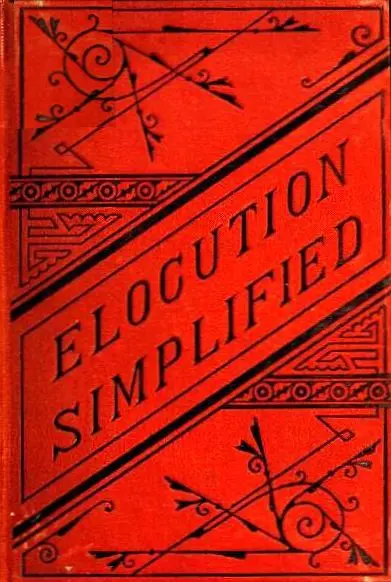
"Elocution Simplified" by Walter K. Fobes is an instructional guide on the art of elocution written in the late 19th century. This manual is designed to provide practical techniques for improving reading and speaking skills, catering to those interested in oratory, public speaking, and overcoming speech defects. Fobes emphasizes the importance of both physical and vocal exercises to cultivate effective speech, aiming to make the art of elocution accessible to a wide audience. The opening of the book begins with a preface that establishes the necessity of elocution, arguing that there is a lack of accessible resources addressing this skill. Fobes outlines the structure of the manual, which includes sections on physical and vocal gymnastics as foundational elements for effective speech. The introduction highlights the value of good reading as an elegant accomplishment, essential for various professions including clergy, teachers, and public speakers. Fobes aims to equip readers with techniques that promote clarity, expression, and confidence in communicating thoughts and feelings, making a compelling case for the importance of mastering elocution.
Introduction adapted from the source catalogue; source summaries may be automatically generated.
Free to read · English · 27,588 words · No account needed
MAKE TIME FOR A GOOD BOOK
On by default. Untick to stop anonymous reading totals. Each page counts after 10 seconds in view. How this works.
Anonymous counting is on unless you have switched it off.
Practise these sounds of vowels and articulations until you can make them forcibly and easily, with elastic movement of jaw, tongue, and lips; and remember that force depends on the strength and good control of muscles below the lungs. Then unite them by placing articulations before vowels, giving most force to the vowel, but make both clear and distinct. Then use articulations both before and after the vowel, still giving the vowel the most force, but making the articulation that begins and ends equally distinct and clear. To arrange these for your practice in this small book would take too much space. You have above each element of the English language clearly shown, and can easily combine them as directed.
1. Standing Position.
2. Speaker's "
3. Sitting Position.
4. Change "
5. Poise.
6. Rise on Toes.
7. Holding Book.
1. Active and Passive Chest.
2. Arms at Side.
3. Fore-arm Vertical.
4. Percussion. Full Arm.
5. " Hands on Chest.
1. Body bend forward and back.
2. " " right and left.
3. " turn " "
4. Neck bend forward and back.
5. " " right and left.
6. " turn " "
NOTE.--Be sure and keep ACTIVE CHEST in all vocal exercises.
1. Abdominal.
2. Costal.
3. Dorsal.
4. Puff.
5. Puff--Pause between.
6. " Breathe "
7. Holding Breath.
NOTE.--In following exercises use first long, then short vowels.
1. Glottis stroke. Who, whispered, followed by short vowels quickly
spoken.
2. Soft Tones. Use oo-oh-awe-ah first, then any other vowels.
3. Swell Tones. Use vowels as in Soft Tones.
1. Learn Musical Scale. Practise Tone Exercise on each tone within
compass of voice.
2. Chant sentences on each tone.
3. Read sentences, beginning on each tone.
1. Major, fall from different pitches.
2. " rise " "
3. " " and fall from different pitches.
4. Minor rise and fall.
5. Circumflex, rise and fall.
6. Monotone, different pitches.
1. Whisper.
2. Aspirate.
3. Pure.
4. Orotund.
NOTE.--Use exercises under Pitch, Nos. 2 and 3, with different degrees
of force.
1. Gentle.
2. Moderate.
3. Loud.
1. Radical.
2. Median.
3. Terminal.
4. Thorough.
5. Compound.
6. Tremolo.
NOTE.--Use exercises under Pitch, Nos. 2 and 3, with different rates of
movement.
1. Quick.
2. Moderate.
3. Slow.
NOTE.--Use only sounds represented by Italicized letters in the words
and letters below.
1. Elementary Sounds.
2. Syllables.
3. Words.
4. Phrases.
5. Sentences.
Long Vowels. 1. meet. 3^1. may. 5. air. 6. her. 8. ah. 10. awe. 12^{14}. oh. 12. ore. 14. woo.
Short Vowels. 2. it. 4. met. 5. at. 7. Cuba. 9. up. 11. on.
13. foot.
Diphthongs. 8^1. pie. 11^1. oil. 8^{14}. out. y14. you.
Glides. 1.--14.-r.
Articulations. Lips--p, b, m-wh, w. Lips and Teeth--f, v. Teeth and Tongue--th (thin), th (then). Tip of Tongue--t, d, n-l-r-ch, j-s, z-sh, zh. Tongue--y. Back of Tongue--k, g, ng. Whispered Vowel--h.
Your reading position is saved on this browser. Take it to another device with a library code. Reading pages adapt to text, rather than matching a printed edition.
BEHIND THE BOOK
This eBook is for the use of anyone anywhere in the United States and most other parts of the world at no cost and with almost no restrictions whatsoever. You may copy it, give it away or re-use it under the terms of the Project Gutenberg License included with this eBook or online at www.gutenberg.org. If you are not located in the United States, you will have to check the laws of the country where you are located before using this eBook. Read the source licence.
The original source file, including credits and licence, is retained by this library. Request an original-format copy at no charge. Please include the book title and Project Gutenberg identifier #51109.
KEEP YOUR CURIOSITY GOING
Charles G. (Charles Griffith) Ross
Hannah Webster Foster

Emily Lawless
Edwin Hamlin Carr

Charles De Lano Hine
Andrew Ure