
Old People and the Things That Pass
Louis Couperus
THE CLASSIC COLLECTION · 1892
"Eline Vere" by Louis Couperus is a novel written in the late 19th century. The book explores themes of beauty, youth, and societal roles through the life of the main character, Eline Vere, a sensitive and dreamy young woman navigating her relationships and ambitions in a social milieu that often feels stifling and unkind. The narrative offers a richly detailed look at the intricacies of her world, where social expectations clash with personal desires. The opening of "Eline Vere" introduces readers to a vibrant setting of a grand social event where various characters prepare for a tableau performance. Frédérique van Erlevoort, one of the performers, is assisted by Paul van Raat as she readies herself. The atmosphere is filled with excitement and a flurry of activity. Through insightful descriptions, we learn about Eline, who is later revealed as a more introspective character, feeling somewhat isolated due to her melancholic nature and her struggles with identity and purpose. Tender moments are interspersed with observations on the superficiality of social interactions, setting the stage for Eline's deeper emotional journey.
Introduction adapted from the source catalogue; source summaries may be automatically generated.
Free to read · English · 128,052 words · No account needed
MAKE TIME FOR A GOOD BOOK
On by default. Untick to stop anonymous reading totals. Each page counts after 10 seconds in view. How this works.
Anonymous counting is on unless you have switched it off.
“Oh no, if you aren’t tired, I should like another duet Really, I think it’s splendid to sing together like that. Would you venture the grand duo in Romeo?”
“Really, Eline, I don’t know it very well yet, and it is so difficult.”
“Oh, you knew it well enough the other day; if only you will sing soft and low, and not force your notes. There—you see, the whole of this passage with your medium register; don’t shout, whatever you do.”
With an anxious look he asked her for a little more advice about the piece, and she told him what to do.
“Come now, will you venture? But don’t shout; that’s frightful, and—if we do break down, what of it?”
“Well, if you like to try, I don’t mind.”
Eline’s face glowed with pleasure, and she played the soft prelude to the grand duo in the fourth act.
“Va! je t’ai pardonné, Tybalt voulait ta mort!”
she sang, with splendid delivery, and Paul answered with his recitative; then together they warbled—
“Nuit d’hyménée, o, douce nuit d’amour!”
Once more the dramatic form of the duo rose before her: Juliette’s departure; Romeo, in his brilliant dress, lying on the cushions at her feet. And it was no longer Paul, but Fabrice, the new baritone, who was the Romeo, and she let her head rest on his shoulder—
“Sous tes baisers de flamme
Le ciel rayonne en moi!”
Paul’s voice was growing very shaky and uncertain, but Eline scarcely heard it. To her imagination it was Fabrice, with his deep voice, who sang; and her song sounded full and ringing, quite forgetful as she was that she entirely eclipsed the tenor.
There—there was the warbling of the lark at daybreak, as in alarm she
asked—
“Qu’as tu donc—Roméo?”
“Ecoute, o Juliette!”
replied Paul in firmer tones, after his rest.
But to her it was not the voice of the lark, but the soft tones of the nightingale; not the first rays of the morning sun, but the silvery gleam of moonlight, and still it was Fabrice, and still the orchestra resounded in the chords she struck on her piano, as, without speaking, they sank in each other’s arms. At times, in the brief intervals, the stern reality dispelled Eline’s vision, and no longer was it the stage and Fabrice she beheld, but Paul, turning the pages. But again she revelled in the luxury of her fancies; Juliette saw the danger of Romeo’s prolonged stay, she urged him to go, and he answered—
Your reading position is saved on this browser. Take it to another device with a library code. Reading pages adapt to text, rather than matching a printed edition.
Louis Couperus
Louis Couperus

Louis Couperus
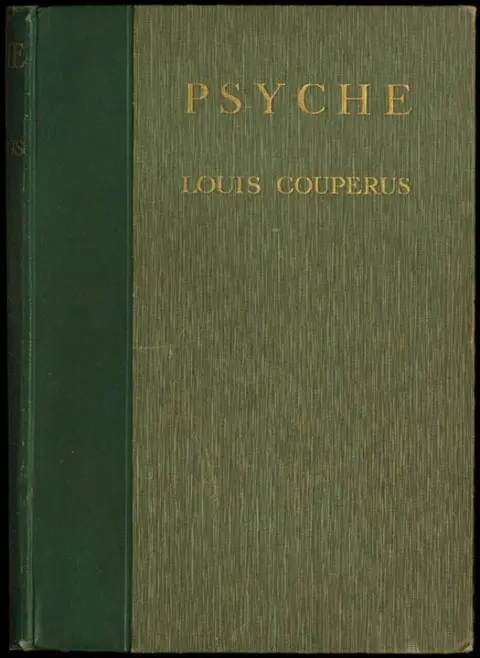
Louis Couperus
BEHIND THE BOOK
This eBook is for the use of anyone anywhere in the United States and most other parts of the world at no cost and with almost no restrictions whatsoever. You may copy it, give it away or re-use it under the terms of the Project Gutenberg License included with this eBook or online at www.gutenberg.org. If you are not located in the United States, you will have to check the laws of the country where you are located before using this eBook. Read the source licence.
The original source file, including credits and licence, is retained by this library. Request an original-format copy at no charge. Please include the book title and Project Gutenberg identifier #66911.
KEEP YOUR CURIOSITY GOING
Coulson Kernahan

Maurice Baring
Frances Wright
Cécile Tormay

Frederic Jesup Stimson

W. H. P. (William Henry Pope) Jarvis