THE CLASSIC COLLECTION✦Studies of American Fungi. Mushrooms, Edible, Poisonous, etc.CLASSIC FREE BOOKS
Studies of American Fungi. Mushrooms, Edible, Poisonous, etc.
George Francis Atkinson
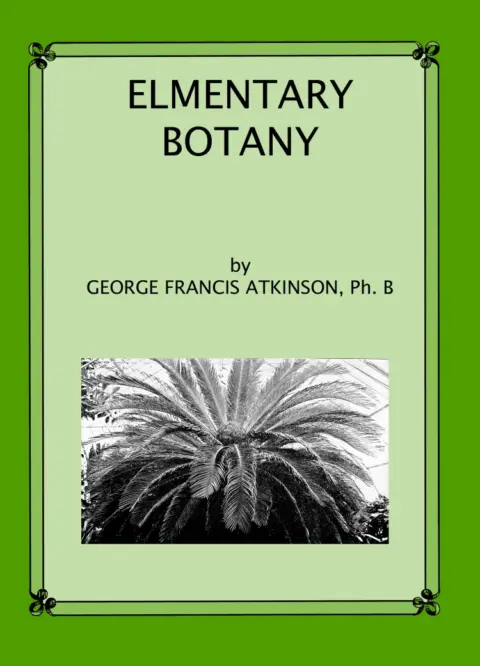
THE CLASSIC COLLECTION · 1898
"Elementary Botany" by George Francis Atkinson is a scientific publication written in the early 20th century. The work provides a comprehensive introduction to botany, focusing on plant physiology, morphology, and ecology, exploring the fundamental life processes of plants, as well as their form and function in relation to their environment. It serves as a textbook for students, particularly those in botany courses, aiming to deepen their understanding of plant life. At the start of the book, the author outlines the structure and aims of the text, detailing its organization into three main parts: physiology, morphology and life history of representative plants, and the relationship between plant members and their environment. This introductory section sets the stage for an in-depth exploration of protoplasm—the living material of plants—beginning with its study in various simple plants like "Spirogyra" and "Mucor". The opening discussions illustrate important concepts such as the properties of protoplasm, methods of observation, and initial experiments to observe plant behavior under different conditions, laying a strong foundation for the chapters that follow.
Introduction adapted from the source catalogue; source summaries may be automatically generated.
Free to read · English · 146,679 words · No account needed
MAKE TIME FOR A GOOD BOOK
On by default. Untick to stop anonymous reading totals. Each page counts after 10 seconds in view. How this works.
Anonymous counting is on unless you have switched it off.
The potato family (Solanaceæ) includes the ground-cherry (Physalis),
the nightshades (Solanum), the tomato (Lycopersicon), tobacco
(Nicotiana).
The figwort family (Scrophulariaceæ) includes the common mullein (Verbascum), the monkey-flower (Mimulus), the toad-flax (Linaria), turtle’s-head (Chelone), and many other genera and species.
The bladderwort family (Lentibulariaceæ) includes the curious bog or aquatic plants with finely dissected leaves, and with bladders in which insects are caught (Utricularia).
The trumpet-creeper family (Bignoniaceæ) includes the trumpet-creeper (Bignonia), the catalpa tree, and others.
=980. Order Plantaginales= with one family (Plantaginaceæ)
includes the plantains (Plantago).
=981. Order Rubiales= with three families is represented by the madder family (Rubiaceæ) with the bluets (Houstonia), the button-bush (Cephalanthus), the partridge-berry (Mitchella), the bedstraws (Galium), etc.
The honeysuckle family (Caprifoliaceæ) with the elder (Sambucus), the arrowwoods and cranberry trees (Viburnum), the honeysuckles (Lonicera), etc.
=982. Order Valerianales= with two families includes the teasel family (Dipsacaceæ). Example, Fuller’s teasel (Dipsacus).
=983. Order Campanulales= with five families, the corolla usually
gamopetalous.
The gourd family (Cucurbitaceæ) includes the pumpkin, squash, melon, and a few feral species. Example, the star-cucumber (Sicyos angulatus), in moist places in eastern and middle United States.
The bell-flower family (Campanulaceæ) includes the hare-bells or bell-flowers (Campanula), the lobelias (example, Lobelia cardinalis, the cardinal-flower), etc.
The chicory family (Cichoriaceæ) includes the chicory or succory (Cichorium intybus, known also as blue-sailors), the oyster-plant or salsify (Tragopogon porrifolius), the dandelion (Taraxacum taraxacum = T. densleonis), the lettuce (Lactuca), the hawkweed (Hieraceum), and others.
The ragweed family (Ambrosiaceæ) includes the ragweeds (Ambrosia), the cockle-bur (Xanthium), and others.
The thistle family (Compositæ) includes the thistle (Carduus), asters (Aster), goldenrods (Solidago), sunflowers (Helianthus), eupatoriums or joepye-weeds, thoroughworts (Eupatorium), cone-flowers or black-eyed Susans (Rudbeckia), tickseed (Coreopsis), bur-marigold or beggar-ticks or devil’s-bootjack (Bidens), chrysanthemums, etc.
Absorption, 13, 22-28
Aceraceæ, 497
Acorn, 451
Acorus, 493
Æcidiomycetes, 218
Æcidiospore, 189
Æsculus hippocastanum, 498
Agaricaceæ, 199, 219
Agaricus arvensis, 206
Agaricus campestris, 200-207
Akene, 451
Albumen, 98
Albuminous, 98, 108
Alder, 495
Algæ, 136-176
Algæ, absorption by, 22
Alismaceæ, 493
Alpine formation, 474
Alpine plant societies, 483
Amanita phalloides, 207, 208
Amaranth, 495
Amaryllidaceæ, 494
Aments, 429
American mistletoe, 495
Ampelopsis, 498
Ancylistales, 215
Andreales, 249
Andrœcium, 319, 419
Anemophilous, 435
Angiosperms, morphology of, 318-348;
classification, 487
Antheridiophore, 227
Antheridium, 144, 149, 155, 176, 223, 228,
240, 245, 246, 266, 287, 433
Anthesis, 429
Anthoceros, 240, 241
Anthocerotales, 242
Anthocerotes, 242
Apogamy, 346
Apogeotropic (ap″o-ge″o-trop´ic), 126
Apogeotropism (ap″o-ge-ot′ro-pism), 126
Apple, 456, 497
Apple family, 497
Aquatic formations, 475
Aquatic plant societies, 486
Araceæ, 493
Archegonia (ar-che-go′ni-a), 223, 229, 233, 241, 244-246,
267, 288, 291, 307, 308
Archegoniophore, 229
Archegonium, 433
Archesporium (ar″che-spo´ri-um), 235
Archidiales, 249
Arctic formation, 481
Aril, 457
Arisæma, 493
Arisæma triphyllum, 442, 443
Aristolochiales, 495
Arrow leaf, 492
Arum family, 493
Asclepias, 500
Asclepias cornuti, 462
Ascomycetes (as-co-my-ce′tes), 195-198, 216-218
Ascus, 190, 213
Ash of plants, 79, 80
Ash tree, 500
Aspidium acrostichoides, 253, 257
Assimilation, 67, 109
Aster, 502
Atriplex, 495
Auriculariales, 218
Autotrophic plants, 85
Azalea, 499
Azolla, 296
Your reading position is saved on this browser. Take it to another device with a library code. Reading pages adapt to text, rather than matching a printed edition.
BEHIND THE BOOK
This eBook is for the use of anyone anywhere in the United States and most other parts of the world at no cost and with almost no restrictions whatsoever. You may copy it, give it away or re-use it under the terms of the Project Gutenberg License included with this eBook or online at www.gutenberg.org. If you are not located in the United States, you will have to check the laws of the country where you are located before using this eBook. Read the source licence.
The original source file, including credits and licence, is retained by this library. Request an original-format copy at no charge. Please include the book title and Project Gutenberg identifier #64601.
KEEP YOUR CURIOSITY GOING
John Muir
Asa Gray
Asa Gray

Florence Nightingale
Elizabeth Robins Pennell
Denison Olmsted