Stories of Symphonic Music A Guide to the Meaning of Important Symphonies, Overtures, and Tone-poems from Beethoven to the Present Day
Lawrence Gilman
THE CLASSIC COLLECTION · 1906
"Edward MacDowell: A Study" by Lawrence Gilman is a biographical analysis written in the early 20th century. This work delves into the life and creative accomplishments of Edward MacDowell, an influential American composer known for his significant contribution to the world of music through a unique fusion of Celtic themes and contemporary classical forms. The text not only charts MacDowell's early life, artistic development, and personal struggles but also provides insights into his music and the methodologies that defined his artistic output. At the start of the study, the author outlines MacDowell's family heritage, highlighting his Irish and Scottish roots, which shaped his artistic sensibilities. It chronicles his early musical education from the age of eight, mentioning notable instructors and his experiences at prestigious conservatories in Europe, like the Paris Conservatory and the Frankfurt Conservatory. The opening sections paint a vivid picture of MacDowell's formative years, his frustrations with convention in musical instruction, and his burgeoning talents in composition alongside his piano studies. These experiences are set against the backdrop of his growing discontent with the teaching methods of the time, leading to a narrative that is both a historical account and a character study of an artist seeking his voice.
Introduction adapted from the source catalogue; source summaries may be automatically generated.
Free to read · English · 39,075 words · No account needed
MAKE TIME FOR A GOOD BOOK
On by default. Untick to stop anonymous reading totals. Each page counts after 10 seconds in view. How this works.
Anonymous counting is on unless you have switched it off.
Meanwhile his prestige grew steadily. Each new work that he put forth met with a remarkable measure of success, both among the general public and at the hands of many not over-complacent critical appraisers. On January 10, 1890, his "Lancelot and Elaine" was played at a Boston Symphony concert under Mr. Nikisch. In September, 1891, his orchestral suite in A-minor (op. 42) was performed for the first time at the Worcester Festival, and a month later it was played in Boston at a Symphony concert under Mr. Nikisch. In November of the same year the Boston Philharmonic Orchestra, under Bernhard Listemann, performed for the first time, at the Tremont Theatre, his "Roland" pieces, "The Saracens" and "The Lovely Aldâ." On the following day--November 6, 1891--he gave his first piano recital, playing, in addition to pieces by Bach, Schubert, Schumann, Templeton Strong, P. Geisler, Alabieff, and Liszt, his own "Witches' Dance," "Shadow Dance" (op. 39), "The Eagle," the Étude in F-sharp (op. 36), the Prelude from the first suite, and the fourth of the "Idyls" after Goethe. He followed this with a second recital in January, 1892, at which he played, among other things, the "Winter," "Moonshine," and "The Brook," from the "Four Little Poems" (op. 32). Discussing the first of these recitals, Mr. Philip Hale (in the Boston Post) wrote these words, which have a larger application than their reference to MacDowell: "No doubt, as a composer, he has studied and mastered form and knows its value; but he prefers suggestions and hints and dream pictures and sleep-chasings to all attempts to be original in an approved and conventional fashion.... They [his compositions] are interesting, and more than that: they are extremely characteristic in harmonic colouring. Their size has nothing to do with their merits. A few lines by Gautier stuffed with prismatic words and yet as vague as mist-wreaths may in artistic worth surpass whole cantos of more famous poets; and Mr. MacDowell has Gautier's sense of colour and knowledge of the power of suggestion." His performance "was worthy of the warmest praise ... seeing gorgeous or delicate colours and hearing the voices of orchestral instruments, it is no wonder that Mr. MacDowell is a pianist of rare fascination." On January 28, 1893, the "Hamlet and Ophelia" was played, for the first time in Boston, by the Symphony Orchestra under Mr. Nikisch; but a more important event was the first performance[6] two months later of the "Sonata Tragica," which MacDowell played at a Kneisel Quartet concert in Chickering Hall. Concerning the sonata Mr. Apthorp wrote: "One feels genius in it throughout--and we are perfectly aware that genius is not a term to be used lightly. The composer," he added, "played it superbly, magnificently." MacDowell achieved one of the conspicuous triumphs of his career on December 14, 1894, when he played his second concerto with the Philharmonic Society of New York, under the direction of Anton Seidl. He won on this occasion, recorded Mr. Finck in the Evening Post, "a success, both as pianist and composer, such as no American musician has ever won before a metropolitan concert audience. A Philharmonic audience can be cold when it does not like a piece or a player; but Mr. MacDowell ... had an ovation such as is accorded only to a popular prima donna at the opera. Again and again he had to get up and bow after every movement of his concerto; again and again was he recalled at the close ... For once a prophet has had great honour in his own country ... He played with that splendid kind of virtuosity which makes one forget the technique." Concerning the concerto, Mr. W.J. Henderson wrote (in the Times) that it was difficult to speak of it "in terms of judicial calmness, for it is made of the stuff that calls for enthusiasm. There need be no hesitation," he continued, "in saying that Mr. MacDowell in this work fairly claims the position of an American master. We may have no distinctive school of music, but here is one young man who has placed himself on a level with the men owned by the world. This D-minor concerto is a strong, wholesome, beautiful work of art, vital with imagination, and made with masterly skill." And Mr. James Huneker observed that "it easily ranks with any modern work in this form. Dramatic in feeling, moulded largely, and its themes musically eloquent, it sounds a model of its kind--the kind which Johannes Brahms gave the world over thirty years ago in his D-minor concerto." In March of the following year MacDowell gave two piano recitals in the Madison Square Garden Concert Hall, New York, playing, beside a number of his smaller pieces, his "Tragica" sonata, which made, if anything, an even profounder impression than it had made in Boston two years before. Probably the most signal of the honours that came to him at this time was paid him when the Boston Symphony Orchestra placed both his "Indian" suite and his first concerto on the programme of its New York concert on January 23, 1896, at the Metropolitan Opera House.
Your reading position is saved on this browser. Take it to another device with a library code. Reading pages adapt to text, rather than matching a printed edition.
Lawrence Gilman
Lawrence Gilman
BEHIND THE BOOK
This eBook is for the use of anyone anywhere in the United States and most other parts of the world at no cost and with almost no restrictions whatsoever. You may copy it, give it away or re-use it under the terms of the Project Gutenberg License included with this eBook or online at www.gutenberg.org. If you are not located in the United States, you will have to check the laws of the country where you are located before using this eBook. Read the source licence.
The original source file, including credits and licence, is retained by this library. Request an original-format copy at no charge. Please include the book title and Project Gutenberg identifier #14109.
KEEP YOUR CURIOSITY GOING
John L. Ransom
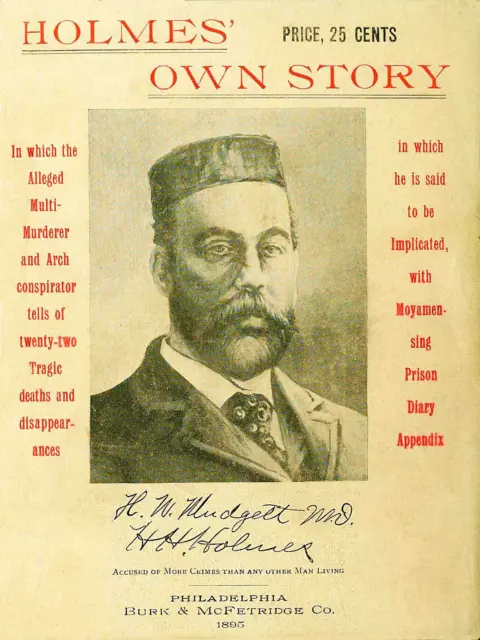
Herman W. Mudgett

Harriet Monroe
Daniel Dulany Addison
Charles Lanman

Harold Rosher