Stories of Symphonic Music A Guide to the Meaning of Important Symphonies, Overtures, and Tone-poems from Beethoven to the Present Day
Lawrence Gilman
THE CLASSIC COLLECTION · 1906
"Edward MacDowell: A Study" by Lawrence Gilman is a biographical analysis written in the early 20th century. This work delves into the life and creative accomplishments of Edward MacDowell, an influential American composer known for his significant contribution to the world of music through a unique fusion of Celtic themes and contemporary classical forms. The text not only charts MacDowell's early life, artistic development, and personal struggles but also provides insights into his music and the methodologies that defined his artistic output. At the start of the study, the author outlines MacDowell's family heritage, highlighting his Irish and Scottish roots, which shaped his artistic sensibilities. It chronicles his early musical education from the age of eight, mentioning notable instructors and his experiences at prestigious conservatories in Europe, like the Paris Conservatory and the Frankfurt Conservatory. The opening sections paint a vivid picture of MacDowell's formative years, his frustrations with convention in musical instruction, and his burgeoning talents in composition alongside his piano studies. These experiences are set against the backdrop of his growing discontent with the teaching methods of the time, leading to a narrative that is both a historical account and a character study of an artist seeking his voice.
Introduction adapted from the source catalogue; source summaries may be automatically generated.
Free to read · English · 39,075 words · No account needed
MAKE TIME FOR A GOOD BOOK
On by default. Untick to stop anonymous reading totals. Each page counts after 10 seconds in view. How this works.
Anonymous counting is on unless you have switched it off.
[3] The published score of this opus bears the title (in German): "Hamlet; Ophelia: Two Poems for Grand Orchestra." But MacDowell afterward changed his mind concerning this designation, and preferred to entitle the work: "First Symphonic Poem (a. 'Hamlet'; b. 'Ophelia')." This alteration is written in MacDowell's handwriting in his copy of the printed score. When "Lancelot and Elaine" was published three years later it bore the sub-title: "Second Symphonic Poem."
One afternoon in the spring of 1887 MacDowell and his friend Templeton Strong, a brilliant American composer who had recently moved from his home in Leipzig to Wiesbaden, were tramping through the country when they came upon a dilapidated cottage on the edge of the woods, in the Grubweg. It had been built by a rich German, not as a habitation, but as a kind of elaborate summer house. The situation was enticing. The little building stood on the side of the Neroberg, overlooking the town on one side, with the Rhine and the Main beyond, and on the other side the woods. The two Americans were captivated by it, and nothing would do but that MacDowell should purchase it for a home. There was some question of its practicability by his cooler-headed wife; but eventually the cottage was bought, with half an acre of ground, and the MacDowells ensconced themselves. There was a small garden, in which MacDowell delighted to dig; the woods were within a stone's throw; and he and Strong, who were inseparable friends, walked together and disputed amicably concerning principles and methods of music-making, and the need for patriotism, in which Strong was conceived to be deficient.
This was a time of rich productiveness for MacDowell; and the life that he and his wife were able to live was of an ideal serenity and detachment. He was now devoting his entire energy to composition. He put forth during these years at Wiesbaden the four pieces of op. 24 ("Humoresque," "March," "Cradle Song," "Czardas"); the symphonic poem "Lancelot and Elaine" (op. 25); the six songs, "From An Old Garden," to words by Margaret Deland (op. 26); the three songs for male chorus of op. 27 ("In the Starry Sky Above Us," "Springtime," "The Fisherboy"); the "Idyls" and "Poems" for piano (op. 28 and op. 31), after Goethe and Heine; the symphonic poem "Lamia" (op. 29); the two "Fragments" for orchestra after the "Song of Roland": "The Saracens" and "The Lovely Aldâ" (op. 30); the "Four Little Poems" for piano--"The Eagle," "The Brook," "Moonshine," "Winter" (op. 32); the three songs of op. 33 ("Prayer," "Cradle Hymn," "Idyl") and the two of op. 34 ("Menie," "My Jean"); and the "Romance" for 'cello and orchestra. He had, moreover, the satisfaction of knowing that his work was being received, both in Europe and in his own country, with interest and respect. His reputation had begun unmistakably to spread. "Hamlet and Ophelia" had been performed at Darmstadt, Wiesbaden, Baden-Baden, Sondershausen, Frankfort. On March 8, 1884, his former teacher, Teresa Carreno, had played his second piano suite at a recital in New York; in March of the following year two movements from the first suite were played at an "American Concert" given at Princes' Hall, London; on March 30, 1885, at one of Mr. Frank Van der Stucken's "Novelty Concerts" in New York, Miss Adele Margulies played the second and third movements from the first piano concerto. In the same year Mme. Carreño played on tour in America three movements from the second suite, and in the following September she played at the Worcester Festival of that year the "Hexentanz" of op. 17. On November 4, 1886, the "Ophelia" section of op. 22 was performed at the first of Mr. Van der Stucken's "Symphonic Concerts" at Chickering Hall, New York. Mr. H.E. Krehbiel, reviewing the work in the Tribune, praised the orchestration as "brilliant" ("though the models studied are rather more obvious than we like"), the melodic invention as "beautiful" and as having a poetical mood and characteristic outline. He considered that the music deserved repetition during the course of the season, and pronounced it "a finer work in every respect than the majority of the novelties which have come to us this season with French and English labels." Mr. Henry T. Finck, writing in the Evening Post, characterised the work as "an exquisitely conceived tone-poem, charmingly orchestrated and full of striking harmonic progressions." A year after the performance of the "Ophelia" in New York Mr. Van der Stucken produced its companion piece, "Hamlet." In April, 1888, at the first of a course of "pianoforte-concerto concerts" given by Mr. B.J. Lang at Chickering Hall, Boston, MacDowell's first concerto was played by Mr. B.L. Whelpley. "The effect upon all present," wrote Mr. W.F. Apthorp in the Transcript, "was simply electric." The concerto "was a surprise, if ever there was one. We can hardly," he declared, "recall a composition so full of astonishing and unprecedented effects [it will be recalled that this concerto was composed in 1882, when MacDowell was nineteen years old]. The work was evidently written at white heat; its brilliancy and vigour are astounding. The impression it made upon us, in other respects, is as yet rather undigested... But its fire and forcibleness are unmistakable." These opinions are of interest, for they testify to the prompt and ungrudging recognition which was accorded to MacDowell's work, from the first, by responsible critics in his own country.
Your reading position is saved on this browser. Take it to another device with a library code. Reading pages adapt to text, rather than matching a printed edition.
Lawrence Gilman
Lawrence Gilman
BEHIND THE BOOK
This eBook is for the use of anyone anywhere in the United States and most other parts of the world at no cost and with almost no restrictions whatsoever. You may copy it, give it away or re-use it under the terms of the Project Gutenberg License included with this eBook or online at www.gutenberg.org. If you are not located in the United States, you will have to check the laws of the country where you are located before using this eBook. Read the source licence.
The original source file, including credits and licence, is retained by this library. Request an original-format copy at no charge. Please include the book title and Project Gutenberg identifier #14109.
KEEP YOUR CURIOSITY GOING
John L. Ransom
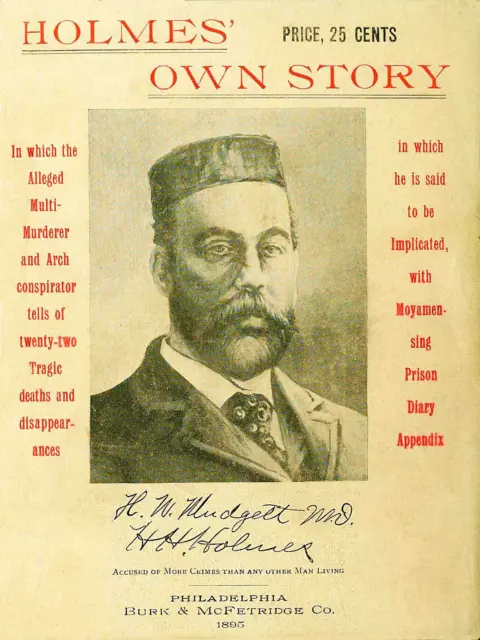
Herman W. Mudgett

Harriet Monroe
Daniel Dulany Addison
Charles Lanman
Harold Rosher