Things to be Remembered in Daily Life With Personal Experiences and Recollections
John Timbs
THE CLASSIC COLLECTION · 1869
"Eccentricities of the Animal Creation" by John Timbs is a zoological treatise written in the late 19th century. This work delves into the peculiar characteristics and behaviors of various animals, blending observations from natural history with engaging anecdotes. The book appears to aim at educating readers about fascinating facts surrounding animals, capturing both their whimsical traits and significant historical contexts. The opening of the book introduces the topic of zoological curiosities, highlighting humankind's long-standing interest in animal life across different cultures and eras. It references historical accounts of zoological gardens dating back thousands of years, discussing their origins and the exotic creatures kept within them. Timbs specifically emphasizes the rich history of zoological collections in places like China, Greece, and England, noting earlier examples such as the famous menagerie in the Tower of London. Additionally, the introduction sets the stage for subsequent chapters that promise to explore various eccentricities and remarkable habits of animals, indicating a blend of education and storytelling aimed at both young and adult audiences.
Introduction adapted from the source catalogue; source summaries may be automatically generated.
Free to read · English · 87,626 words · No account needed
MAKE TIME FOR A GOOD BOOK
On by default. Untick to stop anonymous reading totals. Each page counts after 10 seconds in view. How this works.
Anonymous counting is on unless you have switched it off.
Swallows, in fine and settled weather, fly higher in the air than they do just before or during a showery or rainy time. Then, also, Swallows flying low, and skimming over the surface of a meadow where there is tolerably long grass, frequently stop, and hang about the blades, as if they were gathering insects lodged there.
Swans, when they fly against the wind, portend rain, a sign frequently
fulfilled.
Toads, when they come from their holes in an unusual number in the evening, although the ground be still dry, foreshow the coming rain, which will generally fall more or less during the night.
Urchins of the Sea, a sort of fish, when they thrust themselves into the mud, and try to cover their bodies with sand, foreshow a storm.
Vultures, when they scent carrion at a great distance, indicate that state of the atmosphere which is favourable to the perception of smells, and this often forebodes rain.
Willow Wrens are frequently seen, in mild and still rainy weather, flitting about the willows, pines, and other trees, in quest of insects.
Woodcocks appear in autumn earlier, and in greater numbers, previous to severe winters; as do Snipes and other winter birds.
Worms come forth more abundantly before rain, as do snails, slugs, and almost all limaceous animals.
Some birds build their nests weather-proof, as ascertained by careful observation of Mr. M. W. B. Thomas, of Cincinnati, Ohio. Thus, when a pair of migratory birds have arrived in the spring, they prepare to build their nest, making a careful reconnaissance of the place, and observing the character of the season. If it be a windy one, they thatch the straw and leaves on the inside of the nest, between the twigs and the lining; if it be very windy, they get pliant twigs, and bind the nest firmly to the limb of the tree, securing all the small twigs with their saliva. If they fear the approach of a rainy season, they build their nests so as to be sheltered from the weather; but if a pleasant one, they build in a fair open place, without taking any of these extra precautions.
Of all writers, Dr. Darwin has given us the most correct account of the "Signs of Rain," in a poetical description of the approach of foul weather, as follows. This passage has been often quoted, but, perhaps, never exceeded in the accuracy of its phenomenal observation:--
Your reading position is saved on this browser. Take it to another device with a library code. Reading pages adapt to text, rather than matching a printed edition.
John Timbs
John Timbs
John Timbs
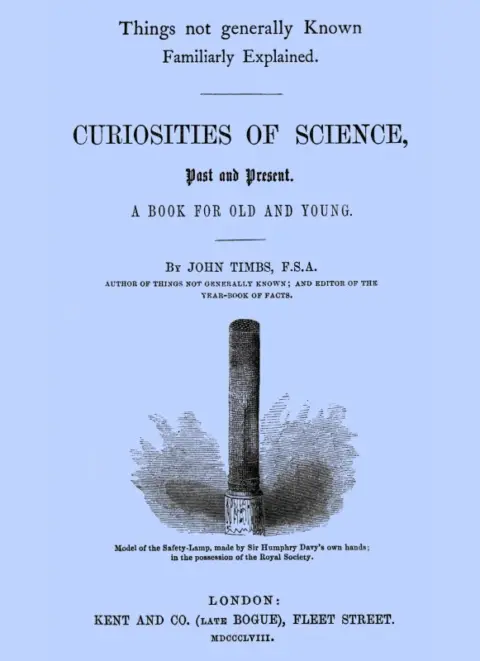
John Timbs
BEHIND THE BOOK
This eBook is for the use of anyone anywhere in the United States and most other parts of the world at no cost and with almost no restrictions whatsoever. You may copy it, give it away or re-use it under the terms of the Project Gutenberg License included with this eBook or online at www.gutenberg.org. If you are not located in the United States, you will have to check the laws of the country where you are located before using this eBook. Read the source licence.
The original source file, including credits and licence, is retained by this library. Request an original-format copy at no charge. Please include the book title and Project Gutenberg identifier #44422.
KEEP YOUR CURIOSITY GOING
Cécile Tormay

Moritz Busch
John L. Ransom
Frances Wright
Cécile Tormay

Mabel Potter Daggett