
Two Women, 1862; a Poem
Constance Fenimore Woolson
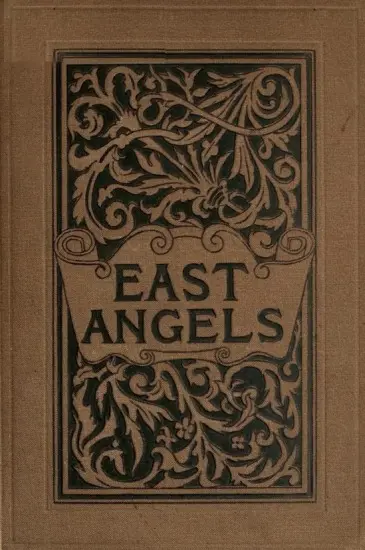
THE CLASSIC COLLECTION · 1884
"East Angels: A Novel" by Constance Fenimore Woolson is a romantic novel written in the late 19th century. The story unfolds in a southern setting, introducing characters such as Evert Winthrop, a visitor from the North, and the Thorne family, consisting of the widow Mrs. Thorne and her daughter Garda. The narrative explores themes of contentment, longing for different climates, and contrasts between northern and southern lives, while establishing the relationships and dynamics among the characters. At the start of the novel, we meet Evert Winthrop, who is seeking a change from the harsh northern winters and has come to East Angels in Florida. Engaging in conversation with Garda Thorne, he learns about her desires to experience the winters of the North, while they both contemplate the beauty and tranquility of the southern climate. Their interactions reveal interesting dynamics, especially as Garda expresses her dreams and aspirations. The stage is set for an exploration of both the physical landscape and the emotional terrain as they encounter various characters, including Mrs. Thorne and their neighbor, Dr. Kirby. The opening portion effectively introduces the characters' backgrounds, setting a tone of introspection and connection to nature.
Introduction adapted from the source catalogue; source summaries may be automatically generated.
Free to read · English · 222,450 words · No account needed
MAKE TIME FOR A GOOD BOOK
On by default. Untick to stop anonymous reading totals. Each page counts after 10 seconds in view. How this works.
Anonymous counting is on unless you have switched it off.
"Oh no, Mr. Winthrop," said his hostess, earnestly; "you are quite mistaken. Good health is in itself full of the deepest interest, I am sure, and especially at the present day, when it is so singularly rare. I am most glad you possess it--most glad indeed."
"I possess enough of it, at any rate, to go over the place, if you will be so kind," said Winthrop. "You know you promised me that pleasure some day, and why not this afternoon? There is a delightful breeze."
Mrs. Thorne dropped her eyes to the tips of her black cloth slippers, visible beneath the skirt of her gown. These little shoes one could scarcely fail to see, since the skirt, which was neatness itself in its decent black folds, was rather scanty and short. Their age and well-worn thinness, the skilful mending of their worst places, the new home-made bindings, the fresh ribbon bows bravely tied, told a story to the observers of delicate things.
But while Mrs. Thorne surveyed her slippers, her daughter was replying: "It would hardly amuse you to go over the place, Mr. Winthrop; there is really nothing to see but the crane."
"Let us go, then, and see the crane."
"Mamma would be so delighted, you know. But she never walks."
"Not far," corrected Mrs. Thorne. "I am not strong, not able to walk
far."
"And I should be delighted, too," continued Garda, "only I am so sleepy. I have fallen into the habit of spending my afternoons in the hammock; that makes me immensely drowsy just at this hour."
"I feel like an interloper," said Winthrop; "say a large mosquito."
"You needn't. It's not well to sleep so much," replied Miss Thorne,
calmly.
"Certainly you know how to console. Is that the hammock in which you
pass your happy existence?"
"Not existence; only afternoons. You really wish to go?" she added, seeing that he had taken his hat from the chair beside him. "We will send Raquel with you, then, as guide."
"Raquel?"
"Haven't you noticed her? She lets you in when you come. She is an important personage with us, I assure you; her mother, grandmother, and great-grandmother lived on the place here before her."
Winthrop recalled the portly jet-black negress who, in answer to his knock, had opened the lower door.
"Three generations make aristocracy in America," he replied; "I am afraid of so distinguished a guide. If doomed to go without Mrs. Thorne or yourself, why may I not go alone?"
Your reading position is saved on this browser. Take it to another device with a library code. Reading pages adapt to text, rather than matching a printed edition.
Constance Fenimore Woolson

Constance Fenimore Woolson

Constance Fenimore Woolson
Constance Fenimore Woolson
BEHIND THE BOOK
This eBook is for the use of anyone anywhere in the United States and most other parts of the world at no cost and with almost no restrictions whatsoever. You may copy it, give it away or re-use it under the terms of the Project Gutenberg License included with this eBook or online at www.gutenberg.org. If you are not located in the United States, you will have to check the laws of the country where you are located before using this eBook. Read the source licence.
The original source file, including credits and licence, is retained by this library. Request an original-format copy at no charge. Please include the book title and Project Gutenberg identifier #33143.
KEEP YOUR CURIOSITY GOING
Coulson Kernahan

Maurice Baring
Frances Wright
Cécile Tormay

Frederic Jesup Stimson

W. H. P. (William Henry Pope) Jarvis