
Two Women, 1862; a Poem
Constance Fenimore Woolson
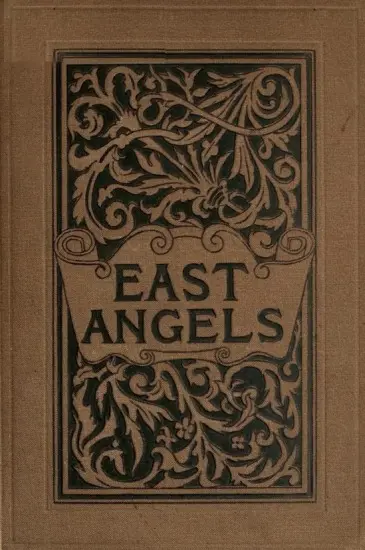
THE CLASSIC COLLECTION · 1884
"East Angels: A Novel" by Constance Fenimore Woolson is a romantic novel written in the late 19th century. The story unfolds in a southern setting, introducing characters such as Evert Winthrop, a visitor from the North, and the Thorne family, consisting of the widow Mrs. Thorne and her daughter Garda. The narrative explores themes of contentment, longing for different climates, and contrasts between northern and southern lives, while establishing the relationships and dynamics among the characters. At the start of the novel, we meet Evert Winthrop, who is seeking a change from the harsh northern winters and has come to East Angels in Florida. Engaging in conversation with Garda Thorne, he learns about her desires to experience the winters of the North, while they both contemplate the beauty and tranquility of the southern climate. Their interactions reveal interesting dynamics, especially as Garda expresses her dreams and aspirations. The stage is set for an exploration of both the physical landscape and the emotional terrain as they encounter various characters, including Mrs. Thorne and their neighbor, Dr. Kirby. The opening portion effectively introduces the characters' backgrounds, setting a tone of introspection and connection to nature.
Introduction adapted from the source catalogue; source summaries may be automatically generated.
Free to read · English · 222,450 words · No account needed
MAKE TIME FOR A GOOD BOOK
On by default. Untick to stop anonymous reading totals. Each page counts after 10 seconds in view. How this works.
Anonymous counting is on unless you have switched it off.
One afternoon, six months later, Margaret, under her white umbrella, opened the gate of the rose garden at East Angels. She came through the crape-myrtle avenue, at the end of its long vista, on the bench under the great rose-tree, she saw Garda; the crane, outlined in profile against the camellia bushes, kept watch over his mistress stiffly; another companion, in bearing scarcely less rigid, stood beside her--Adolfo Torres.
His Cuban slips had served their destiny after all, Garda's lap was full of roses. Crimson and pink, they lay on her black dress a mass of color, contrasting with the creamy hue of the paler roses above her head.
There was always the same interest in Margaret; as soon as Garda saw her friend, she left the bench and came to meet her. The roses tumbled to the ground; Adolfo did not glance at his fallen blossoms, but Carlos, stalking forward, pecked at the finest ones.
"Oh, have you got through at last--that everlasting reading aloud and fish-nets?" Garda inquired. "To think that I should have to give way to fish-nets?"
"I was to tell you--Lanse hopes that you will come in before long,"
Margaret answered.
"Hopes are good. But I shall not come in." And Garda linked her arm in her friend's. "Or rather, if I do, I shall go and sit in your room with you--may I? Good-by, Adolfo; you are not vexed with me for going?" she added. And, leaving Margaret, she went back to him, extending her hand.
He bowed over it. "Whatever pleases you--"
"You please me," answered Garda, promptly. "After they have carried off Mr. Harold to bed, those terrible men of his--about ten o'clock generally--then I never have very much to do for an hour. From ten to eleven, that is the time when I am in want of society."
"But you don't expect poor Mr. Torres to go stumbling home through the woods at midnight, just for the sake of giving you that?" Margaret suggested.
"Yes, I do. Mr. Torres never stumbled in his life. And I don't think he is at all poor," Garda answered, smiling.
He had kept her hand, he bowed over it; he did not appear to think he
was, himself.
"Yes--from ten to eleven, that is much the best time. Couldn't you come then, and only then?" Garda went on. "Margaret doesn't mind, she's always late."
"Yes, I've a wretched habit of sitting up," that lady acknowledged.
"It is impossible that any habit of Mrs. Harold's should be wretched," announced the Cuban, with gravity. "She may not always explain her reasons. They are sure to be excellent."
Your reading position is saved on this browser. Take it to another device with a library code. Reading pages adapt to text, rather than matching a printed edition.
Constance Fenimore Woolson

Constance Fenimore Woolson

Constance Fenimore Woolson
Constance Fenimore Woolson
BEHIND THE BOOK
This eBook is for the use of anyone anywhere in the United States and most other parts of the world at no cost and with almost no restrictions whatsoever. You may copy it, give it away or re-use it under the terms of the Project Gutenberg License included with this eBook or online at www.gutenberg.org. If you are not located in the United States, you will have to check the laws of the country where you are located before using this eBook. Read the source licence.
The original source file, including credits and licence, is retained by this library. Request an original-format copy at no charge. Please include the book title and Project Gutenberg identifier #33143.
KEEP YOUR CURIOSITY GOING
Coulson Kernahan

Maurice Baring
Frances Wright
Cécile Tormay

Frederic Jesup Stimson

W. H. P. (William Henry Pope) Jarvis