
Two Women, 1862; a Poem
Constance Fenimore Woolson
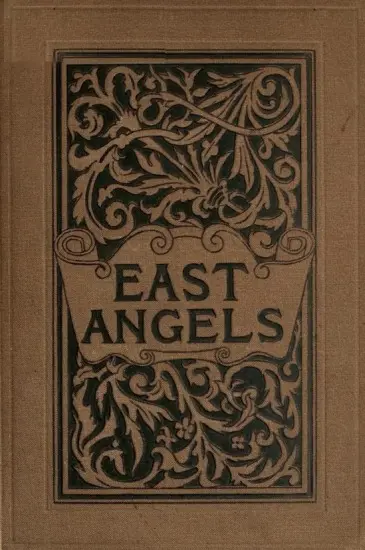
THE CLASSIC COLLECTION · 1884
"East Angels: A Novel" by Constance Fenimore Woolson is a romantic novel written in the late 19th century. The story unfolds in a southern setting, introducing characters such as Evert Winthrop, a visitor from the North, and the Thorne family, consisting of the widow Mrs. Thorne and her daughter Garda. The narrative explores themes of contentment, longing for different climates, and contrasts between northern and southern lives, while establishing the relationships and dynamics among the characters. At the start of the novel, we meet Evert Winthrop, who is seeking a change from the harsh northern winters and has come to East Angels in Florida. Engaging in conversation with Garda Thorne, he learns about her desires to experience the winters of the North, while they both contemplate the beauty and tranquility of the southern climate. Their interactions reveal interesting dynamics, especially as Garda expresses her dreams and aspirations. The stage is set for an exploration of both the physical landscape and the emotional terrain as they encounter various characters, including Mrs. Thorne and their neighbor, Dr. Kirby. The opening portion effectively introduces the characters' backgrounds, setting a tone of introspection and connection to nature.
Introduction adapted from the source catalogue; source summaries may be automatically generated.
Free to read · English · 222,450 words · No account needed
MAKE TIME FOR A GOOD BOOK
On by default. Untick to stop anonymous reading totals. Each page counts after 10 seconds in view. How this works.
Anonymous counting is on unless you have switched it off.
"She's a cousin of theirs, and a very nice woman; about fifty-five. Nothing could be more respectable," Lanse went on, glancing with an amused eye at Aunt Katrina's unwilling face. "You were there some time, Mrs. Carew; I suppose you saw some men?"
"The population seemed to me to consist principally of men," Betty answered, naively; "the streets were always crowded with them."
"That's because the Italian women don't knock about. But some of these men came to see you, I suppose?"
"Oh, you mean gentlemen? Yes, a good many came; but for my part, I was always gladdest to see Adolfo Torres. He wasn't so foreign."
"Is he there?" said Lanse, with a delighted laugh; "has he followed her all that distance? Bravo for Adolfo!"
"I don't see where he got the money to go," remarked Aunt Katrina, with one of her well-bred sniffs.
Betty flushed at this. "Mr. Torres has property, Kate," she said, with dignity. Then her usual humble sincerity came back to her. "I don't reckon it's much," she went on. "I've no idea where he stayed, nor anything about it; but I'm sure, whenever he came to see us, he always looked like a dignified gentleman."
"Naturally," said Lanse. "Because that is what he is. Well, I give him
my vote."
As this conversation was beginning, word was brought to Margaret that Mr. Winthrop was in the drawing-room, and wished to see her. Celestine was the messenger.
"Has he come to stay? You and Looth must put the east room in order, then," said the mistress of the house. "Have you told the others?"
"Yes'm," said Celestine, disappearing.
When Margaret entered the drawing-room, twenty minutes later, Winthrop was there alone. Celestine had told nobody. Minerva Poindexter, meanwhile, sweeping a remote corridor, had had a tussle with her conscience; and gagged it.
"No one here?" said Margaret in surprise. "Where are the others?"
"I didn't come to see the others," Winthrop answered.
Though many months had elapsed since their last meeting, no greeting passed between them beyond this; they did not even shake hands. She had seen upon entering that angry feelings had possession of him, that this time he would not go through any of the forms. This made her only the more anxious to keep to them strictly herself.
"I hope you have come to stay with us a while," she said.
He paid no attention to this. "Shall we go out--to the garden, or somewhere? I wish to see you alone."
"We couldn't well be more alone than this, could we?" she answered,
looking about the room.
Your reading position is saved on this browser. Take it to another device with a library code. Reading pages adapt to text, rather than matching a printed edition.
Constance Fenimore Woolson

Constance Fenimore Woolson

Constance Fenimore Woolson
Constance Fenimore Woolson
BEHIND THE BOOK
This eBook is for the use of anyone anywhere in the United States and most other parts of the world at no cost and with almost no restrictions whatsoever. You may copy it, give it away or re-use it under the terms of the Project Gutenberg License included with this eBook or online at www.gutenberg.org. If you are not located in the United States, you will have to check the laws of the country where you are located before using this eBook. Read the source licence.
The original source file, including credits and licence, is retained by this library. Request an original-format copy at no charge. Please include the book title and Project Gutenberg identifier #33143.
KEEP YOUR CURIOSITY GOING
Coulson Kernahan

Maurice Baring
Frances Wright
Cécile Tormay

Frederic Jesup Stimson

W. H. P. (William Henry Pope) Jarvis