READ · DISCOVER · ENJOYClassic literature · Always free
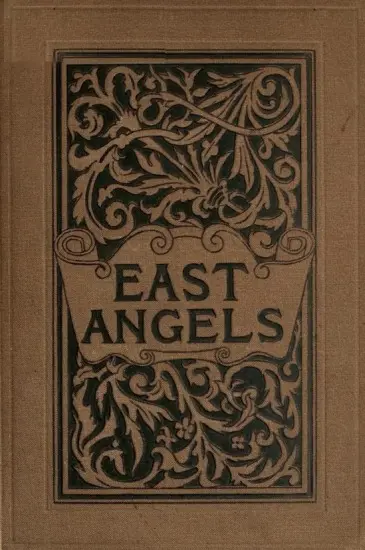
East Angels: A Novel — digital edition cover

THE CLASSIC COLLECTION · 1884

East Angels: A Novel

"East Angels: A Novel" by Constance Fenimore Woolson is a romantic novel written in the late 19th century. The story unfolds in a southern setting, introducing characters such as Evert Winthrop, a visitor from the North, and the Thorne family, consisting of the widow Mrs. Thorne and her daughter Garda. The narrative explores themes of contentment, longing for different climates, and contrasts between northern and southern lives, while establishing the relationships and dynamics among the characters. At the start of the novel, we meet Evert Winthrop, who is seeking a change from the harsh northern winters and has come to East Angels in Florida. Engaging in conversation with Garda Thorne, he learns about her desires to experience the winters of the North, while they both contemplate the beauty and tranquility of the southern climate. Their interactions reveal interesting dynamics, especially as Garda expresses her dreams and aspirations. The stage is set for an exploration of both the physical landscape and the emotional terrain as they encounter various characters, including Mrs. Thorne and their neighbor, Dr. Kirby. The opening portion effectively introduces the characters' backgrounds, setting a tone of introspection and connection to nature.

Introduction adapted from the source catalogue; source summaries may be automatically generated.

Start reading ↓

Free to read · English · 222,450 words · No account needed

MAKE TIME FOR A GOOD BOOK

East Angels: A Novel

On by default. Untick to stop anonymous reading totals. Each page counts after 10 seconds in view. How this works.

Anonymous counting is on unless you have switched it off.

East Angels: A Novel

"Yes, that was Mistress Thorne and Garda, I reckon; on second thoughts, I am sure of it; for they always come up from East Angels on Sunday mornings to service, with old Pablo to row, as Mistress Thorne has succeeded in getting as far as the Episcopal church, though Our Lady of the Angels was too much for her, which was quite as well, however, because, of course, all the Thornes, being English, were Church people of course in the old country, though poor Eddie, having been twice diluted, as one may say, owing to his mother and grandmother having been Spanish and Roman Catholic, was not quite so strong in the real Episcopal doctrines as he might have been, which was a pity, of course, but could hardly, under the circumstances, have been prevented so far as I can see, for one swallow doesn't make a summer, I reckon, any more than one parent makes a Protestant, especially when the other's a Duero--with the Old Madam roaring on the borders, ready to raise Ned on the slightest provocation, to come down like wolf on the fold, you know--or was it the Assyrian? Now at East Angels--perhaps you are wondering at the name? Well, the cathedral, to begin with, is Our Lady of the Angels, and, in the old days, there were two mission-stations for the Indians south of here, one on the east coast, one more to the west, and bearing the same name. These chapels are gone; but as the Duero house stood near one of them, it took the name, or part of it, and has been called East Angels ever since. There was no house near the other chapel--West Angels--and some say the very site is lost, though others again have declared that the old bell is still there, lying at the foot of a great cypress--that hunters have seen it. But I haven't much faith in hunters, have you?--nor in fishermen either, for that matter. Little Mistress Thorne must know a great deal about fish, I suppose she lived on cod before she came down here; she belongs to Puritan stock, they say, and there were good people among them of course, though, for my part, I have always had a horror of the way they treated the witches; not that I approve of witchcraft, which is of course as wicked as possible, and even the witch of Endor, I suppose, could hardly be defended upon moral grounds, whatever you may do upon historical--which are so much the fashion nowadays, though I, for one, can't abide them--making out as they do that everything is a falsehood, and that even Pocahontas was not a respectable person; I don't know what they will attack next, I'm sure; Pocahontas was our only interesting Indian. Not that I care for Indians, don't fancy that; the Seminoles particularly; I'm always so glad that they've gone down to live in the Everglades, half under water; if anything could take down their savageness, I should think it would be that. I know them very well, of course--the Thornes, not the Seminoles--though perhaps I was never quite so intimate with them as Pamela Kirby was (she's dead now, poor soul! so sad for her!), for Pamela used to give Garda lessons; she moulded her, as she called it, taught her to shoot--of course I mean the young idea, and not guns. In fact, they have all had a hand in it--the moulding of Garda; too many, I think, for I believe in one overruling eye, and if you get round that, there's the good old proverb that remains pretty true, after all, I reckon, the one about too many cooks, though in this case the broth has been saved by the little mother, who is a very Napoleon in petticoats, and never forgets a thing; she actually remembers a thing before it has happened; Methuselah himself couldn't do more, though, come to think of it, I suppose very little had happened in the world before his day--excepting trilobites, that we used to read about in school. And Mistress Thorne knows all about them, you may be sure, just as well as Methuselah did; for she was a teacher, to begin with, a prim little New England school marm whom poor Eddie Thorne met by accident one summer when he went north, and fell in love with, as I have always supposed, from sheer force of contrast, like Beauty and the Beast, you know--not that she was a beast, of course, though poor Eddie was very handsome, but still I remember that everybody wondered, because it had been thought that he would marry the sister of Madame Giron, who had hair that came down to her feet. However, I ought to say that poor little Mistress Thorne has certainly done her very best to acquire our southern ways; she has actually tried to make herself over, root, stem, and branch, from her original New England sharpness to our own softer temperament, though I always feel sure, at the same moment, that, in the core of the rock, the old sap burns still--like the soul under the ribs of death, you know; not that I mean that exactly (though she is thin), but simply that the leopard cannot change his spots, nor the zebra his stripes, nor," added the good lady--altering her tone to solemnity as she perceived that her language was becoming Biblical--"the wild cony her young. Just to give you an idea of what I mean, Mr. Winthrop: for a long time after she first came to Gracias that little creature used regularly to parse twenty-four pages of 'Paradise Lost' every day, as a sort of mental tonic, I reckon, against what she thought the enervating tendencies of our southern life here--like quinine, you know; and as she parsed so much, she was naturally obliged to quote, as a sort of safety-valve, which was very pleasant of course and very intellectual, though I never care much for quotations myself, they are so diffuse, and besides, with all your efforts, you cannot make 'Paradise Lost' appropriate to all the little daily cares of life and house-keeping, which no true woman, I think, should be above; for though Eve did set a table for the angel, that was merely poetical and not like real life in the least, for she only had fruits, and no dishes probably but leaves, that you could throw away afterwards, which was very different from nice china, I can assure you, for you may not know, not being a house-keeper, that as regards china nowadays--our old blue sets--our servants are not in the least careful not to nick; I don't enter here into the great question of emancipation for the slaves, but--nick they will! Mistress Thorne speaks like 'Paradise Lost' to this day, and, what is more, she has taught Garda to speak in the same way--just like a book; only Garda's book is her own, you never know what she is going to say next, she turns about in all sorts of shapes, like those kaleidoscopes they used to give us children when I was little, only she never rattles (they did, dreadfully)--for I am sure a softer voice I never heard, unless it was that of the Old Madam, who used to say in velvet tones the most ferocious things you ever heard. Ah, you should have seen her!--straight as an arrow, and they said she was ninety for over thirty years, which of course was impossible, even if she had wished it, which I doubt, for there is the well-known Bible age of threescore years and ten, and to have exceeded it to that extent would have been irreverent. She was poor Eddie Thorne's aunt, the sister of his mother, a Duero and a tremendous one, dyed in ancestors to the core; every one was afraid of her but Garda, and Garda she took complete charge of as long as she lived, though Mistress Thorne did what she could on the outskirts--not much, I fancy, for the Old Madam declared that the child was a true Duero and should be brought up as one, which seemed to mean principally that she should swing in the hammock, and not learn verbs. I think Mistress Thorne began to teach Garda verbs the day after the funeral; at least when I went down there to pay a visit of condolence I found her with a grammar in her hand, and a good deal of cheerfulness under the circumstances--a good deal! The first Edgar Thorne, the one who came out from England, is said to have been a man of a good deal of force of character, for he kept a coach and four, and at that early day, on these pine-barrens, it almost seemed as if he must have created them by magic, which makes one think of Cinderella and her rats, doesn't it? And indeed, in this case, the horses did turn into rats, as one may say, before their very eyes; the poor Thornes have no horses now" said the kind-hearted lady, pausing to shake her head sympathetically, and then speeding on again. "They say that rats desert a sinking ship--though I have always wondered how, since ships are not apt to sink at the piers, are they?--and I never heard that rats could make rafts, though squirrels can, they say--a bit of plank with their tails put up as a sail, though of course rats' tails would never do for that, they are so thin; but if rats do desert their ship, Mistress Thorne will never desert hers, she will keep the Thorne colors flying to the last, and go down, if down she must, with the silent courage of the Spartan boy--although it was a fox he had gnawing him, wasn't it? and not a rat; but it makes no difference, it's the principle that's important, not the illustration. Garda's name is really Edgarda, Edgarda after all the Thornes, who, it seems, have been Edgars and Edgardas for centuries, which I should think must have been very inconvenient, for, just to mention one thing, they could never have signed their names in initials, because that would have meant fathers and sons and brothers and sisters indiscriminately, in fact all of them except the wives, who, having come in from outside families, would be able, fortunately, to be plain Mary and Jane. I am very fond of Garda, as indeed we all are; and I think she has wonderful beauty, don't you?--though rather Spanish perhaps. When she was about twelve years old I was afraid that the tinge of her mother in her was going to make her thin; but Nature fortunately prevented that in time, for you know that once an elbow gets fixed in the habit of being sharp, sharp it remains to the end of the chapter, though you may have pounds and pounds both above and below it, which seems strange, doesn't it? though of course it must serve some good purpose, as we ought all to believe. And that reminds me to say that I hope dear Katrina has gained flesh since she left school, for she used to be rather too slender (though very handsome otherwise), so that, in profile view, you couldn't help thinking of a paper-cutter, and you doubted whether she could even cast a shadow--like the man without a shadow, you remember, who used to double his up and put it in his pocket--only of course dear Katrina was never anything horrible like that, and, after all, why we should wish to cast shadows I am sure I don't know; certainly there are enough of them, as it is, in this vale of tears. If you like, I will take you down some day to call upon the Thornes; they will be delighted to see us and we shall be like angels' visits, few and far between, or fair as a star when only one; I hope you like poetry--you modern young gentlemen have such a way of being above it! But Mr. Carew was always very fond of Mrs. Hemans."

Your reading position is saved on this browser. Take it to another device with a library code. Reading pages adapt to text, rather than matching a printed edition.

More from this author

BEHIND THE WORDS

About Constance Fenimore Woolson

Constance Fenimore Woolson (1840–1894). Explore Two Women, 1862; a Poem, Dorothy, and Other Italian Stories, Horace Chase and other works in this collection. These books span history, poetry, classic fiction.

Explore this author’s books →

THE READERS’ VERDICT

How did this story stay with you?

Not rated yet
Your rating for East Angels: A Novel

Be the first to share your verdict.

One rating per browser, which you can change or remove. A necessary browser identifier remembers your vote. How ratings work

A GOOD STORY DESERVES COMPANY

Pass this book along.

A great read is even better when it’s shared.

SEND A LITTLE INSPIRATION

Share this book

BEHIND THE BOOK

Edition & source details.

Title
East Angels: A Novel
Author
Constance Fenimore Woolson
Publication year
1884
Digital edition publisher
Project Gutenberg
Gutenberg release date
2010-07-12
Language
English
Source edition imprint
Not stated in source catalogue
Source identifier
Project Gutenberg #33143
Contributors
No additional named contributors in source metadata

Public-domain source & licence

This eBook is for the use of anyone anywhere in the United States and most other parts of the world at no cost and with almost no restrictions whatsoever. You may copy it, give it away or re-use it under the terms of the Project Gutenberg License included with this eBook or online at www.gutenberg.org. If you are not located in the United States, you will have to check the laws of the country where you are located before using this eBook. Read the source licence.

Full source licence and obtaining an original copy

The original source file, including credits and licence, is retained by this library. Request an original-format copy at no charge. Please include the book title and Project Gutenberg identifier #33143.

the full Project Gutenberg License must appear
prominently whenever any copy of a Project Gutenberg work (any work
on which the phrase “Project Gutenberg” appears, or with which the
phrase “Project Gutenberg” is associated) is accessed, displayed,
performed, viewed, copied or distributed:

This eBook is for the use of anyone anywhere in the United States and most
other parts of the world at no cost and with almost no restrictions
whatsoever. You may copy it, give it away or re-use it under the terms
of the Project Gutenberg™ License included with this eBook or online
at www.gutenberg.org. If you
are not located in the United States, you will have to check the laws
of the country where you are located before using this eBook.

1.E.2. If an individual Project Gutenberg electronic work is
derived from texts not protected by U.S. copyright law (does not
contain a notice indicating that it is posted with permission of the
copyright holder), the work can be copied and distributed to anyone in
the United States without paying any fees or charges. If you are
redistributing or providing access to a work with the phrase “Project
Gutenberg” associated with or appearing on the work, you must comply
either with the requirements of paragraphs 1.E.1 through 1.E.7 or
obtain permission for the use of the work and the Project Gutenberg
trademark as set forth in paragraphs 1.E.8 or 1.E.9.

1.E.3. If an individual Project Gutenberg electronic work is posted
with the permission of the copyright holder, your use and distribution
must comply with both paragraphs 1.E.1 through 1.E.7 and any
additional terms imposed by the copyright holder. Additional terms
will be linked to the Project Gutenberg License for all works
posted with the permission of the copyright holder found at the
beginning of this work.

1.E.4. Do not unlink or detach or remove the full Project Gutenberg
License terms from this work, or any files containing a part of this
work or any other work associated with Project Gutenberg.

1.E.5. Do not copy, display, perform, distribute or redistribute this
electronic work, or any part of this electronic work, without
prominently displaying the sentence set forth in paragraph 1.E.1 with
active links or immediate access to the full terms of the Project
Gutenberg License.

1.E.6. You may convert to and distribute this work in any binary,
compressed, marked up, nonproprietary or proprietary form, including
any word processing or hypertext form. However, if you provide access
to or distribute copies of a Project Gutenberg work in a format
other than “Plain Vanilla ASCII” or other format used in the official
version posted on the official Project Gutenberg website
(www.gutenberg.org), you must, at no additional cost, fee or expense
to the user, provide a copy, a means of exporting a copy, or a means
of obtaining a copy upon request, of the work in its original “Plain
Vanilla ASCII” or other form. Any alternate format must include the
full Project Gutenberg License as specified in paragraph 1.E.1.

1.E.7. Do not charge a fee for access to, viewing, displaying,
performing, copying or distributing any Project Gutenberg works
unless you comply with paragraph 1.E.8 or 1.E.9.

1.E.8. You may charge a reasonable fee for copies of or providing
access to or distributing Project Gutenberg electronic works
provided that:

• You pay a royalty fee of 20% of the gross profits you derive from
the use of Project Gutenberg works calculated using the method
you already use to calculate your applicable taxes. The fee is owed
to the owner of the Project Gutenberg trademark, but he has
agreed to donate royalties under this paragraph to the Project
Gutenberg Literary Archive Foundation. Royalty payments must be paid
within 60 days following each date on which you prepare (or are
legally required to prepare) your periodic tax returns. Royalty
payments should be clearly marked as such and sent to the Project
Gutenberg Literary Archive Foundation at the address specified in
Section 4, “Information about donations to the Project Gutenberg
Literary Archive Foundation.”

• You provide a full refund of any money paid by a user who notifies
you in writing (or by e-mail) within 30 days of receipt that s/he
does not agree to the terms of the full Project Gutenberg™
License. You must require such a user to return or destroy all
copies of the works possessed in a physical medium and discontinue
all use of and all access to other copies of Project Gutenberg™
works.

• You provide, in accordance with paragraph 1.F.3, a full refund of
any money paid for a work or a replacement copy, if a defect in the
electronic work is discovered and reported to you within 90 days of
receipt of the work.

• You comply with all other terms of this agreement for free
distribution of Project Gutenberg™ works.


1.E.9. If you wish to charge a fee or distribute a Project
Gutenberg™ electronic work or group of works on different terms than
are set forth in this agreement, you must obtain permission in writing
from the Project Gutenberg Literary Archive Foundation, the manager of
the Project Gutenberg™ trademark. Contact the Foundation as set
forth in Section 3 below.

1.F.

1.F.1. Project Gutenberg volunteers and employees expend considerable
effort to identify, do copyright research on, transcribe and proofread
works not protected by U.S. copyright law in creating the Project
Gutenberg™ collection. Despite these efforts, Project Gutenberg™
electronic works, and the medium on which they may be stored, may
contain “Defects,” such as, but not limited to, incomplete, inaccurate
or corrupt data, transcription errors, a copyright or other
intellectual property infringement, a defective or damaged disk or
other medium, a computer virus, or computer codes that damage or
cannot be read by your equipment.

1.F.2. LIMITED WARRANTY, DISCLAIMER OF DAMAGES - Except for the “Right
of Replacement or Refund” described in paragraph 1.F.3, the Project
Gutenberg Literary Archive Foundation, the owner of the Project
Gutenberg™ trademark, and any other party distributing a Project
Gutenberg™ electronic work under this agreement, disclaim all
liability to you for damages, costs and expenses, including legal
fees. YOU AGREE THAT YOU HAVE NO REMEDIES FOR NEGLIGENCE, STRICT
LIABILITY, BREACH OF WARRANTY OR BREACH OF CONTRACT EXCEPT THOSE
PROVIDED IN PARAGRAPH 1.F.3. YOU AGREE THAT THE FOUNDATION, THE
TRADEMARK OWNER, AND ANY DISTRIBUTOR UNDER THIS AGREEMENT WILL NOT BE
LIABLE TO YOU FOR ACTUAL, DIRECT, INDIRECT, CONSEQUENTIAL, PUNITIVE OR
INCIDENTAL DAMAGES EVEN IF YOU GIVE NOTICE OF THE POSSIBILITY OF SUCH
DAMAGE.

1.F.3. LIMITED RIGHT OF REPLACEMENT OR REFUND - If you discover a
defect in this electronic work within 90 days of receiving it, you can
receive a refund of the money (if any) you paid for it by sending a
written explanation to the person you received the work from. If you
received the work on a physical medium, you must return the medium
with your written explanation. The person or entity that provided you
with the defective work may elect to provide a replacement copy in
lieu of a refund. If you received the work electronically, the person
or entity providing it to you may choose to give you a second
opportunity to receive the work electronically in lieu of a refund. If
the second copy is also defective, you may demand a refund in writing
without further opportunities to fix the problem.

1.F.4. Except for the limited right of replacement or refund set forth
in paragraph 1.F.3, this work is provided to you ‘AS-IS’, WITH NO
OTHER WARRANTIES OF ANY KIND, EXPRESS OR IMPLIED, INCLUDING BUT NOT
LIMITED TO WARRANTIES OF MERCHANTABILITY OR FITNESS FOR ANY PURPOSE.

1.F.5. Some states do not allow disclaimers of certain implied
warranties or the exclusion or limitation of certain types of
damages. If any disclaimer or limitation set forth in this agreement
violates the law of the state applicable to this agreement, the
agreement shall be interpreted to make the maximum disclaimer or
limitation permitted by the applicable state law. The invalidity or
unenforceability of any provision of this agreement shall not void the
remaining provisions.

1.F.6. INDEMNITY - You agree to indemnify and hold the Foundation, the
trademark owner, any agent or employee of the Foundation, anyone
providing copies of Project Gutenberg™ electronic works in
accordance with this agreement, and any volunteers associated with the
production, promotion and distribution of Project Gutenberg™
electronic works, harmless from all liability, costs and expenses,
including legal fees, that arise directly or indirectly from any of
the following which you do or cause to occur: (a) distribution of this
or any Project Gutenberg work, (b) alteration, modification, or
additions or deletions to any Project Gutenberg work, and (c) any
Defect you cause.

Section 2. Information about the Mission of Project Gutenberg

Project Gutenberg is synonymous with the free distribution of
electronic works in formats readable by the widest variety of
computers including obsolete, old, middle-aged and new computers. It
exists because of the efforts of hundreds of volunteers and donations
from people in all walks of life.

Volunteers and financial support to provide volunteers with the
assistance they need are critical to reaching Project Gutenberg’s
goals and ensuring that the Project Gutenberg collection will
remain freely available for generations to come. In 2001, the Project
Gutenberg Literary Archive Foundation was created to provide a secure
and permanent future for Project Gutenberg and future
generations. To learn more about the Project Gutenberg Literary
Archive Foundation and how your efforts and donations can help, see
Sections 3 and 4 and the Foundation information page at www.gutenberg.org.

Section 3. Information about the Project Gutenberg Literary Archive Foundation

The Project Gutenberg Literary Archive Foundation is a non-profit
501(c)(3) educational corporation organized under the laws of the
state of Mississippi and granted tax exempt status by the Internal
Revenue Service. The Foundation’s EIN or federal tax identification
number is 64-6221541. Contributions to the Project Gutenberg Literary
Archive Foundation are tax deductible to the full extent permitted by
U.S. federal laws and your state’s laws.

The Foundation’s business office is located at 41 Watchung Plaza #516,
Montclair NJ 07042, USA, +1 (862) 621-9288. Email contact links and up
to date contact information can be found at the Foundation’s website
and official page at www.gutenberg.org/contact

Section 4. Information about Donations to the Project Gutenberg
Literary Archive Foundation

Project Gutenberg™ depends upon and cannot survive without widespread
public support and donations to carry out its mission of
increasing the number of public domain and licensed works that can be
freely distributed in machine-readable form accessible by the widest
array of equipment including outdated equipment. Many small donations
($1 to $5,000) are particularly important to maintaining tax exempt
status with the IRS.

The Foundation is committed to complying with the laws regulating
charities and charitable donations in all 50 states of the United
States. Compliance requirements are not uniform and it takes a
considerable effort, much paperwork and many fees to meet and keep up
with these requirements. We do not solicit donations in locations
where we have not received written confirmation of compliance. To SEND
DONATIONS or determine the status of compliance for any particular state
visit www.gutenberg.org/donate.

While we cannot and do not solicit contributions from states where we
have not met the solicitation requirements, we know of no prohibition
against accepting unsolicited donations from donors in such states who
approach us with offers to donate.

International donations are gratefully accepted, but we cannot make
any statements concerning tax treatment of donations received from
outside the United States. U.S. laws alone swamp our small staff.

Please check the Project Gutenberg web pages for current donation
methods and addresses. Donations are accepted in a number of other
ways including checks, online payments and credit card donations. To
donate, please visit: www.gutenberg.org/donate.

Section 5. General Information About Project Gutenberg electronic works

Professor Michael S. Hart was the originator of the Project
Gutenberg concept of a library of electronic works that could be
freely shared with anyone. For forty years, he produced and
distributed Project Gutenberg eBooks with only a loose network of
volunteer support.

Project Gutenberg eBooks are often created from several printed
editions, all of which are confirmed as not protected by copyright in
the U.S. unless a copyright notice is included. Thus, we do not
necessarily keep eBooks in compliance with any particular paper
edition.

Most people start at our website which has the main PG search
facility: www.gutenberg.org.

This website includes information about Project Gutenberg,
including how to make donations to the Project Gutenberg Literary
Archive Foundation, how to help produce our new eBooks, and how to
subscribe to our email newsletter to hear about new eBooks.


KEEP YOUR CURIOSITY GOING

Your next chapter awaits.