
Two Women, 1862; a Poem
Constance Fenimore Woolson
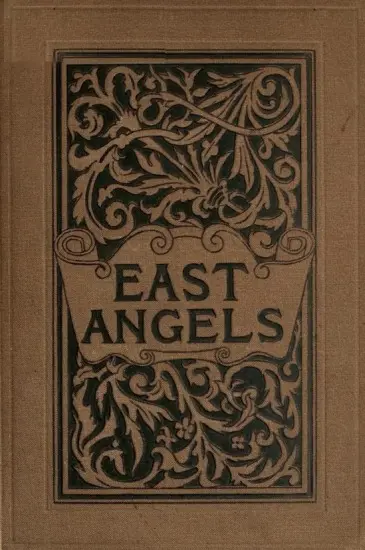
THE CLASSIC COLLECTION · 1884
"East Angels: A Novel" by Constance Fenimore Woolson is a romantic novel written in the late 19th century. The story unfolds in a southern setting, introducing characters such as Evert Winthrop, a visitor from the North, and the Thorne family, consisting of the widow Mrs. Thorne and her daughter Garda. The narrative explores themes of contentment, longing for different climates, and contrasts between northern and southern lives, while establishing the relationships and dynamics among the characters. At the start of the novel, we meet Evert Winthrop, who is seeking a change from the harsh northern winters and has come to East Angels in Florida. Engaging in conversation with Garda Thorne, he learns about her desires to experience the winters of the North, while they both contemplate the beauty and tranquility of the southern climate. Their interactions reveal interesting dynamics, especially as Garda expresses her dreams and aspirations. The stage is set for an exploration of both the physical landscape and the emotional terrain as they encounter various characters, including Mrs. Thorne and their neighbor, Dr. Kirby. The opening portion effectively introduces the characters' backgrounds, setting a tone of introspection and connection to nature.
Introduction adapted from the source catalogue; source summaries may be automatically generated.
Free to read · English · 222,450 words · No account needed
MAKE TIME FOR A GOOD BOOK
On by default. Untick to stop anonymous reading totals. Each page counts after 10 seconds in view. How this works.
Anonymous counting is on unless you have switched it off.
Manuel immediately began to talk. "They sent me down here, Adolfo; they had heard, and they were afraid for you. I had just got home, and they asked me to come--your aunt asked me."
"My aunt asked you," repeated Torres, mechanically.
"Yes, Adolfo, your aunt. You must care something for her," said Manuel. He looked uneasily about him.
And then hurrying through the wood, came Madam Giron.
The loving-hearted, sweet-tempered woman was much moved. She took her dead sister's unhappy boy in her arms, and wept over him as though he had been her own child; she soothed him with motherly caresses; she said, tenderly, that she had not been kind enough to him, that she had been too much taken up with her own children; "But now--now, my dearest--" This all in Spanish, the sweetest sound in the world to poor Torres' ears.
A slight convulsion passed over his features, though no tears came. He was young enough to have felt acutely the loneliness of his suffering, the solitude of the death he was on his way to seek. He stood perfectly still; his aunt was now leaning against him as she wept, he put one arm protectingly round her; he felt a slow, slow return towards, not a less torturing pain, but towards greater courage in bearing it, in this sympathy which had come to him. Even Manuel had shown sympathy. "I feel--I feel that I have been--rather cowardly," he said at last in a dull tone.
"No, no, dear," said his aunt, putting up her soft hand to stroke his dark hair. "It was very natural, we all understand."
And then a mist did show itself for an instant in the poor boy's eyes.
That same evening, Garda, far at sea, sitting with her head on Lucian's shoulder under the brilliant stars, answered a question he asked. She did not answer it at first, she was too contented to talk. Then, as he asked it again, "What ever became of that mediaeval young Cuban of mine?"
"Oh, Adolfo?" she said. "I sent him down to the Indian River."
"To the Indian River? What in the world did you do that for?"
"He was in Charleston, and you were coming; I didn't want him there."
"Were you afraid he would attack me?" asked Lucian, laughing.
"I was afraid he would suffer,--in fact, I knew he would; and I didn't want to see it. He can suffer because he is like me--he can love."
"Poor fellow!"
"Yes. But I never cared for him; and he wouldn't see it."
Your reading position is saved on this browser. Take it to another device with a library code. Reading pages adapt to text, rather than matching a printed edition.
Constance Fenimore Woolson

Constance Fenimore Woolson

Constance Fenimore Woolson
Constance Fenimore Woolson
BEHIND THE BOOK
This eBook is for the use of anyone anywhere in the United States and most other parts of the world at no cost and with almost no restrictions whatsoever. You may copy it, give it away or re-use it under the terms of the Project Gutenberg License included with this eBook or online at www.gutenberg.org. If you are not located in the United States, you will have to check the laws of the country where you are located before using this eBook. Read the source licence.
The original source file, including credits and licence, is retained by this library. Request an original-format copy at no charge. Please include the book title and Project Gutenberg identifier #33143.
KEEP YOUR CURIOSITY GOING
Coulson Kernahan

Maurice Baring
Frances Wright
Cécile Tormay

Frederic Jesup Stimson

W. H. P. (William Henry Pope) Jarvis