
Two Women, 1862; a Poem
Constance Fenimore Woolson
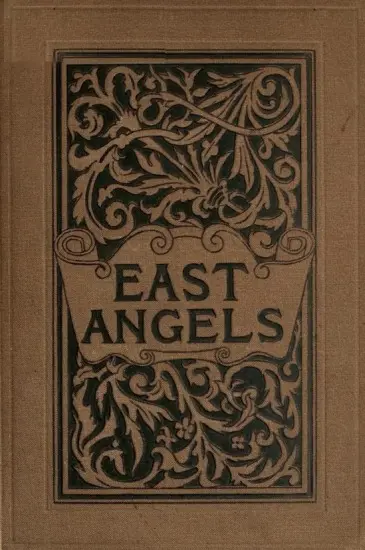
THE CLASSIC COLLECTION · 1884
"East Angels: A Novel" by Constance Fenimore Woolson is a romantic novel written in the late 19th century. The story unfolds in a southern setting, introducing characters such as Evert Winthrop, a visitor from the North, and the Thorne family, consisting of the widow Mrs. Thorne and her daughter Garda. The narrative explores themes of contentment, longing for different climates, and contrasts between northern and southern lives, while establishing the relationships and dynamics among the characters. At the start of the novel, we meet Evert Winthrop, who is seeking a change from the harsh northern winters and has come to East Angels in Florida. Engaging in conversation with Garda Thorne, he learns about her desires to experience the winters of the North, while they both contemplate the beauty and tranquility of the southern climate. Their interactions reveal interesting dynamics, especially as Garda expresses her dreams and aspirations. The stage is set for an exploration of both the physical landscape and the emotional terrain as they encounter various characters, including Mrs. Thorne and their neighbor, Dr. Kirby. The opening portion effectively introduces the characters' backgrounds, setting a tone of introspection and connection to nature.
Introduction adapted from the source catalogue; source summaries may be automatically generated.
Free to read · English · 222,450 words · No account needed
MAKE TIME FOR A GOOD BOOK
On by default. Untick to stop anonymous reading totals. Each page counts after 10 seconds in view. How this works.
Anonymous counting is on unless you have switched it off.
Margaret looked at her, her eyes for one brief instant showed uncertainty. But the uncertainty was immediately replaced by a decision: no, it was, it must be, that this girl did not in the least realize what she was doing. "It is foolish to go, Garda," she said at last, putting some ridicule into her tone; "Lucian has said good-by to you, he doesn't want to see you again."
Garda did not assert the contrary. And she remained perfectly unmoved by the ridicule. "But I want to see him," she explained.
"We can send for him, then--though he will laugh at you; there is plenty
of time to send."
"No," replied Garda. "For I want to see him by myself, and that I couldn't do at the house; there'd be sure to be somebody about; you yourself wouldn't be very far off, I reckon. No, I've thought it all over, and I would rather see him at Madam Giron's."
"Absurd! You cannot have anything of the least importance to say to him," said Margaret, still temporizing. She took the girl's hand and drew it through her arm.
"Oh, the important thing, of course, is to see him," answered Garda.
Winthrop was so far from the path that the low sound of their voices, speaking their usual tones, could not reach him. But the bend was near; let Garda once pass it, and he would see her plainly; he would not only see her pass through the wood, but, from where he sat, he commanded the field which she would have to cross to reach Madam Giron's. All this pictured itself quickly in Margaret's mind, she tightened her hold on the girl's hand, and the ridicule left her voice. "Don't go, Garda," she said, beseechingly.
"I must; it's my last chance."
"I shouldn't care much for a last chance which I had had to arrange
entirely myself."
"Well, that is the difference between us--I should," Garda answered.
"I shall have to speak more plainly, then, and tell you that you must not go. It would be thought extremely wrong."
"Who would think so?"
"Everybody."
"You know you mean Evert," said Garda, amused.
"I mean everybody. But if it should be Evert too!"
"I shouldn't care."
"If he were somewhere about here now, and should see you, shouldn't you care for that?" asked Margaret, a change of expression, in spite of her effort to prevent it, passing over her face.
Your reading position is saved on this browser. Take it to another device with a library code. Reading pages adapt to text, rather than matching a printed edition.
Constance Fenimore Woolson

Constance Fenimore Woolson

Constance Fenimore Woolson
Constance Fenimore Woolson
BEHIND THE BOOK
This eBook is for the use of anyone anywhere in the United States and most other parts of the world at no cost and with almost no restrictions whatsoever. You may copy it, give it away or re-use it under the terms of the Project Gutenberg License included with this eBook or online at www.gutenberg.org. If you are not located in the United States, you will have to check the laws of the country where you are located before using this eBook. Read the source licence.
The original source file, including credits and licence, is retained by this library. Request an original-format copy at no charge. Please include the book title and Project Gutenberg identifier #33143.
KEEP YOUR CURIOSITY GOING
Coulson Kernahan

Maurice Baring
Frances Wright
Cécile Tormay

Frederic Jesup Stimson

W. H. P. (William Henry Pope) Jarvis