
Two Women, 1862; a Poem
Constance Fenimore Woolson
THE CLASSIC COLLECTION · 1884
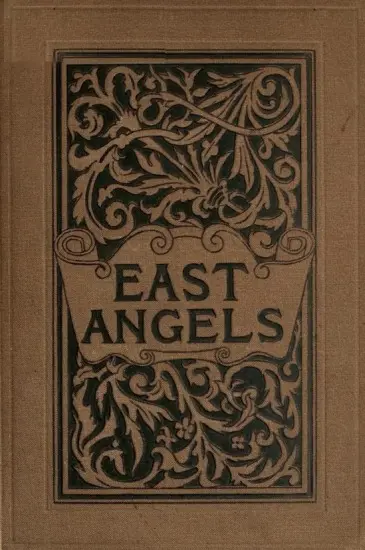
"East Angels: A Novel" by Constance Fenimore Woolson is a romantic novel written in the late 19th century. The story unfolds in a southern setting, introducing characters such as Evert Winthrop, a visitor from the North, and the Thorne family, consisting of the widow Mrs. Thorne and her daughter Garda. The narrative explores themes of contentment, longing for different climates, and contrasts between northern and southern lives, while establishing the relationships and dynamics among the characters. At the start of the novel, we meet Evert Winthrop, who is seeking a change from the harsh northern winters and has come to East Angels in Florida. Engaging in conversation with Garda Thorne, he learns about her desires to experience the winters of the North, while they both contemplate the beauty and tranquility of the southern climate. Their interactions reveal interesting dynamics, especially as Garda expresses her dreams and aspirations. The stage is set for an exploration of both the physical landscape and the emotional terrain as they encounter various characters, including Mrs. Thorne and their neighbor, Dr. Kirby. The opening portion effectively introduces the characters' backgrounds, setting a tone of introspection and connection to nature.
Introduction adapted from the source catalogue; source summaries may be automatically generated.
Free to read · English · 222,450 words · No account needed
MAKE TIME FOR A GOOD BOOK
On by default. Untick to stop anonymous reading totals. Each page counts after 10 seconds in view. How this works.
Anonymous counting is on unless you have switched it off.
"What is your idea of it?" said Winthrop, speaking immediately, in order to prevent the Doctor from speaking; for he saw that this gentleman was gazing at Garda with amazement, and divined the solemnity his words would assume after he should have got his breath back.
"I hardly know how to describe my idea," Garda was answering. "It's a delicious forgetting of everything that is tiresome, an enthusiasm that makes you feel as if you could do anything--that takes you way above stupid people. Stupid people are worse than thieves."
"You describe the intoxication, or rather, to give it a better name, the inspiration of genius," said Winthrop; "all artists feel this inspiration at times--musicians, poets, painters, sculptors, all who have in them a spark, great or small, of the creative fire; even I, when with such persons--as by good fortune I have been once or twice--have been able to comprehend a little of it, have caught, by reflection at least, a tinge of its glow."
"Oh, if you have felt it, it is not at all what I mean," answered Garda, with one of her sudden laughs. She drew her hand from his arm, and walked down the slope across the lower level towards the magnolias.
As soon as her back was turned, Dr. Kirby tapped Winthrop on the back impressively, and raising himself on tiptoe, spoke in his ear. "She has never, sir, been near--I may say, indeed, that she has never seen--an intoxicated person in her life." He then came down to earth again, and folding his arms, surveyed the northerner challengingly.
"Of course I understood that," Winthrop answered.
When Garda reached the dark shade under the great trees she paused and turned. Winthrop had followed her. She gave him a bright smile as he joined her. "I wanted to see if you would come," she said, with her usual frankness.
"Of course I came; what did you suppose I would do?"
"I did not know, that was what I wanted to find out. You are so
different, I should never know."
"Different from whom? From your four persons about here? I assure you that I am not different, I have no such pretension; your four are different, perhaps, but I am like five thousand, fifty thousand, others--as you will see for yourself when you come north."
"I don't believe it," said Garda, beginning to retrace her steps. She looked at him reflectively, then added, "I don't believe they are like you."
"What is it in me that you dislike so much?"
Your reading position is saved on this browser. Take it to another device with a library code. Reading pages adapt to text, rather than matching a printed edition.
Constance Fenimore Woolson

Constance Fenimore Woolson

Constance Fenimore Woolson
Constance Fenimore Woolson
BEHIND THE BOOK
This eBook is for the use of anyone anywhere in the United States and most other parts of the world at no cost and with almost no restrictions whatsoever. You may copy it, give it away or re-use it under the terms of the Project Gutenberg License included with this eBook or online at www.gutenberg.org. If you are not located in the United States, you will have to check the laws of the country where you are located before using this eBook. Read the source licence.
The original source file, including credits and licence, is retained by this library. Request an original-format copy at no charge. Please include the book title and Project Gutenberg identifier #33143.
KEEP YOUR CURIOSITY GOING
Coulson Kernahan

Maurice Baring
Frances Wright
Cécile Tormay

Frederic Jesup Stimson

W. H. P. (William Henry Pope) Jarvis