
Two Women, 1862; a Poem
Constance Fenimore Woolson
THE CLASSIC COLLECTION · 1884
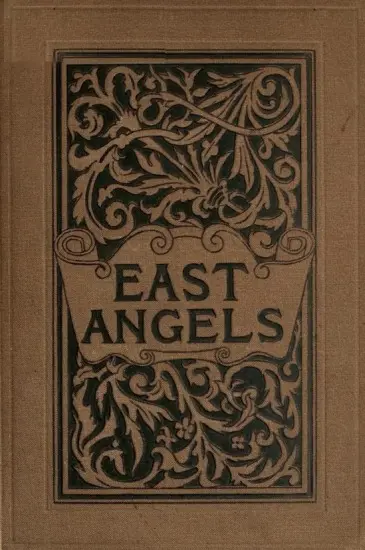
"East Angels: A Novel" by Constance Fenimore Woolson is a romantic novel written in the late 19th century. The story unfolds in a southern setting, introducing characters such as Evert Winthrop, a visitor from the North, and the Thorne family, consisting of the widow Mrs. Thorne and her daughter Garda. The narrative explores themes of contentment, longing for different climates, and contrasts between northern and southern lives, while establishing the relationships and dynamics among the characters. At the start of the novel, we meet Evert Winthrop, who is seeking a change from the harsh northern winters and has come to East Angels in Florida. Engaging in conversation with Garda Thorne, he learns about her desires to experience the winters of the North, while they both contemplate the beauty and tranquility of the southern climate. Their interactions reveal interesting dynamics, especially as Garda expresses her dreams and aspirations. The stage is set for an exploration of both the physical landscape and the emotional terrain as they encounter various characters, including Mrs. Thorne and their neighbor, Dr. Kirby. The opening portion effectively introduces the characters' backgrounds, setting a tone of introspection and connection to nature.
Introduction adapted from the source catalogue; source summaries may be automatically generated.
Free to read · English · 222,450 words · No account needed
MAKE TIME FOR A GOOD BOOK
On by default. Untick to stop anonymous reading totals. Each page counts after 10 seconds in view. How this works.
Anonymous counting is on unless you have switched it off.
The Doctor had not thought of this, he seized it as an excuse. "I will go and ask for something now," he said, and, with a brief bow, he left the room. In the hall outside, in a dark corner, he was obliged to stop and wipe his eyes. Poor Doctor! Poor fathers all the world over! They have to, as the phrase is, get over it.
Before Gracias had been formally apprised of Garda's engagement, Mr. and Mrs. Moore came down to East Angels to see Margaret; they came, indeed, the morning after Winthrop's interview with Dr. Kirby, and explained that they should have come on the previous afternoon if they had been able to secure old Cato and his boat. It was no small thing for Mrs. Moore to make such a journey; and Margaret expressed her acknowledgments.
"It is, in fact, an especial matter that has brought me down to-day," answered Penelope. "Would you allow Middleton to go out and look at the roses? It is a long time since he has had an opportunity of seeing them." When Middleton had departed, his wife, who was established in an easy-chair with her own rubber cushion, disguised in worsted-work, behind her, went on as follows: "I have come, Mrs. Harold, about this reported engagement between our little Garda and your cousin Mr. Winthrop" (Winthrop and Margaret had ceased to disclaim this relationship which Gracias had made up its mind to establish between them). "When Middleton returned from here yesterday, he told me what Mr. Winthrop had said--when they first reached here, you know--and we talked it over. Middleton was pleased, of course" (Penelope had known, then)--"I mean with the general idea; as he has the highest esteem for your cousin. But while we were still talking about it--for anything that so nearly touches Garda touches us too--we thought of something, which, I confess, troubled us. Edgarda is lovely, but Edgarda is a child, or nearly so; what is more, we remember that your cousin has always treated her as one. Now a man doesn't care for a child, Mrs. Harold, in the way he cares for a wife, and Middleton and I are both firmly of the opinion that only a love that is inevitable, overwhelming" (Penelope emphasized these adjectives with her black-gloved forefinger), "should be the foundation of a marriage. Look at us; we are examples of this. I couldn't have lived without Middleton; Middleton couldn't have lived without me--I mean after we had become aware of the state of our feelings towards each other. And we both think this should be the test: can he live without her?--can she live without him? If they can, either of them, they had better not marry. Of course, as to what may happen afterwards" (Penelope had suddenly remembered to whom she was talking), "that is another matter; things may occur; we may not be responsible for differences. But, as a beginning, this overmastering love is, we are convinced, the only real foundation. Now, does your cousin care for Garda in this way? That is what we ask. And if he does not, is there any reason that could have influenced him in making such an engagement? At this point of our conversation, Middleton repeated to me a remark of Dr. Kirby's--which I will not particularize further than to say that it contained the Kirbyly coined word--oatmealish. But it was that very epithet that made us think that he had the--the worldly idea that what had happened would cause remark in Gracias, unless it could be said, by authority, that the two persons concerned were formally engaged to each other. Now, Mrs. Harold, that is a complete mistake. You and your cousin, all of you, in fact, are strangers, you do not know either Gracias-a-Dios, or Reginald Kirby, as we do. Gracias will not remark; Gracias has no such habits; and Reginald Kirby's views must not be taken in such a serious matter as this. Much as we like Reginald Kirby, indisputable as is his talent--and we consider him, all Gracias considers him, one of the most brilliant men of the time--he is in some of his judgments--I regret to say it--but he is light! When he speaks on certain subjects, one might almost think that he was" (here Penelope lowered her voice) "French! And so Middleton and I have come down to-day to say that your cousin must not be in the least influenced by anything he may have suggested. Gracias will not comment; Middleton, speaking (through me) as rector of the parish, assures you of this; and he knows our people. I hope you will not think us forward; but we could not possibly stand by and see Garda so terribly sacrificed--married to a man who does not love her in the only true way. And all on account of a misconception!"
Your reading position is saved on this browser. Take it to another device with a library code. Reading pages adapt to text, rather than matching a printed edition.
Constance Fenimore Woolson

Constance Fenimore Woolson

Constance Fenimore Woolson
Constance Fenimore Woolson
BEHIND THE BOOK
This eBook is for the use of anyone anywhere in the United States and most other parts of the world at no cost and with almost no restrictions whatsoever. You may copy it, give it away or re-use it under the terms of the Project Gutenberg License included with this eBook or online at www.gutenberg.org. If you are not located in the United States, you will have to check the laws of the country where you are located before using this eBook. Read the source licence.
The original source file, including credits and licence, is retained by this library. Request an original-format copy at no charge. Please include the book title and Project Gutenberg identifier #33143.
KEEP YOUR CURIOSITY GOING
Coulson Kernahan

Maurice Baring
Frances Wright
Cécile Tormay

Frederic Jesup Stimson

W. H. P. (William Henry Pope) Jarvis