
Two Women, 1862; a Poem
Constance Fenimore Woolson
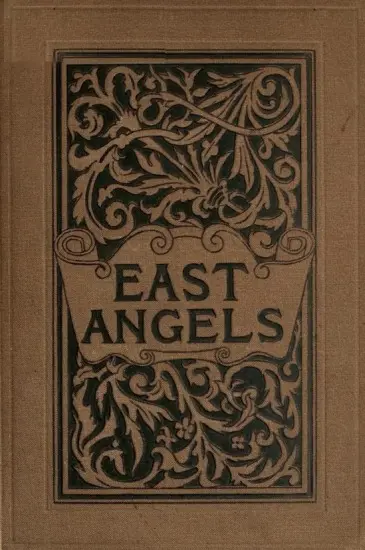
THE CLASSIC COLLECTION · 1884
"East Angels: A Novel" by Constance Fenimore Woolson is a romantic novel written in the late 19th century. The story unfolds in a southern setting, introducing characters such as Evert Winthrop, a visitor from the North, and the Thorne family, consisting of the widow Mrs. Thorne and her daughter Garda. The narrative explores themes of contentment, longing for different climates, and contrasts between northern and southern lives, while establishing the relationships and dynamics among the characters. At the start of the novel, we meet Evert Winthrop, who is seeking a change from the harsh northern winters and has come to East Angels in Florida. Engaging in conversation with Garda Thorne, he learns about her desires to experience the winters of the North, while they both contemplate the beauty and tranquility of the southern climate. Their interactions reveal interesting dynamics, especially as Garda expresses her dreams and aspirations. The stage is set for an exploration of both the physical landscape and the emotional terrain as they encounter various characters, including Mrs. Thorne and their neighbor, Dr. Kirby. The opening portion effectively introduces the characters' backgrounds, setting a tone of introspection and connection to nature.
Introduction adapted from the source catalogue; source summaries may be automatically generated.
Free to read · English · 222,450 words · No account needed
MAKE TIME FOR A GOOD BOOK
On by default. Untick to stop anonymous reading totals. Each page counts after 10 seconds in view. How this works.
Anonymous counting is on unless you have switched it off.
The Doctor glared at him. Then he took him by the button and led him apart from the others. "Sir," he said, frowning, "you can take what stand you like in this matter, you are a clergyman, and a certain oatmealish view of things becomes your cloth; but I, sir, am a man of the world, and must act accordingly!" And leaving the parson to digest that, he returned to his post at the door.
When Betty came back from her interview with Aunt Dinah she brought with her a piece of hot corn-bread; "I thought you might like a taste of it," she said. Mrs. Kirby was very glad to get it; she sat breaking off small fragments and eating them carefully--Mrs. Rutherford would have said that she nibbled. "Yes, the sweetest thing!" continued Betty, seating herself broadly in an arm-chair, and searching again for her handkerchief. "Let me see--you and the Doctor started down here about midnight, didn't you? Well, of course we didn't feel like going to bed, of course, not knowing where our poor dear child might be, and so I went over and sat with Penelope Moore; and Mr. Moore very often went down to the gate, and indeed a good deal of the time he stayed out on the plaza; Telano's coming up from here had let everybody know what had happened, and many others sat up besides ourselves, and some of the servants got together with torches and went out on the barren to look, only Mr. Moore wouldn't organize a regular search, because he supposed that was being done here under the Doctor's directions, he never dreamed you hadn't got here at all! At length, when it was nearly three, Mr. Moore came in and said that he thought we had better go to bed and get what sleep we could; that we should only be perfectly useless and exhausted the next day if we sat up all night" (here little Mrs. Kirby heaved a noiseless sigh); "and so I went home, and did go to bed, but more to occupy the time than anything else, for of course it was simply impossible to sleep, anxious as I was. But I must have dropped off, after all, I reckon, because it was just dawn when Cynthy came up to tell me that Mr. Moore was down-stairs; I rushed down, and he said that Marcos Finish, the livery-stable man, had been to the rectory to say that Bartolo Johnson had come to his house a short time before, knocked him up, and told him that the northern gentleman and Garda were ten miles out on the barren, and that he had been sent in to bring out a carriage for them. He confessed--Bartolo--that he ought to have been there hours before, as the gentleman had sent him in on his own horse not much past eight in the evening. But, on the way, he had to pass the cabin of one of his friends, he said--a nice friend, that wild, drinking Joe Tasteen!--and Joe stopped him, and he intended to stay only a moment, of course, which soon became many minutes as the foolish boy lay on the floor in a drunken sleep, while two of Joe's hangers-on, though not actually Joe himself, I believe, made off with the horse. Of course it was a regular plot, and I'm afraid Mr. Winthrop will never see that horse again! When Bartolo did at last wake up, he came in to Gracias as fast as he could scamper, and went straight to Marcos's place and told all about it--the only redeeming feature in his part of the affair--and Marcos got out his carriage, and sent one of his best men as driver, with Bartolo as guide, and then he went over to your house to tell the Doctor, and not finding him, came on to the rectory, and Mr. Moore told him that he did wrong not to come to him before sending the carriage (but Marcos said Bartolo wouldn't wait), because he himself would have gone out in it after Garda, of course. This was the first we knew, in Gracias, of Mr. Winthrop's being with the dear child, and it did seem so fortunate that if they were to be lost at all, they should happen to be lost together. Mr. Moore thought, and so did Marcos Finish, that they would drive directly here, without stopping in Gracias, and so he rode down at once; and I was coming down myself, later, only they did that sweet thing, they stopped after all, and came to me. There they were in the drawing-room when I hurried down, Garda laughing, oh, so pretty, the dear! As soon as I knew, I took her in my arms and gave her a true mother's blessing. Oh, Mistress Kirby, how such days as this take us back to our own spring-time, to the first buddings and blossomings of our own dear days of love! I am sure--I am sure," continued Betty, overcome again, and lifting the handkerchief, "that we cannot but remember!"
Your reading position is saved on this browser. Take it to another device with a library code. Reading pages adapt to text, rather than matching a printed edition.
Constance Fenimore Woolson

Constance Fenimore Woolson

Constance Fenimore Woolson
Constance Fenimore Woolson
BEHIND THE BOOK
This eBook is for the use of anyone anywhere in the United States and most other parts of the world at no cost and with almost no restrictions whatsoever. You may copy it, give it away or re-use it under the terms of the Project Gutenberg License included with this eBook or online at www.gutenberg.org. If you are not located in the United States, you will have to check the laws of the country where you are located before using this eBook. Read the source licence.
The original source file, including credits and licence, is retained by this library. Request an original-format copy at no charge. Please include the book title and Project Gutenberg identifier #33143.
KEEP YOUR CURIOSITY GOING
Coulson Kernahan

Maurice Baring
Frances Wright
Cécile Tormay

Frederic Jesup Stimson

W. H. P. (William Henry Pope) Jarvis