
Two Women, 1862; a Poem
Constance Fenimore Woolson
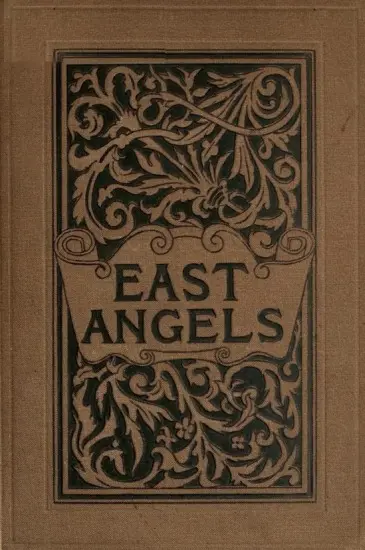
THE CLASSIC COLLECTION · 1884
"East Angels: A Novel" by Constance Fenimore Woolson is a romantic novel written in the late 19th century. The story unfolds in a southern setting, introducing characters such as Evert Winthrop, a visitor from the North, and the Thorne family, consisting of the widow Mrs. Thorne and her daughter Garda. The narrative explores themes of contentment, longing for different climates, and contrasts between northern and southern lives, while establishing the relationships and dynamics among the characters. At the start of the novel, we meet Evert Winthrop, who is seeking a change from the harsh northern winters and has come to East Angels in Florida. Engaging in conversation with Garda Thorne, he learns about her desires to experience the winters of the North, while they both contemplate the beauty and tranquility of the southern climate. Their interactions reveal interesting dynamics, especially as Garda expresses her dreams and aspirations. The stage is set for an exploration of both the physical landscape and the emotional terrain as they encounter various characters, including Mrs. Thorne and their neighbor, Dr. Kirby. The opening portion effectively introduces the characters' backgrounds, setting a tone of introspection and connection to nature.
Introduction adapted from the source catalogue; source summaries may be automatically generated.
Free to read · English · 222,450 words · No account needed
MAKE TIME FOR A GOOD BOOK
On by default. Untick to stop anonymous reading totals. Each page counts after 10 seconds in view. How this works.
Anonymous counting is on unless you have switched it off.
During this time Celestine and Looth were often obliged to be companions; there were certain things they each did which no one else could do as well, and therefore neither one could be spared. To Celestine it was a weird experience, this sitting up at night in the large bare room of a strange old Spanish house (a house which had been inhabited for generations by Papists), opposite a great black woman in a red turban, who was in the habit of dancing barelegged in the roads in the middle of the day; and all this on a winter night with roses blooming outside in the garden, and the perfume of orange blossoms coming in through the half-closed windows--a winter night which seemed to have gone astray from some other world. The absence of cold in winter climates abroad Celestine had accepted without opposition; it was only part of their general outlandishness. But that such foreign eccentricities should exist in the United States of America, under the Stars and Stripes, this she by no means approved; like many other persons, she could not help believing that frost-tipped noses were an accompaniment of republican simplicity and virtue, and that a good conscience and east wind could not be long separated without danger to morals.
She had never alluded to the dance. But one night Looth herself alluded to it. "Specks yer seen us, Miss Selsty, dat day you wuz firs' down dar fur to ax me to come up yer to nuss--specks yer seen me an' Jinny?"
Celestine nodded grimly: a confession was evidently on the way.
"Yessum, Miss Selsty, I reckoned yer seen us. We wuz shoutin'," Looth went on, with gentle satisfaction. "I's a very rilligeous 'oman, Miss Selsty, yessum. An' so's Jinny too."
All the Gracias friends came down often to East Angels to inquire after Mrs. Rutherford; Madam Ruiz and Madam Giron came over from their respective plantations. Adolfo Torres, however, did not come; he remained at home, and sent his respectful inquiries by his aunt. Neither the Doctor nor Mr. Moore had betrayed his secret; these two gentlemen were not in the habit of betraying anybody. Torres did not altogether like their reticence upon this particular occasion, he could not see that it was a subject upon which reticence was required. In the old days (the only days he cared about) the position of suitor, devoted suppliant for his lady's hand, was an honorable one, one distinctly recognized; he should like to be recognized as occupying it now. But if these friends would not tell, he could not; to tell would not accord with his present posture. "Posture" was his own word, no one else would have dreamed of applying it to anything connected with this self-controlled young man. Gracias, too, was having veritable postures of another kind to look at. These were the attitudes of Manuel Ruiz, which were very new and surprising. After that first burst of fury (which Torres had witnessed) he had taken to riding over the barren at headlong speed on his large, thin black horse, with several knives stuck in his belt--a belt whose presence (in itself brigandish) he had further emphasized by tying over it a crimson sash. Next he had suddenly appeared as a man of dissipations, a scoffer; he haunted the two small, rather sleepy bar-rooms of Gracias, smoking large cigars, wearing his sombrero much on one side, and in public places--the plaza for instance--made cynical remarks about "the fair sex." This was worse even than the knives and the galloping, and Gracias was considering what had better be done, when, lo! Manuel appeared among them playing a third part. He was not only himself, but more mellifluous even than he had ever been before; his manner, indeed, when he met any of these ladies, had in it such a delicate yet keenly personal admiration, such an appreciation of what they had been as well as of what they were, that all of them, even stout, honest Betty, and little Mrs. Kirby herself, under her high-held parasol, were set to blushing a little, without knowing why, and to vaguely adjusting their front hair with a touch or two, only to become conscious of it later, and say to themselves, angrily, that that boy ought to have a good horsewhipping! Manuel called upon all his friends and all his mother's friends (except Garda at East Angels), and could hardly sit in a chair. Upon seeing him, the idea was that he had been accustomed to a divan; he seemed to have come from the sipping of nectar, and to have touched nothing but rose-leaves. Having thus thrown dust in the eyes of the town, he took his departure; as he had long threatened, he was going to see the world. He mentioned to Mrs. Harold that he should try to "take in" New York; and then he sailed on a coasting schooner for Key West, with four dollars and twenty five-cents in his pocket.
Your reading position is saved on this browser. Take it to another device with a library code. Reading pages adapt to text, rather than matching a printed edition.
Constance Fenimore Woolson

Constance Fenimore Woolson

Constance Fenimore Woolson
Constance Fenimore Woolson
BEHIND THE BOOK
This eBook is for the use of anyone anywhere in the United States and most other parts of the world at no cost and with almost no restrictions whatsoever. You may copy it, give it away or re-use it under the terms of the Project Gutenberg License included with this eBook or online at www.gutenberg.org. If you are not located in the United States, you will have to check the laws of the country where you are located before using this eBook. Read the source licence.
The original source file, including credits and licence, is retained by this library. Request an original-format copy at no charge. Please include the book title and Project Gutenberg identifier #33143.
KEEP YOUR CURIOSITY GOING
Coulson Kernahan

Maurice Baring
Frances Wright
Cécile Tormay

Frederic Jesup Stimson

W. H. P. (William Henry Pope) Jarvis