
Two Women, 1862; a Poem
Constance Fenimore Woolson
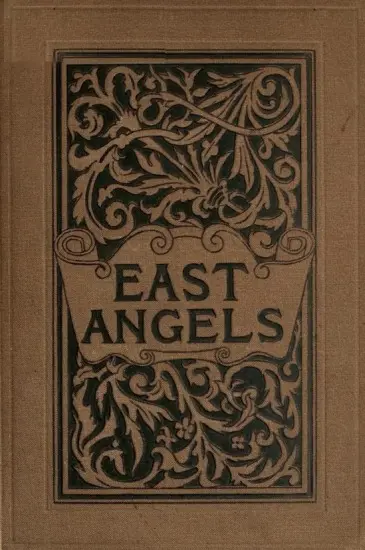
THE CLASSIC COLLECTION · 1884
"East Angels: A Novel" by Constance Fenimore Woolson is a romantic novel written in the late 19th century. The story unfolds in a southern setting, introducing characters such as Evert Winthrop, a visitor from the North, and the Thorne family, consisting of the widow Mrs. Thorne and her daughter Garda. The narrative explores themes of contentment, longing for different climates, and contrasts between northern and southern lives, while establishing the relationships and dynamics among the characters. At the start of the novel, we meet Evert Winthrop, who is seeking a change from the harsh northern winters and has come to East Angels in Florida. Engaging in conversation with Garda Thorne, he learns about her desires to experience the winters of the North, while they both contemplate the beauty and tranquility of the southern climate. Their interactions reveal interesting dynamics, especially as Garda expresses her dreams and aspirations. The stage is set for an exploration of both the physical landscape and the emotional terrain as they encounter various characters, including Mrs. Thorne and their neighbor, Dr. Kirby. The opening portion effectively introduces the characters' backgrounds, setting a tone of introspection and connection to nature.
Introduction adapted from the source catalogue; source summaries may be automatically generated.
Free to read · English · 222,450 words · No account needed
MAKE TIME FOR A GOOD BOOK
On by default. Untick to stop anonymous reading totals. Each page counts after 10 seconds in view. How this works.
Anonymous counting is on unless you have switched it off.
For in their hearts women always know that of all the gifts bestowed upon their sex that of beauty has so immeasurably the greatest power that nothing else can for one moment be compared with it, that all other gifts, of whatsoever nature and extent, sink into insignificance and powerlessness beside it. It is, of course, to the interest of domestic men, the good husbands and fathers who are satisfied with home comforts and home productions, and desire nothing so much as peace at the hearth-stone, to deny this fact, to qualify it as much as possible, and reduce its universality. But the denials of these few, contented, low-flying gentlemen are lost in the great tide of world-wide agreement, and no one is deceived by them, save, in occasional instances, their own wives, who in that case have been endowed by nature with much faith (or is it self-complacence?), and powers of observation not much beyond those of the oyster. But on that long New England coast already spoken of, and in those pleasant, pretty towns of the Middle States, observation has been keenly cultivated, and self-complacence held in abeyance by much analysis. All the northern sisters who lived there would probably have answered again, and with one voice, that with simply the most ordinary good qualities in addition, a girl as beautiful as Edgarda Thorne would carry all before her in any case.
Garda was of medium height, but her litheness made her seem tall. This litheness had in it none of the meagre outlines of the little mother, its curves were all moulded with that soft roundness which betrays a southern origin. But the observer was not left to this evidence alone, there was further and indisputable proof in her large, dark, beautiful, wholly Spanish eyes. She had, in truth, been well described by Mrs. Thorne's phrase--"the portrait of her Spanish grandmother, painted in English colors." The tints of her complexion were very different from the soft, unchanging, creamy line which had been one of the beauties of the beautiful Ines de Duero; Garda's complexion had the English lightness and brightness. But it was not merely pink and white; there were browns under its warm fairness--browns which gave the idea that it was acquainted with the open air, the sun, the sea, and enjoyed them all. It never had that blue look of cold which mars at times the beauty of all women who are delicately fair; it never had the fatal shade of yellow that menaces the brunette. It was a complexion made for all times and all lights; pure and clear, it had also a soft warmth of color which was indescribably rich. The lustrous black braids of Ines de Duero had been changed in her grand-daughter to braids equally thick, but in color a bright brown; not the brown that is but golden hair grown darker, nor that other well-known shade, neither light nor dark, which covers the heads of so many Americans that it might almost be called the national color; this brown had always been bright, had never changed; the head of the little Garda of two years old had showed a flossy mass of the same hue. This hair curled slightly through all its length, which gave the braids a rippled appearance. It had, besides, the beauty of growing low and thickly at the temples and over the forehead. The small head it covered was poised upon a throat which was not a mere point of union, an unimportant or lean angle to be covered by a necklace or collar; this throat was round, distinct in outline, its fairness beautiful not only in front, but also behind, under and at the edges of the hair where the comb had lifted the thick, soft mass and swept it up to take its place in the braids above. Garda's features were fine, but they were not of the Greek type, save that the beautiful forehead was low; the mouth was not small, the lips full, delicately curved. When she smiled, these lips had a marked sweetness of expression. They parted over brilliantly white teeth, which, with the colors in her hair and complexion, were the direct gifts of English ancestors, as her dark eyes with their long, curling, dark lashes, the thickness of her brown braids, her rounded figure with its graceful unhurrying gait and high-arched little feet, were inheritances from the Dueros.
Your reading position is saved on this browser. Take it to another device with a library code. Reading pages adapt to text, rather than matching a printed edition.
Constance Fenimore Woolson

Constance Fenimore Woolson

Constance Fenimore Woolson
Constance Fenimore Woolson
BEHIND THE BOOK
This eBook is for the use of anyone anywhere in the United States and most other parts of the world at no cost and with almost no restrictions whatsoever. You may copy it, give it away or re-use it under the terms of the Project Gutenberg License included with this eBook or online at www.gutenberg.org. If you are not located in the United States, you will have to check the laws of the country where you are located before using this eBook. Read the source licence.
The original source file, including credits and licence, is retained by this library. Request an original-format copy at no charge. Please include the book title and Project Gutenberg identifier #33143.
KEEP YOUR CURIOSITY GOING
Coulson Kernahan

Maurice Baring
Frances Wright
Cécile Tormay

Frederic Jesup Stimson

W. H. P. (William Henry Pope) Jarvis