
Two Women, 1862; a Poem
Constance Fenimore Woolson
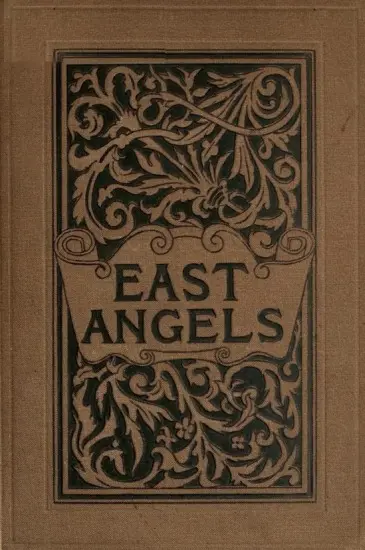
THE CLASSIC COLLECTION · 1884
"East Angels: A Novel" by Constance Fenimore Woolson is a romantic novel written in the late 19th century. The story unfolds in a southern setting, introducing characters such as Evert Winthrop, a visitor from the North, and the Thorne family, consisting of the widow Mrs. Thorne and her daughter Garda. The narrative explores themes of contentment, longing for different climates, and contrasts between northern and southern lives, while establishing the relationships and dynamics among the characters. At the start of the novel, we meet Evert Winthrop, who is seeking a change from the harsh northern winters and has come to East Angels in Florida. Engaging in conversation with Garda Thorne, he learns about her desires to experience the winters of the North, while they both contemplate the beauty and tranquility of the southern climate. Their interactions reveal interesting dynamics, especially as Garda expresses her dreams and aspirations. The stage is set for an exploration of both the physical landscape and the emotional terrain as they encounter various characters, including Mrs. Thorne and their neighbor, Dr. Kirby. The opening portion effectively introduces the characters' backgrounds, setting a tone of introspection and connection to nature.
Introduction adapted from the source catalogue; source summaries may be automatically generated.
Free to read · English · 222,450 words · No account needed
MAKE TIME FOR A GOOD BOOK
On by default. Untick to stop anonymous reading totals. Each page counts after 10 seconds in view. How this works.
Anonymous counting is on unless you have switched it off.
As Winthrop came out from the myrtles, "How long you have been!" she said. Then, "Come and see this sketch," she went on immediately, her eyes returning to the picture. "I've never seen anything so pretty in my life."
As Winthrop, after a moment's survey of the scene, came towards her over the flowers, "Oh," she said, "I forget that you don't know each other. Mr. Winthrop, Mr. Lucian Spenser, civil engineer, from Washington, the District of Columbia. Mr. Spenser, Mr. Evert Winthrop--he is nothing in particular now, I believe--from the city of New York."
"It's an occupation in itself, isn't it? to be from New York," said the artist, going on with his sketching, after the little motion, half nod, half wave of the hand, with which he had acknowledged Garda's introduction. Winthrop in the mean while had neither spoken nor bowed; he had only, as slightly as possible, raised his hat.
"Why do you stop there?" said Garda. She came to him, took his arm, and led him behind the easel. "The picture--the picture's the thing to look at!"
The sketch--it was in water-colors--represented the little arena, which was in itself a brilliant picture, done by Nature's hand. It was an open oval space about fifteen feet in diameter, entirely bare of trees or bushes, and covered with low green, through which rose lightly slender leafless stalks, each holding up, several inches above the herbage, a single large bright-faced flower; the flowers did not touch each other, they were innumerable spots of gold and bright lavender, which did not blend; on three sides the thick dark chaparral, on the fourth the dark myrtles, enclosed this gayly decked nook, and seemed to have kept it safely from all the world until now. The artist was making a very good sketch, good, that is, in the manner of the new foreign school.
"Isn't it beautiful--wonderful?" insisted Garda.
"Very clever," Winthrop answered.
The artist laughed. "You hate the manner," he said. "Many people do; I think I hate it a little myself, now and then." And he began to sing softly to himself as he worked:
"'Oh, de sun shines bright in my ole Kentucky home, 'Tis summah, de darkies are gay--'"
"'Twas his singing, you know, that attracted my attention," said Garda to Winthrop, under cover of the song. She did not seem to be explaining so much as repeating a narrative that pleased herself. "I had climbed up here to hide myself from you, when I heard singing; I followed the sound, and--here he was!"
"You have met him before, of course?" was Winthrop's reply.
Your reading position is saved on this browser. Take it to another device with a library code. Reading pages adapt to text, rather than matching a printed edition.
Constance Fenimore Woolson

Constance Fenimore Woolson

Constance Fenimore Woolson
Constance Fenimore Woolson
BEHIND THE BOOK
This eBook is for the use of anyone anywhere in the United States and most other parts of the world at no cost and with almost no restrictions whatsoever. You may copy it, give it away or re-use it under the terms of the Project Gutenberg License included with this eBook or online at www.gutenberg.org. If you are not located in the United States, you will have to check the laws of the country where you are located before using this eBook. Read the source licence.
The original source file, including credits and licence, is retained by this library. Request an original-format copy at no charge. Please include the book title and Project Gutenberg identifier #33143.
KEEP YOUR CURIOSITY GOING
Coulson Kernahan

Maurice Baring
Frances Wright
Cécile Tormay

Frederic Jesup Stimson

W. H. P. (William Henry Pope) Jarvis