The orchestra and its instruments
Esther Singleton
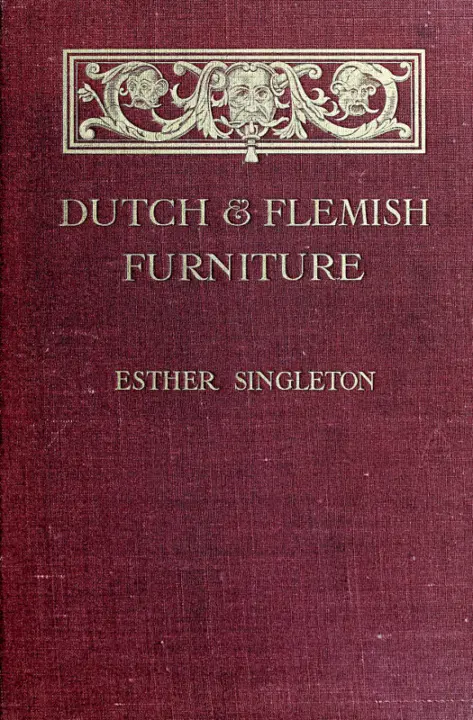
THE CLASSIC COLLECTION · 1907
"Dutch and Flemish Furniture" by Esther Singleton is a historical account written in the early 20th century. This work explores the intricate history and craftsmanship of furniture from the Low Countries, focusing on how various artistic styles evolved from the Middle Ages through the Renaissance to the 19th century. The book likely delves into the impact of socio-political developments on furniture design and manufacturing, as well as the cultural exchanges between different European countries. The opening of the text provides background on the artistic and cultural evolution in the Low Countries, emphasizing the significant influence of the English and Flemish artisans on one another throughout history. Singleton highlights the interconnectedness of trade, craftsmanship, and socio-political relationships between England, France, and the Low Countries. This section sets the stage for a detailed exploration of the various furniture styles and artistic movements, indicating that subsequent chapters will draw upon historical events and artistic trends that shaped the distinctive styles found in Dutch and Flemish designs.
Introduction adapted from the source catalogue; source summaries may be automatically generated.
Free to read · English · 90,730 words · No account needed
MAKE TIME FOR A GOOD BOOK
On by default. Untick to stop anonymous reading totals. Each page counts after 10 seconds in view. How this works.
Anonymous counting is on unless you have switched it off.
Two pair of tongs, one fire shovell, a long bar of iron 0 4 6
One iron chaine in the chimney and three pot hangers 0 15 6
One bellows, a board to whet knives upon 0 1 0
Two copper pots, two brass candlesticks, six tin 0 10 0
candlesticks
Silverware was an important item in the possessions of the merchant class as well as the nobility. In 1682, we find the following items in the inventory of a prosperous butcher:
£ s. d.
Twenty-two silver spoons, one silver forke, three silver 48 0 0 gobletts, one ditto tankard, one ditto mustard pot, one ditto cup with two eares, five silver small cuppes, one ditto, one goblet, two ditto salt sellars, one ditto cup, two ditto saucers, one ditto cup, one ditto spice box, a Cornelia tree cup with silver, two ditto dishes, weight in all ten pounds
A silver girdle with hanging keys, one ditto with three 1 4 0 chaines with hookes, one gold bodkin, two silver bodkins, “silver for my booke with a chaine,” silver to a belt for a sworde
One silver hat band 0 13 6
One silver tumbler 1 0 0
One silver bell 0 18 0
One silver watch 1 0 0
Two pair silver buckles 0 8 0
Fourteen gold rings 10 7 6
One pair silver buttons, and one silver knife 0 12 0
No view of a Dutch interior of the seventeenth century would be complete if it neglected to take into consideration the family pets. These are very much in evidence in the pictures, by Dutch masters. These consist of monkeys, parrots, peacocks, pheasants, cats and dogs.
The monkey is quite a privileged character. Sometimes he is perched on the top of a spinet and sometimes on a kas or a chimney-piece.
The masters of vessels that sailed the Eastern Seas, both English and Dutch, were commissioned by nobles and potentates to bring home rare animals. In 1609, for instance, the East India Company issued letters for reserving “all strange fowls and beasts to be found there,” for the Council. In 1623, we find a note that to the governor of the Company a “Caccatoa” was sent from Batavia. The cockatoo is a familiar resident in Dutch homes. He and other kinds of parrots, domiciled in wicker and wire cages, are very much in evidence in the genre pictures of the age. The golden and silver pheasants were also privileged members of the household, and were allowed the freedom of the hall. Sometimes we see them perched on cornices, and sometimes strutting on the tiled floor. The monkey, which played so important a part in the “singerie” decoration of the late Louis Quatorze, Régence and Louis Quinze periods, was imported in considerable numbers. A gossipy journal—Le Courrier du temps, conducted by Fouquet de Croissy who undertook to tell the secret happenings in the court of every prince in Europe— records the following item of news from Amsterdam, under date of September 1, 1649:
Your reading position is saved on this browser. Take it to another device with a library code. Reading pages adapt to text, rather than matching a printed edition.
Esther Singleton
Esther Singleton
Esther Singleton
Esther Singleton
BEHIND THE BOOK
This eBook is for the use of anyone anywhere in the United States and most other parts of the world at no cost and with almost no restrictions whatsoever. You may copy it, give it away or re-use it under the terms of the Project Gutenberg License included with this eBook or online at www.gutenberg.org. If you are not located in the United States, you will have to check the laws of the country where you are located before using this eBook. Read the source licence.
The original source file, including credits and licence, is retained by this library. Request an original-format copy at no charge. Please include the book title and Project Gutenberg identifier #54552.
KEEP YOUR CURIOSITY GOING
Cécile Tormay

Moritz Busch
John L. Ransom
Frances Wright
Cécile Tormay

Mabel Potter Daggett