THE CLASSIC COLLECTION✦Torwood’s trustCLASSIC FREE BOOKS
Torwood’s trust
Evelyn Everett-Green
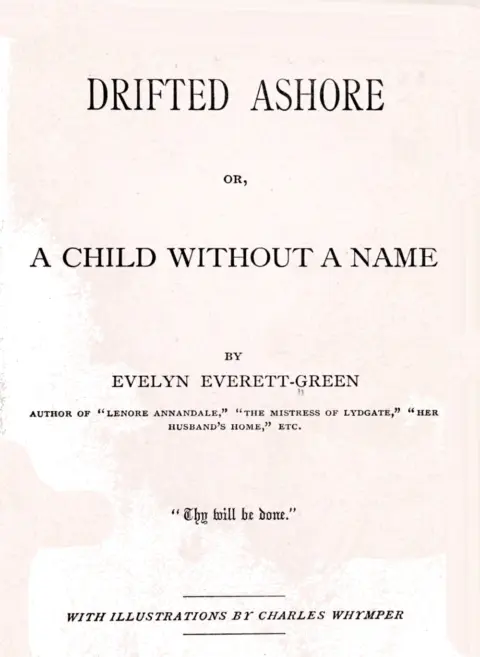
THE CLASSIC COLLECTION · 1890
"Drifted Ashore; or, A Child Without a Name" by Evelyn Everett-Green is a novel written in the late 19th century. This compelling tale revolves around the mysterious fate of a young boy washed ashore after a storm, who is taken in by a kind-hearted fisherwoman while he recovers from his injuries. The book explores themes of identity, belonging, and the search for family, as the boy, later named Bertie, grapples with his lost memories and the kindness extended to him by strangers. The opening of the novel paints a vivid picture of a desolate seaside landscape marked by a tumultuous ocean and a solitary young boy named David, a fisherman's son, reflecting on a name and a life he has yet to uncover. We learn that Bertie, the boy who drifted ashore, lies in a fisherman's cottage, unconscious and without any means of identifying himself. As he slowly regains consciousness, not only does he face the uncertainty of his origins, but he also develops a bond with David and the fisherwoman. The narrative hints at the darker realities of life through the boy’s mysterious past, intertwining the lives of the two boys, and raising questions about class and identity as they navigate their new friendship.
Introduction adapted from the source catalogue; source summaries may be automatically generated.
Free to read · English · 66,074 words · No account needed
MAKE TIME FOR A GOOD BOOK
On by default. Untick to stop anonymous reading totals. Each page counts after 10 seconds in view. How this works.
Anonymous counting is on unless you have switched it off.
SUMMER merged into autumn almost before any one was aware of the change, and with the advance of the season came changes in the life of little Bertie.
The Arbuthnot boys went back to school, and Sir Walter took his wife and little daughter away to Scotland, where he possessed a shooting-box, and Queenie told her playfellow that she did not know when they would be back, for her mother had talked of paying a round of visits during the winter months, and, unless they came home for the boys’ Christmas holidays, it was quite possible they might remain away in one place or another until the spring came round again.
Queenie was pleased and excited at the thought of all the changes and amusements in store for her. She had been used to a London life, and had thought the country just a little dull. She liked the idea of going about with her parents and paying visits at country houses, for she always made her way wherever she went, and was quite a pet and plaything to grown-up people, to whose company she was well used.
So she talked a good deal of anticipated delights, and pitied “poor Bertie” a good deal, wondering whatever he would find to do all through the long winter months, with nobody to play with “except that fisher-boy, David.”
Bertie, however, did not seem at all put out by the prospect of his loneliness, as depicted by Queenie. He smiled when she pitied him, and said,—
“Oh, never mind me; I shall be quite happy. I don’t mind being alone. Besides, there is always the Squire, you know.”
“But he doesn’t play with you.”
“No,” answered Bertie, with his grave smile, “he doesn’t play;” and then the little boy smiled again, as if such an idea amused him.
“And he doesn’t talk much either, does he?”
“No, not much.”
“And you don’t see him often?”
“Not very often, perhaps; but I can always sit in his library when I
like.”
“Well,” remarked Queenie, tossing back her curly head, “I can’t quite see what good the Squire can be to you, if he doesn’t play, and doesn’t talk, and only lets you sit in his library.”
Bertie smiled again in the way that Queenie never quite understood.
“I like him to be just as he is,” answered the little boy. “I shouldn’t like him to be a bit different. He is just right, I think.”
Queenie looked puzzled.
“You’re a very odd child, Bertie. I often say so, and so do other
people.”
Your reading position is saved on this browser. Take it to another device with a library code. Reading pages adapt to text, rather than matching a printed edition.
Evelyn Everett-Green
Evelyn Everett-Green
Evelyn Everett-Green
Evelyn Everett-Green
BEHIND THE BOOK
This eBook is for the use of anyone anywhere in the United States and most other parts of the world at no cost and with almost no restrictions whatsoever. You may copy it, give it away or re-use it under the terms of the Project Gutenberg License included with this eBook or online at www.gutenberg.org. If you are not located in the United States, you will have to check the laws of the country where you are located before using this eBook. Read the source licence.
The original source file, including credits and licence, is retained by this library. Request an original-format copy at no charge. Please include the book title and Project Gutenberg identifier #70089.
KEEP YOUR CURIOSITY GOING
Coulson Kernahan

Maurice Baring
Frances Wright
Cécile Tormay

Frederic Jesup Stimson

W. H. P. (William Henry Pope) Jarvis