THE CLASSIC COLLECTION✦Torwood’s trustCLASSIC FREE BOOKS
Torwood’s trust
Evelyn Everett-Green
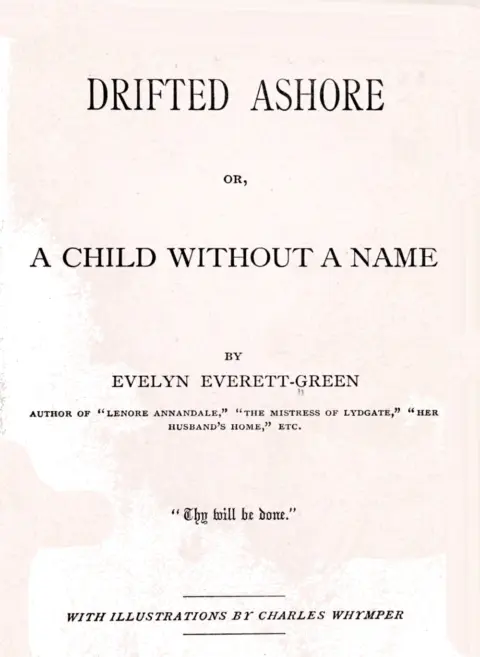
THE CLASSIC COLLECTION · 1890
"Drifted Ashore; or, A Child Without a Name" by Evelyn Everett-Green is a novel written in the late 19th century. This compelling tale revolves around the mysterious fate of a young boy washed ashore after a storm, who is taken in by a kind-hearted fisherwoman while he recovers from his injuries. The book explores themes of identity, belonging, and the search for family, as the boy, later named Bertie, grapples with his lost memories and the kindness extended to him by strangers. The opening of the novel paints a vivid picture of a desolate seaside landscape marked by a tumultuous ocean and a solitary young boy named David, a fisherman's son, reflecting on a name and a life he has yet to uncover. We learn that Bertie, the boy who drifted ashore, lies in a fisherman's cottage, unconscious and without any means of identifying himself. As he slowly regains consciousness, not only does he face the uncertainty of his origins, but he also develops a bond with David and the fisherwoman. The narrative hints at the darker realities of life through the boy’s mysterious past, intertwining the lives of the two boys, and raising questions about class and identity as they navigate their new friendship.
Introduction adapted from the source catalogue; source summaries may be automatically generated.
Free to read · English · 66,074 words · No account needed
MAKE TIME FOR A GOOD BOOK
On by default. Untick to stop anonymous reading totals. Each page counts after 10 seconds in view. How this works.
Anonymous counting is on unless you have switched it off.
Meantime, Uncle Fred had cut the cords that bound Bertie, and had bathed his face with vinegar and water that David brought from the cottage. Very soon Bertie heaved a long, shuddering sigh, and slowly opened his eyes. He did not at first seem to know where he was or who was with him; but after Uncle Fred had spoken to him once or twice kindly, reassuring words, the child appeared to recover himself, and put out a small hand, saying questioningly,—
“Uncle Fred?”
The young man smiled at hearing himself so addressed, but he was pleased to be accepted on such terms.
“Yes, my little man, it is Uncle Fred; and if Uncle Fred had only been here a few minutes earlier, all this should not have happened. I am very sorry those rascally nephews of mine have given you such a fright; but you will be a brave boy, I know, and not think of it more than you can help, and you will be none the worse in the long run.”
Bertie remembered all about it now, and he began to tremble in spite of the kindly pressure of Uncle Fred’s arm round him.
“What is the matter, my child? You are not afraid now?”
“No—not exactly—if they won’t do it again.”
“I will take care they do not.”
“They said they would throw me in to teach me to swim,” and the child’s teeth chattered at the bare recollection.
Uncle Fred muttered some words that Bertie did not catch, and then said
aloud,—
“Never you mind what they said. They shall never have another chance.”
Something in the tone warned Bertie that his tormentors were going to have rather a warm time of it, as they themselves would phrase it, from this favorite uncle of theirs.
He was sorry then, and looked up suddenly with appealing eyes.
“Please don’t be angry with them. I don’t think they understand. You see, it never happened to them.”
“What never happened to them?”
“Why, the water coming in—the cold, dreadful water—rising higher and higher—and the people crying and shouting and rushing to the boats;” and Bertie pressed his hands into his eyes, as if to shut out some terrible picture.
Uncle Fred remained long silent, hoping the child would go on, and perhaps utter words that might be a clue for his identification; but he said no more, and presently the young man asked,—
“And did all that happen to you, Bertie?”
“Ye—es—unless I dreamed it;” and Bertie slowly took his hands from his face and looked wonderingly up at Uncle Fred.
Your reading position is saved on this browser. Take it to another device with a library code. Reading pages adapt to text, rather than matching a printed edition.
Evelyn Everett-Green
Evelyn Everett-Green
Evelyn Everett-Green
Evelyn Everett-Green
BEHIND THE BOOK
This eBook is for the use of anyone anywhere in the United States and most other parts of the world at no cost and with almost no restrictions whatsoever. You may copy it, give it away or re-use it under the terms of the Project Gutenberg License included with this eBook or online at www.gutenberg.org. If you are not located in the United States, you will have to check the laws of the country where you are located before using this eBook. Read the source licence.
The original source file, including credits and licence, is retained by this library. Request an original-format copy at no charge. Please include the book title and Project Gutenberg identifier #70089.
KEEP YOUR CURIOSITY GOING
Coulson Kernahan

Maurice Baring
Frances Wright
Cécile Tormay

Frederic Jesup Stimson

W. H. P. (William Henry Pope) Jarvis