THE CLASSIC COLLECTION✦Torwood’s trustCLASSIC FREE BOOKS
Torwood’s trust
Evelyn Everett-Green
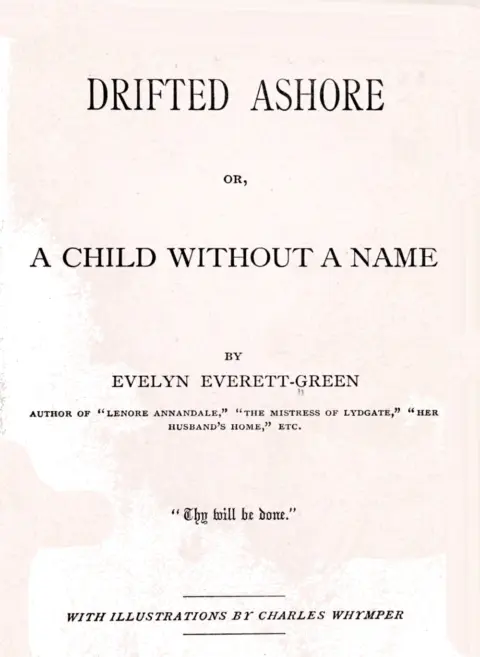
THE CLASSIC COLLECTION · 1890
"Drifted Ashore; or, A Child Without a Name" by Evelyn Everett-Green is a novel written in the late 19th century. This compelling tale revolves around the mysterious fate of a young boy washed ashore after a storm, who is taken in by a kind-hearted fisherwoman while he recovers from his injuries. The book explores themes of identity, belonging, and the search for family, as the boy, later named Bertie, grapples with his lost memories and the kindness extended to him by strangers. The opening of the novel paints a vivid picture of a desolate seaside landscape marked by a tumultuous ocean and a solitary young boy named David, a fisherman's son, reflecting on a name and a life he has yet to uncover. We learn that Bertie, the boy who drifted ashore, lies in a fisherman's cottage, unconscious and without any means of identifying himself. As he slowly regains consciousness, not only does he face the uncertainty of his origins, but he also develops a bond with David and the fisherwoman. The narrative hints at the darker realities of life through the boy’s mysterious past, intertwining the lives of the two boys, and raising questions about class and identity as they navigate their new friendship.
Introduction adapted from the source catalogue; source summaries may be automatically generated.
Free to read · English · 66,074 words · No account needed
MAKE TIME FOR A GOOD BOOK
On by default. Untick to stop anonymous reading totals. Each page counts after 10 seconds in view. How this works.
Anonymous counting is on unless you have switched it off.
Bertie grew tired of the game before the elder boys, who were stronger than he; and then he came and stood by Queenie, who looked, as he thought, rather dull. Queenie did not look at him or speak to him; but Bertie was very straightforward and simple-minded, and did not in the least know that he was in the little lady’s black books.
“Why don’t you play too?” he asked.
“Why should I?”
“I thought you liked playing. You said yesterday you were always wishing you had some boys to play with.”
Queenie’s chin went up into the air.
“Some boys,” she answered, grandly. “I did not say any boys.”
Bertie was a little puzzled by this rather fine distinction.
“Are we any boys?” he asked.
“Rather like it, I think,” answered Queenie, a little put out by
Bertie’s simplicity.
“You wanted to play with me yesterday,” remarked Bertie. “I suppose you are rather changeable, aren’t you?”
Queenie looked exceedingly angry.
“I suppose you are a very impertinent little boy, and don’t know your
manners.”
Bertie saw now that Queenie was angry. He began to think she was not quite so nice as he had once thought. He judged it wise to change the subject.
“Aren’t you very glad Phil has come home? I think he is such a nice
boy!”
This praise of her favorite brother soothed Queenie’s ruffled feelings a little. Moreover, she was finding it a little dull to be so cross. She felt that she was spoiling her own fun, without being half as dignified as she could wish.
“Yes, he is a very nice boy,” she answered, with more warmth; “only I think it is a great pity he did not hide away as we intended. It would have been great fun; and I can’t think why you came and spoiled it all.”
Bertie looked a little shy, but he did not offer any excuse for his
conduct.
This silence encouraged Queenie, who continued, with judicial severity,—
“I think you were a very interfering little boy.”
Bertie was silent for some time, and then he said, slowly,—
“I didn’t mean to interfere. I only wanted him to go on being brave.”
“I should think he wouldn’t want you to teach him that.”
“It didn’t sound very brave to hide away and make everybody frightened and miserable. You would have been very unhappy if you had not known where he was, and so would other people. I don’t think it brave to frighten people and make them unhappy just because it’s fun.”
Your reading position is saved on this browser. Take it to another device with a library code. Reading pages adapt to text, rather than matching a printed edition.
Evelyn Everett-Green
Evelyn Everett-Green
Evelyn Everett-Green
Evelyn Everett-Green
BEHIND THE BOOK
This eBook is for the use of anyone anywhere in the United States and most other parts of the world at no cost and with almost no restrictions whatsoever. You may copy it, give it away or re-use it under the terms of the Project Gutenberg License included with this eBook or online at www.gutenberg.org. If you are not located in the United States, you will have to check the laws of the country where you are located before using this eBook. Read the source licence.
The original source file, including credits and licence, is retained by this library. Request an original-format copy at no charge. Please include the book title and Project Gutenberg identifier #70089.
KEEP YOUR CURIOSITY GOING
Coulson Kernahan

Maurice Baring
Frances Wright
Cécile Tormay

Frederic Jesup Stimson

W. H. P. (William Henry Pope) Jarvis