THE CLASSIC COLLECTION✦Torwood’s trustCLASSIC FREE BOOKS
Torwood’s trust
Evelyn Everett-Green
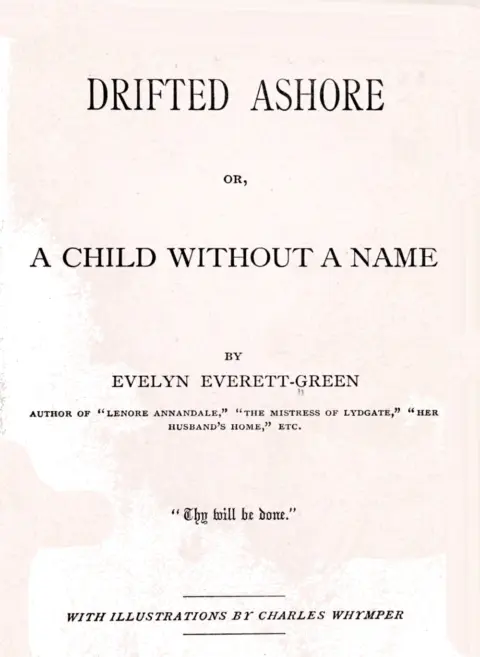
THE CLASSIC COLLECTION · 1890
"Drifted Ashore; or, A Child Without a Name" by Evelyn Everett-Green is a novel written in the late 19th century. This compelling tale revolves around the mysterious fate of a young boy washed ashore after a storm, who is taken in by a kind-hearted fisherwoman while he recovers from his injuries. The book explores themes of identity, belonging, and the search for family, as the boy, later named Bertie, grapples with his lost memories and the kindness extended to him by strangers. The opening of the novel paints a vivid picture of a desolate seaside landscape marked by a tumultuous ocean and a solitary young boy named David, a fisherman's son, reflecting on a name and a life he has yet to uncover. We learn that Bertie, the boy who drifted ashore, lies in a fisherman's cottage, unconscious and without any means of identifying himself. As he slowly regains consciousness, not only does he face the uncertainty of his origins, but he also develops a bond with David and the fisherwoman. The narrative hints at the darker realities of life through the boy’s mysterious past, intertwining the lives of the two boys, and raising questions about class and identity as they navigate their new friendship.
Introduction adapted from the source catalogue; source summaries may be automatically generated.
Free to read · English · 66,074 words · No account needed
MAKE TIME FOR A GOOD BOOK
On by default. Untick to stop anonymous reading totals. Each page counts after 10 seconds in view. How this works.
Anonymous counting is on unless you have switched it off.
“She is having her tea. She left me in the nursery, and said she should soon be back. I came down-stairs to go into the garden, and then I saw the door open, and the books, and I came in to look. I like a library; I always used”—but here the look of bewilderment swept over the boy’s face again, and he concluded, confusedly, “I mean, nobody was there, and it all looked nice and quiet, and so I came in and sat there, and then you came back, and I thought—”
“Never mind, never mind what you thought,” interposed the Squire, hastily, for the look in the child’s eyes was painfully bewildered and strained. “Tell me if you know who I am.”
“You are the Squire,” answered Bertie, promptly, looking more natural and childlike again. “I saw you ride out on your big brown horse to-day; and yesterday I saw you walking in the garden and telling the men what to do. Mrs. Pritchard says that all this big house belongs to you. Are you ever lonely living here all by yourself?”
The Squire looked down into the child’s upturned face, and a curious shade passed over his own.
“What do you know about being lonely?” he asked, in an odd, muffled
voice.
Bertie put his hand over his eyes; and then, after a moment’s pause,
looked up again smiling.
“I was lonely down by the sea with David. He was very kind, and I liked him, and so was his mother. But I was lonely with them. It isn’t half so lonely here with you.”
“You are not lonely, then, with Mrs. Pritchard in the nursery, I
suppose?”
Bertie hesitated.
“Mrs. Pritchard is very kind,” he said, with a little courtly air that was almost amusing,—“very kind indeed; but, somehow, this feels more natural, you know.”
The Squire, as he found the child grew more composed and quiet, began to return to his former state of mind as regarded his position in the house.
“But you must understand, Bertie, that the nursery is your room, and that this is mine. You must not come here without leave.”
The child’s face put on a look of distress and perplexity.
“Isn’t this a library!” he said.
“Yes; this is my library.”
“I always used to sit in the library when I wanted to,” he said, appealingly. “I never did any harm. I like the smell of the books, you know. Ours used to smell just the same.”
“Yours?” interrogated the Squire, hoping to elicit some further
intelligence.
Your reading position is saved on this browser. Take it to another device with a library code. Reading pages adapt to text, rather than matching a printed edition.
Evelyn Everett-Green
Evelyn Everett-Green
Evelyn Everett-Green
Evelyn Everett-Green
BEHIND THE BOOK
This eBook is for the use of anyone anywhere in the United States and most other parts of the world at no cost and with almost no restrictions whatsoever. You may copy it, give it away or re-use it under the terms of the Project Gutenberg License included with this eBook or online at www.gutenberg.org. If you are not located in the United States, you will have to check the laws of the country where you are located before using this eBook. Read the source licence.
The original source file, including credits and licence, is retained by this library. Request an original-format copy at no charge. Please include the book title and Project Gutenberg identifier #70089.
KEEP YOUR CURIOSITY GOING
Coulson Kernahan

Maurice Baring
Frances Wright
Cécile Tormay

Frederic Jesup Stimson

W. H. P. (William Henry Pope) Jarvis