
The Writing of News A Handbook with Chapters on Newspaper Correspondence and Copy Reading
Charles G. (Charles Griffith) Ross
THE CLASSIC COLLECTION · 1897
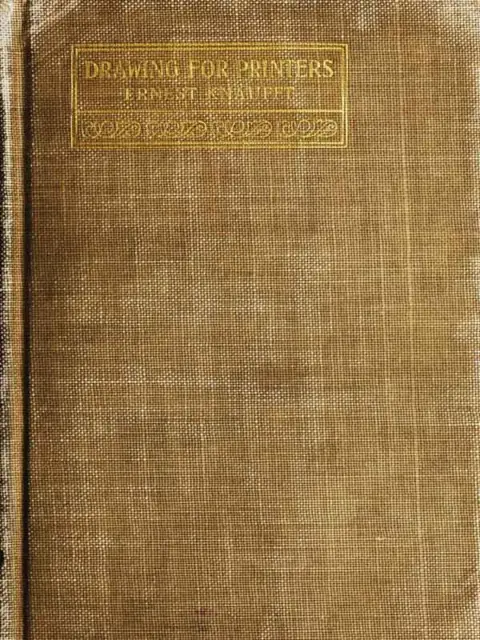
"Drawing for Printers" by Ernest Knaufft is a practical treatise on the art of designing and illustrating in conjunction with typography, written in the late 19th century. The book serves as a comprehensive guide aimed at both beginners and those with some experience in drawing, providing a wealth of instructional content on drawing techniques and principles critical for printers seeking to improve their artistic skills. At the start of the work, the author emphasizes the increasing importance of design knowledge in the printing profession, noting that modern printers must not only be competent in typography but also in illustration. Knaufft outlines the goals of the text: to familiarize readers with essential design principles that they can practically apply, while addressing the common misunderstandings about drawing education. He uses a parable to highlight the necessity of developing observational skills over simply following instructions about materials, urging readers to cultivate the ability to see and interpret forms accurately in order to improve their drawing capabilities.
Introduction adapted from the source catalogue; source summaries may be automatically generated.
Free to read · English · 43,344 words · No account needed
MAKE TIME FOR A GOOD BOOK
On by default. Untick to stop anonymous reading totals. Each page counts after 10 seconds in view. How this works.
Anonymous counting is on unless you have switched it off.
Ornamentation, Aimless, 203
Ornamentation of Northern and Southern scribes compared, 198
Outline, Beginner advised to use, almost exclusively, 47
Outline, Connecting link between, and shaded drawing, 72, 73
Outline, Force of, 41, 132, 139, 140, 144, 145, 213, 214
Outline, Mastery of, recommended to the printer, 23
Paper, 141, 165, 167
Papyrus, 208
Parallel lines. (See Printing), 115, 117, 123, 125
Paul, Herman, 132, 145
Pens, Various, may be used, 118, 120
Pen-Drawing, A, may be on large or small scale, 113
Penlick, 214, 221
Pen practice, Method of, 117, 129, 131
Pen technic, 112–130, 135, 139–146, 147
Pen technic from printers’ view-point, 113
Perspective, 19, 20, 22, 35, 36, 38, 39
Petrarchian letters, 200
Phœnician letters, 158, 208, 209
Photo-engraving, 113–148
Placing, Preliminary, of objects in beginning a drawing, 45, 50–66, 211
Plane, Objects seen in one, 33, 34, 39
Plant form, 205, 206
Pomeroy, F. W., 178
Posters, 177–179, 219
Preface, 3–5
Printer must have an educated taste to design correctly, 200, 201
Printing, Artistic, 154–167, 203, 223, 229
Printing, City newspaper, 115–119, 127–129, 143, 156, 161–168, 239
Printing, Country newspaper, 113–119, 125–129, 156, 161–168, 238
Printing, Magazines, 113–115, 118
Printing, Printers’ experience a guide in adapting technic to, 113, 115
Printing, Recent change in the character of, 17
Printing, Rough, defined, 164
Printing, Technics which are adapted to, 23, 32, 68, 78, 79, 90, 92, 108, 112–119, 123, 127, 128, 177
Process plate, 230
Proportion and direction, 50–55
Proportions, 65
Quill pen, 116, 118, 191–195, 197, 198, 200
Ratdolt, Erhard, 158
Reed pen, 208
Reduction of drawing for printing, 112–119, 124, 146, 149, 150, 164,
171, 176, 215
Renaissance lettering, 155
Renard, E., 114, 115, 123
Resumé of Part I, 133–150
Ricketts, Charles, 183, 184
Rivoire, 176, 179
Rococo design, 220
Rogel, Hans, 187, 188, 194, 198, 209
Roman lettering. (See Lettering), 155, 198
Schafhausen, 225, 226, 228
Scratch-board, Whites in, and wood engraving, 91, 92, 93, 94, 138, 148
Seeing properly, Drawing a matter of, 19–27, 50, 74–78
Shaded drawings, 42, 43, 46, 47, 48, 66–78, 146, 214
Shadows, Finding direction of, 65, 66, 67, 70
Shadows, Large, versus minor ones, 74, 76
Shadows, Thrown and modeling, 43, 46, 149
Sickert, Walter, 118, 119, 150
Silhouette, An old-fashioned, 125, 204, 230
Silhouette, its use as typographical ornament, 32
Silhouette, used by Egyptians, 26, 27
Silhouetting, Practice in, objects, 33, 157, 213, 214
Solid Blacks, (See Silhouette)
Spanish scribes, 198
St. Elme, 123, 124, 126
Stevenson, Robert Louis, portrait of, 116, 117, 118
Still-life studies, 142, 145
Stimmer, Chr., 187, 188, 198, 209
Stipple, 138
Strange’s book on alphabets recommended, 181, 187, 202, 204
Stuck, Franz, 171, 172, 173, 177, 236
Summary, 211
Synthetic drawing, 58, 59, 62
Taste. (See Printing, Artistic), 158, 159, 160, 161, 163, 165
Technic. (See Pen Technic), 87
Texture, 30, 41, 42, 82
Thick and thin pen lines. (See Printing), 118
Tint lines, 228, 231
Touraine font, 158
Toussaint, T., 88, 89
Transfer, How to, a drawing, 131
Typographer should be designer, 17
Vale press, 183, 185, 186
Vallet, 128, 129
Vallotton heads, 133, 134, 135
Values, 42, 43, 68–71, 94
Venetian lettering, 198, 204
Verdyen, 92, 93
Vierge, Daniel, 122, 123
Visigothic letter, 155, 158, 198
Walker, Fred, 101, 102, 149
Watts, George Frederick, R. A., 78–88, 90, 94, 101, 103, 107, 112, 113
White, Gleason, 183
Windows in perspective. (See Perspective), 19, 20, 22
Wood engraving, 134, 135, 153, 218, 220, 223, 230
Wood engraving, Practice, 224, 232, 233
Written language, 207, 208
Youth, Portrayal of, 101–108
Zinc plate, 75, 230–236
The Manufacture of Ink.
Comprising the raw materials and the preparation of writing, copying and hektograph inks, safety inks, ink extracts and powders, colored inks, solid inks, lithographic inks and crayons, printing ink, ink or aniline pencils, marking inks, ink specialties, sympathetic inks, stamp and stencil inks, wash blue, etc. Translated from the German of Sigmund Lehner, with additions by William T. Brannt. Illustrated; 230 pages; $2.00. Address all orders to
THE INLAND PRINTER CO.,—214 Monroe St., Chicago. 34 Park Row, New York.
By J. F. EARHART.
The Standard Work on Color Printing in America.
Your reading position is saved on this browser. Take it to another device with a library code. Reading pages adapt to text, rather than matching a printed edition.
BEHIND THE BOOK
This eBook is for the use of anyone anywhere in the United States and most other parts of the world at no cost and with almost no restrictions whatsoever. You may copy it, give it away or re-use it under the terms of the Project Gutenberg License included with this eBook or online at www.gutenberg.org. If you are not located in the United States, you will have to check the laws of the country where you are located before using this eBook. Read the source licence.
The original source file, including credits and licence, is retained by this library. Request an original-format copy at no charge. Please include the book title and Project Gutenberg identifier #53561.
KEEP YOUR CURIOSITY GOING
Charles G. (Charles Griffith) Ross
Hannah Webster Foster

Emily Lawless
Edwin Hamlin Carr

Charles De Lano Hine
Andrew Ure