
The Writing of News A Handbook with Chapters on Newspaper Correspondence and Copy Reading
Charles G. (Charles Griffith) Ross
THE CLASSIC COLLECTION · 1897
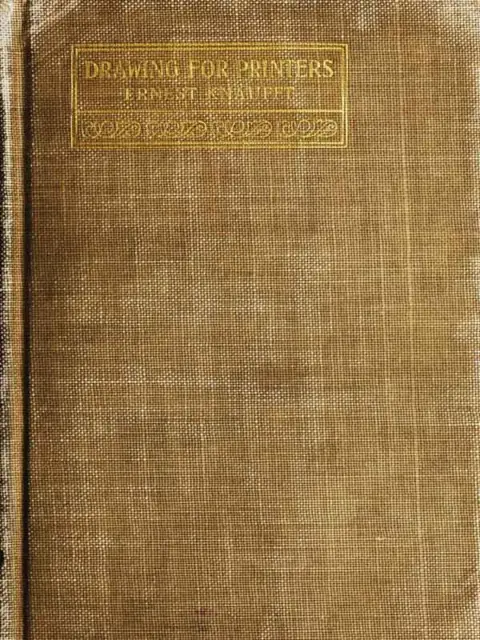
"Drawing for Printers" by Ernest Knaufft is a practical treatise on the art of designing and illustrating in conjunction with typography, written in the late 19th century. The book serves as a comprehensive guide aimed at both beginners and those with some experience in drawing, providing a wealth of instructional content on drawing techniques and principles critical for printers seeking to improve their artistic skills. At the start of the work, the author emphasizes the increasing importance of design knowledge in the printing profession, noting that modern printers must not only be competent in typography but also in illustration. Knaufft outlines the goals of the text: to familiarize readers with essential design principles that they can practically apply, while addressing the common misunderstandings about drawing education. He uses a parable to highlight the necessity of developing observational skills over simply following instructions about materials, urging readers to cultivate the ability to see and interpret forms accurately in order to improve their drawing capabilities.
Introduction adapted from the source catalogue; source summaries may be automatically generated.
Free to read · English · 43,344 words · No account needed
MAKE TIME FOR A GOOD BOOK
On by default. Untick to stop anonymous reading totals. Each page counts after 10 seconds in view. How this works.
Anonymous counting is on unless you have switched it off.
Designs, Small, as difficult as large, 18
Detail versus broad drawing, 74, 76, 90
d’Illzach, Ringel, 136, 138, 150
Dollman, J. C., 139
Donatello, 103, 104
Don Chisciotte, 32
Dots, Eccentric use of, 129, 130
Dragon’s blood, 235
Draw as though tracing on a window pane, 35
Draw by lamplight, 94
Drawing-board recommended, 78
Drawing Finished, and original “placing” compared, 63–70
Drawing, Finished and rough compared, 73, 78, 80, 81
Drawing fragments for practice helpful, 65
Drawing from pasteboard boxes good training in light and shade, 76
Drawing, How to begin a, 19, 49–55
Drawing not arbitrary, 86, 103
Drawing, Preliminary placing of objects in beginning a, 45, 50–66,
211, 212
Drayton, Michael, 184
Dürer, Albrecht, 76, 187
Durham Book, 202
Eaton, Wyatt, 116, 117, 118
Economy of line, 226
Egyptian, The, hieroglyphic and hieratic writing, 207, 208, 209
Element defined, 52
English Old Style lettering, 200, 219
Enlarging a drawing, 75, 113
Engström, Albert, 22, 28, 29, 30, 132, 133, 236
Etching, Art of, 237
Etruscan, The, letter, 158
Eye, Untrained, sees incorrectly, 19
Eye, Education of the, 19–25, 50, 74, 76, 78
Eye, Drawing of the, 103–105
Eyesight, Knowledge of effect necessary beyond mere, 84
Face, Drawing of a, and head, 84, 85, 90–92, 101–109, 132, 133, 136,
144
Finished drawing and original “placing,” compared, 63–70
Finished drawing and rough drawing, compared, 73, 78, 80, 81
Foot, Drawing a, 98, 99, 100
Forain, 127, 139, 142, 144, 161
Fonts, Modern, 158
Form, 69, 76–78
French art school studies, 57, 66, 67
French names, 94, 96, 100
French Old Style lettering, 167, 175, 198, 200
French printers, 160, 161, 175
Frontal muscle, lines made by, 107
Gaillard, C. F., 76, 77, 78, 80, 82, 84, 103
Geometrical forms, 59–62
Gerbault, H., 24
Girardet, Jules, 36
Gothic letters, 155, 181, 182, 187, 188, 191, 193, 197, 198, 200, 203,
204, 206
Grasset, E., 32, 33, 39, 59, 63, 64, 166, 168, 172, 173, 177, 179, 191, 192, 197, 203, 204, 217, 230, 234, 236
Greek manuscript, 209
Grellet, F., 101, 103–107, 109
Grolier, 218
Guillaume, 125, 126, 129, 143
Gütenberg, 200
Half-tones, 148, 160, 167, 170, 177
Hassall, 177, 179, 230
Hats, 23, 24, 26, 27
Hebrew alphabet, 208
Herkomer, Hubert, 50, 51, 52, 59, 60, 61, 63, 65
Hieroglyphs, 207
High light, 42
Historic associations of certain alphabets. (See Lettering), 202, 224
Holbein, 218, 220, 222
Initial letters, Chapter headings, 18, 121, 123, 167, 168, 182, 189, 204, 205, 215–218, 220, 222
Introduction to Part II, 154, 155, 158–162
Irish text, 158, 202, 203
Italian lettering. (See Lettering), 181, 185, 187, 195, 198–200, 209
Italic letter. (See Lettering), 195, 199, 200
Japanese brush, 87
Japanese designing, 48, 217, 218
Japanese graphic art without Occidental modeling, 71
Japanese synthetic drawing, 59
Japanese use chalk plate, 238
Jenson, 158, 174, 200
Jewett, Llewellynn, 227
Kelmscott type, 186
Knaus, Ludwig, 82–85
Landscape, 130, 140, 144, 148, 150
Lansyer, E., 20
Larousse’s Dictionary, 166, 201, 202, 204, 208, 209, 231
Latin capitals, 197, 198
La-Tour, Fantin, 68–71, 148
Lautrec, H. de F., 211, 212
Lefébvre, J., 105, 106, 107
Leloir, Maurice, 147, 220
LeRoux, E., 139, 140, 144
Lettering, 155, 158, 166–169, 171–175, 180–210
Lettering must follow historical principles, 180, 187
Letters based on the circle and the square, 183
Light and dark, Spots of, 47, 48, 90
Lighting, Unusual, on head, 141, 148, 149
Line, Broad, 167–171
Line, Value of a, 56
Lines used to indicate organic parts, 56, 57, 58, 84
Lithography, 69, 109, 238
Local color, 42, 43, 47, 71
Lœwe-Marchand, 74, 75, 84
Lombardic lettering, 198
Lormier. E., 136, 138
Lucas, F. H., 144
Luca della Robbia, 103, 107, 109
Lucidario page, 185, 186, 195, 200
Luque, M., 40, 41, 42, 46, 146
Mannerisms of a caricaturist, 46
Mantelet, Albert, 214, 215
Marchetti, 121, 123, 126
Masses of light and dark appropriate for rough printing, 167–172
Masses of shadows, 74, 76, 90
Materials, Drawing, and technic of slight consequence compared with
correct seeing, 19, 86, 87
Medallions, David d’Angers, 136, 137, 148
Medallions, Lormier, E., 136, 138
Medallions, Ringel d’Illzach, 136, 138
Millais, John Everett, 45
Minnesinger song book, Page from a, 182
Minnesinger lettering, 182, 192–195, 200, 209
Modern Roman lettering. (See Lettering), 200
Modeling, 137
Moloch, B., 30, 31, 236
Monet, Claude, 148, 150
Monumental letters. (See Lettering), 188, 204, 209
Moorish design, 218, 222
Morris, William, 155, 158, 161, 165, 174, 200
Moullier, 129, 130
Mouth, Study of the, 104, 106, 107, 132, 133
Munkacsy, Michael, 53, 55
Naso-labial line, 80–90, 101, 102, 109
Newspaper illustration. (See Printing), 113, 119, 125–129, 143, 156,
161–168, 238, 239
Newspaper portraiture, 116, 117
Nose, The wing of the, 84, 85
Nostril, The shadows of the, 84, 85
Observation, Value of, 25
Old age, How to portray, 101, 105, 107, 169
Old English font, 158
Orbicular muscle, Lines made by, 105
Organic lines defined and illustrated, 56, 58
Your reading position is saved on this browser. Take it to another device with a library code. Reading pages adapt to text, rather than matching a printed edition.
BEHIND THE BOOK
This eBook is for the use of anyone anywhere in the United States and most other parts of the world at no cost and with almost no restrictions whatsoever. You may copy it, give it away or re-use it under the terms of the Project Gutenberg License included with this eBook or online at www.gutenberg.org. If you are not located in the United States, you will have to check the laws of the country where you are located before using this eBook. Read the source licence.
The original source file, including credits and licence, is retained by this library. Request an original-format copy at no charge. Please include the book title and Project Gutenberg identifier #53561.
KEEP YOUR CURIOSITY GOING
Charles G. (Charles Griffith) Ross
Hannah Webster Foster

Emily Lawless
Edwin Hamlin Carr

Charles De Lano Hine
Andrew Ure