THE CLASSIC COLLECTION✦A dead man’s diaryCLASSIC FREE BOOKS
A dead man’s diary
Coulson Kernahan
THE CLASSIC COLLECTION · 1887
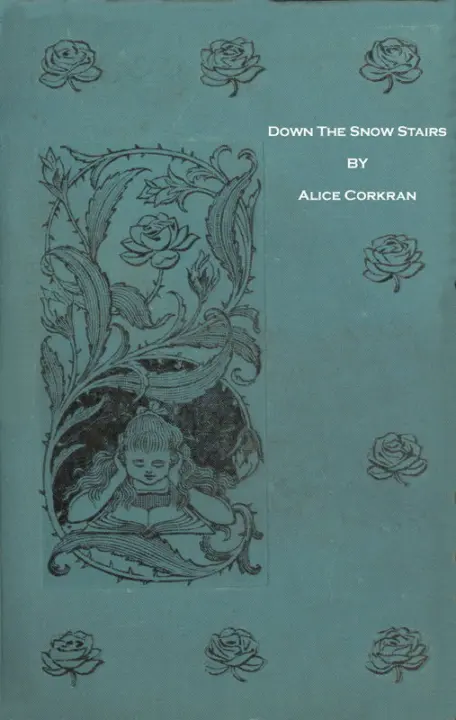
"Down the Snow Stairs; Or, From Good-Night to Good-Morning" by Alice Corkran is a children's fantasy book written in the late 19th century. The story revolves around a young girl named Kitty, who is deeply worried about her sick brother Johnnie. Set during Christmas, Kitty is torn by guilt over a decision that led to his illness, setting the stage for a magical journey that explores themes of innocence, mischief, and the ramifications of one's actions. At the start of the narrative, Kitty lies awake on Christmas Eve, haunted by her brother's illness and the pain she feels for having taken him outside to play in the snow. The sorrow of not being able to see him weighs heavily on her heart, compelling her to sneak into Johnnie’s room while he sleeps. Their tender, albeit bittersweet conversation touches on Kitty's feelings of guilt and desire for reconciliation. As she reminisces about their bond, a magical snowman beckons her on a whimsical adventure, framing her journey into a fantastical world meant to uncover deeper truths about herself and the nature of childhood. This opening sets the tone for a blend of both real and surreal experiences that await Kitty, ultimately leading her to confront her fears and desires in a world filled with enchanting possibilities.
Introduction adapted from the source catalogue; source summaries may be automatically generated.
Free to read · English · 37,917 words · No account needed
MAKE TIME FOR A GOOD BOOK
On by default. Untick to stop anonymous reading totals. Each page counts after 10 seconds in view. How this works.
Anonymous counting is on unless you have switched it off.
“I have cried so much since you were ill,” she went on after awhile. “One day I wetted seven pocket handkerchiefs with my tears. I hung them up to dry. I counted them—there were seven.”
Johnnie’s eyes glistened with sympathy, and he repeated in his feeble
voice:
“Poor old Kitsy!”
“It was the day,” went on Kitty, wishing to be exact, “that mother said I was to say in my prayers, ‘Pray God, leave us little Johnnie; but thy will be done.’ I prayed all day, I kept going down on my knees, and every time I waked up in the night I said ‘Leave us little Johnnie.’ I did not say ‘Thy will be done.’ I said ‘Leave us little Johnnie, leave us little Johnnie.’”
There was a silence; then Johnnie said in an odd sort of a way:
“I know what day that was. It was the day I saw my guardian child.”
“Your guardian child!” repeated Kitty curiously.
Johnnie nodded.
“What was he like?” asked Kitty, pressing nearer up against the bed.
“He was just like me,” answered Johnnie, looking straight before him, as if he were seeing there what he described; “only his two legs were both the same size—so he had no crutch, and he had a rosy face.”
“How was he dressed?” asked Kitty, growing more curious.
“He had a rainbow sort of a coat on,” replied Johnnie, “and he had two little pink wings. I thought he had come, perhaps, because I was going to die—and he wanted to show me that in heaven I was to have two legs the same size, and no crutch.”
“Oh—o-oh!” cried Kitty, her tears gushing out anew.
“Don’t cry, Kitsy,” the little panting voice resumed. “When I die I want you to have my cake of gamboge, my rose-pink, my India-ink, and my two sable brushes.”
“But you are not going to die,” cried Kitty, giving the bed a shake as she plumped against it. “To-morrow is Christmas Day, and you are to be much better to-morrow. Oh, Johnnie!” she added, wiping away her tears, “I have such a present for you: something you wanted ever, ever so much!”
“Is it another go-cart to take fancy drives in?” asked Johnnie eagerly.
“A go-cart! No!” answered Kitty scornfully.
“Is it a musical box with more than one tune?” asked Johnnie, a patch of red forming on one cheek.
“It is something ever so much more splendid,” cried Kitty; “but you are not to know till to-morrow. It is a secret. I’ll only just tell you”—and she nodded several times impressively—“that it sings and is alive.”
Your reading position is saved on this browser. Take it to another device with a library code. Reading pages adapt to text, rather than matching a printed edition.
BEHIND THE BOOK
This eBook is for the use of anyone anywhere in the United States and most other parts of the world at no cost and with almost no restrictions whatsoever. You may copy it, give it away or re-use it under the terms of the Project Gutenberg License included with this eBook or online at www.gutenberg.org. If you are not located in the United States, you will have to check the laws of the country where you are located before using this eBook. Read the source licence.
The original source file, including credits and licence, is retained by this library. Request an original-format copy at no charge. Please include the book title and Project Gutenberg identifier #57413.
KEEP YOUR CURIOSITY GOING
Coulson Kernahan

Maurice Baring
Frances Wright
Cécile Tormay
Francis Greenleaf Allinson & Anne C. E. (Anne Crosby Emery) Allinson

Frederic Jesup Stimson