THE CLASSIC COLLECTION✦A dead man’s diaryCLASSIC FREE BOOKS
A dead man’s diary
Coulson Kernahan
THE CLASSIC COLLECTION · 1887
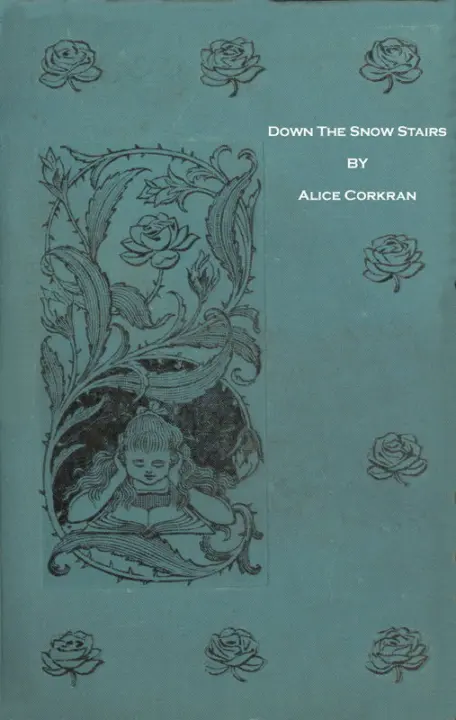
"Down the Snow Stairs; Or, From Good-Night to Good-Morning" by Alice Corkran is a children's fantasy book written in the late 19th century. The story revolves around a young girl named Kitty, who is deeply worried about her sick brother Johnnie. Set during Christmas, Kitty is torn by guilt over a decision that led to his illness, setting the stage for a magical journey that explores themes of innocence, mischief, and the ramifications of one's actions. At the start of the narrative, Kitty lies awake on Christmas Eve, haunted by her brother's illness and the pain she feels for having taken him outside to play in the snow. The sorrow of not being able to see him weighs heavily on her heart, compelling her to sneak into Johnnie’s room while he sleeps. Their tender, albeit bittersweet conversation touches on Kitty's feelings of guilt and desire for reconciliation. As she reminisces about their bond, a magical snowman beckons her on a whimsical adventure, framing her journey into a fantastical world meant to uncover deeper truths about herself and the nature of childhood. This opening sets the tone for a blend of both real and surreal experiences that await Kitty, ultimately leading her to confront her fears and desires in a world filled with enchanting possibilities.
Introduction adapted from the source catalogue; source summaries may be automatically generated.
Free to read · English · 37,917 words · No account needed
MAKE TIME FOR A GOOD BOOK
On by default. Untick to stop anonymous reading totals. Each page counts after 10 seconds in view. How this works.
Anonymous counting is on unless you have switched it off.
“Sings and is alive! Is it”—and now a red patch came on both Johnnie’s cheeks—“is it—no, it can’t be—is it—a bu—ull—finch?”
“Ye—es,” cried Kitty, jumping up and beginning to skip about, first on one bare foot and then on the other. “But you are to forget till to-morrow,” she went on, stopping her dance. “You must forget it, for it is a secret till Christmas Day.”
“Has it a tune?” whispered Johnnie, taking no notice of this order to
forget.
“A lovely tune,” answered Kitty, her eyes sparkling. “‘Home, sweet home.’ He sings it with his tail up and his head on one side.”
As Johnnie laughed with joy, Kitty gave a sob of delight.
“I ran off to the shop by myself, the bird-fancier’s, you know; ever so far. Nurse scolded me dreadfully when I came back; she was so frightened, not finding me anywhere at home.”
“Oh, I did so long for a bullfinch, dear, good old Kitsy!” murmured Johnnie, looking very wide awake.
“I am not good. I am very naughty,” said Kitty slowly. “Oh, Johnnie, I am miserable when I have been naughty to you! It gives me a pain here,” and she thumped her chest.
“You are never naughty. You are a good, GOOD, GOOD Kitsy,” panted
Johnnie with emphasis.
“I am not good to you. I tease you so often, and I am greedy. I take the largest half of things—when you—you—ought to have them all,” cried Kitty, too shaken by repentant sobs to particularize the speech. “I let you fall one day last summer.”
“Good Kitsy, good old Kitsy all the same,” insisted Johnnie, thumping the coverlid with his tiny fist.
Still Kitty’s sobs did not subside: they grew bitterer and bitterer.
Then came the confession:
“I made you ill, Johnnie. I took you—out—in the snow.”
“I made you take me,” said Johnnie sturdily.
“Mother had said I was not to take you out in the sn—now,” went on Kitty, shaking with sobs. “You did not know she had said so. Oh, Johnnie, forgive me! Say you forgive me!”
“I made you take me out,” repeated Johnnie. Then, as Kitty’s sobs continued, he put his wee hand on her head, and said in a voice weak as the pipe of a wounded bird, “Don’t cry, Kitsy. I forgive you!”
There was a silence. Then Kitty dried her tears.
“I wonder what makes me so naughty!” she said.
“It is not naughtiness; it is having two legs the same size,” answered
Johnnie comfortingly.
Your reading position is saved on this browser. Take it to another device with a library code. Reading pages adapt to text, rather than matching a printed edition.
BEHIND THE BOOK
This eBook is for the use of anyone anywhere in the United States and most other parts of the world at no cost and with almost no restrictions whatsoever. You may copy it, give it away or re-use it under the terms of the Project Gutenberg License included with this eBook or online at www.gutenberg.org. If you are not located in the United States, you will have to check the laws of the country where you are located before using this eBook. Read the source licence.
The original source file, including credits and licence, is retained by this library. Request an original-format copy at no charge. Please include the book title and Project Gutenberg identifier #57413.
KEEP YOUR CURIOSITY GOING
Coulson Kernahan

Maurice Baring
Frances Wright
Cécile Tormay
Francis Greenleaf Allinson & Anne C. E. (Anne Crosby Emery) Allinson

Frederic Jesup Stimson