The castaways
James Otis
THE CLASSIC COLLECTION · 1899
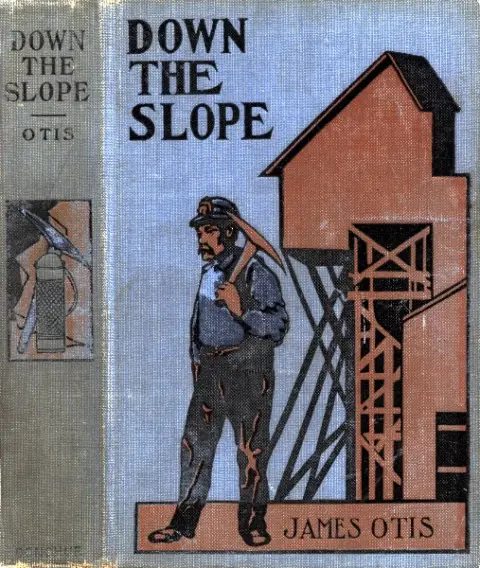
"Down the Slope" by James Otis is a novel written in the late 19th century. The story focuses on Fred Byram, a young breaker boy who begins work in a coal mine, facing adversity and bullying from his peers. As he navigates the harsh realities of working conditions and the dangers posed by a group known as the "regulators," Fred showcases determination and resilience. The opening of the book introduces Fred as he starts his first day at the mine. He quickly encounters Sam Thorpe, another youth who warns him about the rough nature of the boys in this workplace. Fred learns about the exploitative dynamics in the mine, specifically the unwritten rule among the boys that new employees must pay 'footing' or face physical harassment. When Fred refuses to comply, he is bullied, beaten, and eventually thrown into an abandoned mine shaft by Skip Miller and his gang. As the story unfolds, readers are drawn into Fred's struggles against the mob mentality of his peers and the looming threat of danger underground, amplifying the tension and sense of urgency as Fred grapples with survival and courage in the face of fear.
Introduction adapted from the source catalogue; source summaries may be automatically generated.
Free to read · English · 69,895 words · No account needed
MAKE TIME FOR A GOOD BOOK
On by default. Untick to stop anonymous reading totals. Each page counts after 10 seconds in view. How this works.
Anonymous counting is on unless you have switched it off.
"Now when you're willing to walk I'll take that out," he said. "Once in every few minutes, when we have to stop to rest I'll look at your eyes. If you wink, it means you're ready to do as I say."
Gus glared at him savagely; but was careful to keep his eyes wide open.
Again Fred shouldered his burden, realizing, meanwhile that he could never reach Farley's if his prisoner remained obstinate.
When an hundred yards had been traversed he was forced to rest.
Gus' eyes stared at him.
A second and a third time was this repeated. At each interval the distance was shorter, and Fred knew he could not travel much farther.
"If he don't give in pretty soon I shall," he muttered to himself as he threw his burden to the ground for the third time.
To his great relief Gus winked violently when Fred pulled the handkerchief down to gain a view of his eyes and the gag was removed without loss of time.
"Will you agree to walk now?" he asked.
"Yes, yes; it wouldn't take a feller long to stifle with that thing in
his mouth."
"I don't care what happens so long as I get you to Farley's."
Once more Gus tried to beg off; but Fred would not listen.
"Walk fast," he said, "and if you don't do your best, in goes the gag
again."
There was no necessity of emphasizing the demand. The prisoner moved with alacrity; but his captor was by no means certain as to which was the proper course.
Tim had made so many turns in his flight that Fred's ideas regarding the points of the compass were very hazy.
Both the boys were suffering from lack of water, and no halt was made
until two or three hours past noon, when they were at the edge of a
swamp.
Quenching their thirst with the ill-tasting liquid, they lay down on the ground to rest, and did not continue their journey for some time.
"Why not stay here all night?" Gus asked.
"Because we haven't traveled far enough yet."
"But I can't hold out much longer, no matter how hard I try."
"You'll have to go as far as I do."
"Wait till mornin', an' then I'll walk twice as fast to make up for the
time spent now."
"We must get in another hour's tramp before sunset," Fred replied, determinedly, and although Gus pleaded very hard the decision was not changed.
But little was accomplished during the last portion of the traveling. Both were thoroughly tired, and when the shadows of night shrouded the recesses of the forest in gloom the welcome word was given.
Your reading position is saved on this browser. Take it to another device with a library code. Reading pages adapt to text, rather than matching a printed edition.
BEHIND THE BOOK
This eBook is for the use of anyone anywhere in the United States and most other parts of the world at no cost and with almost no restrictions whatsoever. You may copy it, give it away or re-use it under the terms of the Project Gutenberg License included with this eBook or online at www.gutenberg.org. If you are not located in the United States, you will have to check the laws of the country where you are located before using this eBook. Read the source licence.
The original source file, including credits and licence, is retained by this library. Request an original-format copy at no charge. Please include the book title and Project Gutenberg identifier #28697.
KEEP YOUR CURIOSITY GOING
Coulson Kernahan

Maurice Baring
Frances Wright
Cécile Tormay

Frederic Jesup Stimson

W. H. P. (William Henry Pope) Jarvis