The castaways
James Otis
THE CLASSIC COLLECTION · 1899
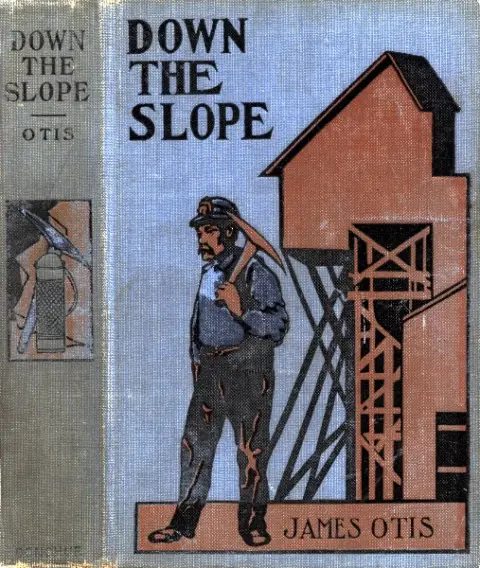
"Down the Slope" by James Otis is a novel written in the late 19th century. The story focuses on Fred Byram, a young breaker boy who begins work in a coal mine, facing adversity and bullying from his peers. As he navigates the harsh realities of working conditions and the dangers posed by a group known as the "regulators," Fred showcases determination and resilience. The opening of the book introduces Fred as he starts his first day at the mine. He quickly encounters Sam Thorpe, another youth who warns him about the rough nature of the boys in this workplace. Fred learns about the exploitative dynamics in the mine, specifically the unwritten rule among the boys that new employees must pay 'footing' or face physical harassment. When Fred refuses to comply, he is bullied, beaten, and eventually thrown into an abandoned mine shaft by Skip Miller and his gang. As the story unfolds, readers are drawn into Fred's struggles against the mob mentality of his peers and the looming threat of danger underground, amplifying the tension and sense of urgency as Fred grapples with survival and courage in the face of fear.
Introduction adapted from the source catalogue; source summaries may be automatically generated.
Free to read · English · 69,895 words · No account needed
MAKE TIME FOR A GOOD BOOK
On by default. Untick to stop anonymous reading totals. Each page counts after 10 seconds in view. How this works.
Anonymous counting is on unless you have switched it off.
Not for a moment did Fred believe it possible Sam had done anything dishonest in regard to the money, and yet it seemed very singular that he could have been robbed without knowing when the deed was committed.
He had no opportunity to speak privately to the accused boy, because of the strict watch maintained by the cashier, but he remained very near him, as if eager to show confidence in his innocence.
From the time the miner had been sent in search of an officer not a word was spoken. Now and then Sam glanced at his friend as if to ask that his story be credited, and the accuser kept a strict watch over every movement.
There was no parley when the officer arrived, his duty was to take the prisoner away, and he did so in a matter-of-fact manner which aroused all of Fred's anger.
"It wouldn't do him any harm to say he knows you ain't a thief," he
whispered, "but never mind, old fellow, Bill an' Joe shall come to see
you."
"Believe I've told the truth, an' that is enough for me," Sam replied, with a choking sob. "Tell the folks at home about it, but try to make 'em know I never stole a dollar."
Fred promised to do this, and would have accompanied his friend to the depot but for the cashier, who said, sternly:
"I insist on your remaining here. A large amount of money is missing; you boys have got a secret between you, and it may have some connection with the robbery. I will not allow you to talk with the prisoner."
"Do as he says, an' don't have any row," Sam added.
"I'll stay here," was the reply, "and when Mr. Wright gets back we'll see what he's got to say about it."
"It's time for the train," the constable interrupted.
"Go on quickly, Sam, before a crowd gathers."
Fred gazed after the accused until he was lost to view in the distance, and then turned away with a heavy heart.
The cashier had nothing more to say about the robbery, but he found plenty of work for the boy to do, much as if wishing to keep him in sight until Mr. Wright came home.
It was half-past eight when the last train arrived and the
superintendent was not on it.
Fred should have been home two hours before, and his mother, always in fear of an accident since the explosion, came in search of him.
To her the story of Sam's misfortune was told, and she at once demanded a private interview with the cashier.
Your reading position is saved on this browser. Take it to another device with a library code. Reading pages adapt to text, rather than matching a printed edition.
BEHIND THE BOOK
This eBook is for the use of anyone anywhere in the United States and most other parts of the world at no cost and with almost no restrictions whatsoever. You may copy it, give it away or re-use it under the terms of the Project Gutenberg License included with this eBook or online at www.gutenberg.org. If you are not located in the United States, you will have to check the laws of the country where you are located before using this eBook. Read the source licence.
The original source file, including credits and licence, is retained by this library. Request an original-format copy at no charge. Please include the book title and Project Gutenberg identifier #28697.
KEEP YOUR CURIOSITY GOING
Coulson Kernahan

Maurice Baring
Frances Wright
Cécile Tormay

Frederic Jesup Stimson

W. H. P. (William Henry Pope) Jarvis