
Switch off
Oliver Optic
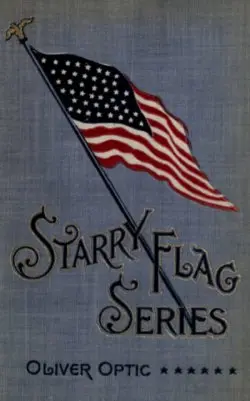
THE CLASSIC COLLECTION · 1896
"Down the River; Or, Buck Bradford and His Tyrants" by Oliver Optic is a novel written in the late 19th century. The story centers around Buck Bradford, a young boy who faces ongoing cruelty and tyrannical treatment from those around him, particularly the Fishley family, as he struggles to protect his deformed sister Flora and assert his own dignity. The book explores themes of self-reliance, morality, and the quest for freedom from oppression. At the start of the novel, we are introduced to Buck and his harsh circumstances living with the Fishley family, where he endures mistreatment from Ham Fishley, the son, and his parents. The opening chapter showcases Buck’s decision to stand up against Ham when ordered to perform menial tasks, flipping the dynamic of their oppressive relationship. Buck's internal conflict is highlighted as he tries to reconcile his desire for respect with his duty to care for Flora. A pivotal moment occurs when he defends her from the harsh treatment of Mrs. Fishley, escalating tensions that hint at further confrontations and challenges ahead for Buck as he navigates his precarious position in a world filled with tyrants.
Introduction adapted from the source catalogue; source summaries may be automatically generated.
Free to read · English · 59,545 words · No account needed
MAKE TIME FOR A GOOD BOOK
On by default. Untick to stop anonymous reading totals. Each page counts after 10 seconds in view. How this works.
Anonymous counting is on unless you have switched it off.
"Are you deaf, Buck?" demanded he, sharply, and with that ugly look he had worn since our troubles began.
"Not much," I replied.
"Mr. Barkspear asked you if you had seen Sim Gwynn. Why don't you answer
him?"
"I would rather not answer him," I replied; for, whatever other faults I had, I felt above lying and stealing.
"That means, I s'pose, that you have seen him," added Barkspear, in that peculiar whining tone which always indicates a mean, stingy man.
I made no reply, for I had no idea of betraying Sim, on the one hand, or
of lying, on the other.
"Why don't you speak, Buck?" growled the captain.
"I have seen him, and he has run away. That's all I have to say about
it."
"I didn't think your boy would try to kiver him up. Sim hadn't any business to run away, jest when he was gittin' big enough to be some help to me about the farm."
"I would have run away if I had been in his place," I ventured to remark, perhaps foolishly, for I could not bear to see Barkspear assuming to be an injured man, when his own meanness had driven poor Sim from his home.
"I allus took care on him, and sent him to school every winter, when there warn't much to do; and it's shameful for him to treat me so. He hain't got no gratitude in him."
"Did you have any trouble with him?" asked the captain.
"Well, we did hev a little yesterday mornin'. He stole some things out of the house, and I licked him for't," replied Barkspear, rather sheepishly.
"He ought to be licked if he stole," said Captain Fishley, glancing sternly at me; "or if he didn't behave himself, and be respectful to his employers."
"What did he steal, Mr. Barkspear?" I asked, indignantly.
"Well, he stole some things out of the buttery."
"Yes, sir! That's just what he stole--something to eat! He didn't have breakfast enough to keep his stomach from grumbling, and he stole a piece of boiled pork and some cold potatoes."
"That boy eats more'n enough for four men!" exclaimed Barkspear, in
disgust.
"No matter if he does; he ought not to be starved. In this house we have enough to eat, and that which is first rate too. When Sim told me he didn't get enough to eat, I pitied him, for I'm not used to such things."
Captain Fishley almost smiled at this "first-rate notice" of the fare at his house; and my judicious commendation saved me any more hard questions from him.
"When boys are growing, they feed pretty strong," added the captain, now
entirely non-committal.
Your reading position is saved on this browser. Take it to another device with a library code. Reading pages adapt to text, rather than matching a printed edition.
BEHIND THE BOOK
This eBook is for the use of anyone anywhere in the United States and most other parts of the world at no cost and with almost no restrictions whatsoever. You may copy it, give it away or re-use it under the terms of the Project Gutenberg License included with this eBook or online at www.gutenberg.org. If you are not located in the United States, you will have to check the laws of the country where you are located before using this eBook. Read the source licence.
The original source file, including credits and licence, is retained by this library. Request an original-format copy at no charge. Please include the book title and Project Gutenberg identifier #24283.
KEEP YOUR CURIOSITY GOING
Coulson Kernahan

Maurice Baring
Frances Wright
Cécile Tormay

Frederic Jesup Stimson

W. H. P. (William Henry Pope) Jarvis
